

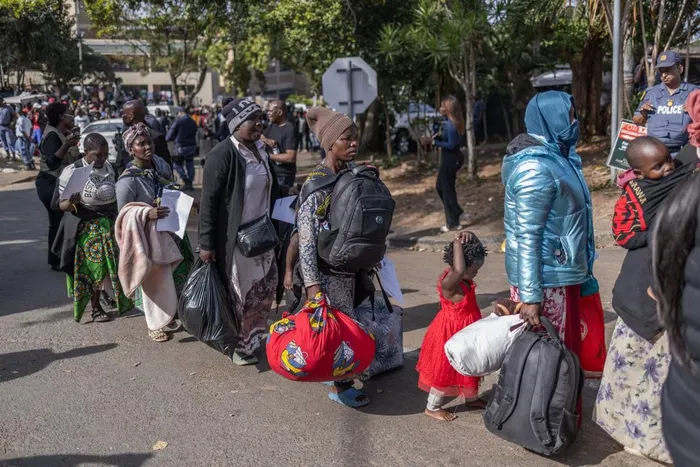
A woman’s desperate bid to be reunited with her partner exposes the complex realities of migration in southern Africa—a region at a crossroads, discussing the need for unity in creating opportunities that keep its people at home.
Image: RAJESH JANTILAL / AFP
Amid the waves of migration between South Africa and its neighbours, a story of love has quietly taken root.
A woman from KwaZulu-Natal, determined to stay with her Malawian partner, tried to slip away under a false identity, but her plan unravelled.
When she reached the Musina temporary repatriation site, she claimed to be Malawian too. But after Malawian officials questioned her, cracks appeared in her story.
Authorities sent her back to South Africa, where her real identity came to light. Her hopes of reuniting with her partner through voluntary repatriation slipped away.
Governments now face mounting pressure to tackle the complex challenges of immigration. The South African government has already repatriated 53,449 foreign nationals, the majority of whom are Malawian.
As the protests over repatriation quiet down, a chorus of more balanced voices is rising across the continent. It is heartening to see the conversation move beyond heated emotions and turn towards the economic realities at stake.
A Zimbabwean woman recently stated on a podcast that millions of Africans migrate in search of jobs, safety, education, or better economic opportunities.
She echoed the view that if more countries offered stronger economies, better governance, reliable public services, and opportunities for youth, many would choose to build their futures at home. South Africa should not shoulder this burden alone.
The whole continent must be involved. African governments, regional bodies such as the African Union, businesses, and communities all have a role to play in building a future where migration is a choice, not a last resort. African leaders are called upon to take bold steps in opening doors of opportunity across the continent.
Africa cannot keep boasting of its rich mineral wealth while so many of its people struggle in poverty and look for hope elsewhere. The moment to confront these challenges has arrived.
By investing in manufacturing and agriculture, and prioritising skills development for young people, African governments can plant the seeds for lasting jobs and empowered futures.
Policymakers must strive for better governance and greater transparency in managing resources so that the continent’s mineral riches truly uplift its people.
By supporting regional economic integration, investing in infrastructure, and expanding access to quality education and healthcare, Africa can become a place where people thrive without ever needing to leave home.