

While addressing the topic of water quality, Manus said that many of the regulatory system and forcing them to deal with the endpoint, which is the most expensive part of the issue.
Image: City of Cape Town/File Picture
Executive director of water and sanitation for the City of Cape Town, Leonardo Manus, said that the clock did not stop ticking towards Day Zero, but that the day had moved further away on the horizon, and that efforts should still be made to conserve water sustainably.
Manus delivered the second keynote address of the second day of the WISA 2026 Biennial Conference & Exhibition, titled “From Crisis to Resilience: Future-proofing South Africa’s Water and Sanitation Systems”.
Organised by the Water Institute of Southern Africa (WISA) until Friday, the conference brings together approximately 2000 delegates from across the water sector. This year’s event is taking place under the theme “Rethinking Amanzi – Securing Our Future”.
The conference programme opened on Wednesday with an address from WISA Chief Executive Officer, Dr Lester Goldman, and the official opening by Minister of Water and Sanitation, Pemmy Majodina.
The technical programme features more than 80 sessions across specialist streams, workshops and high-level engagements, exploring issues including: microplastics, groundwater resilience and managed aquifer recharge, including the Cape Flats Aquifer, climate resilience, droughts, floods and alternative water services, water infrastructure renewal and more.
Manus, during his address, said that South Africa is a water-scarce country, and that we should become water-sensitive. He added that wastewater must be treated as an integral part of water strategy going forward.
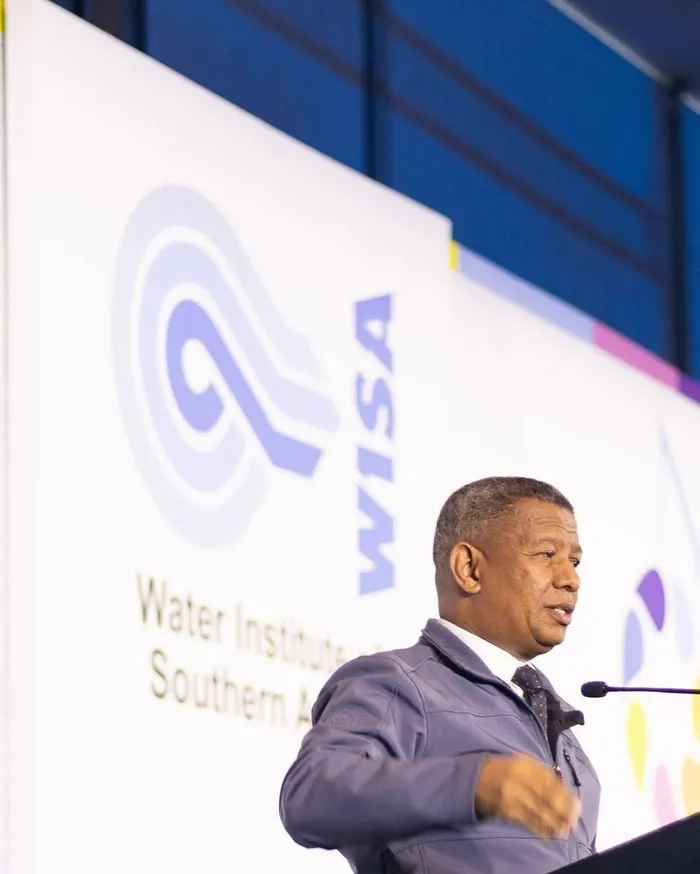
Executive director of water and sanitation for the City of Cape Town, Leonardo Manus.
Image: WISA/Facebook
Manus said that the people need to change and adapt, see wastewater differently, to make Cape Town more resilient for a "Day Zero" that still lingers somewhere off in the future.
The term “Day Zero” referred to a three-year drought the province faced, which led to the 2017 and 2018 water crises. “Day Zero” specifically referred to the day when most of the taps in Cape Town would be shut off, and residents would be forced to queue at some 200 water collection points for their allocated 25 litres of water per day.
Manus said that there was one high-intensity rain event that Cape Town experienced this winter (in May), and the City would be in a “very different” situation with its water levels than where it is now had it not been for that volume of rain.
While addressing the topic of water quality, Manus said that many of the the regulatory system, forcing them to deal with the endpoint, which is the most expensive part of the issue.
He explained, using an expression he claims came from his colleagues, that the sewage system is supposed to deal with three Ps - “pee, poo and paper”.
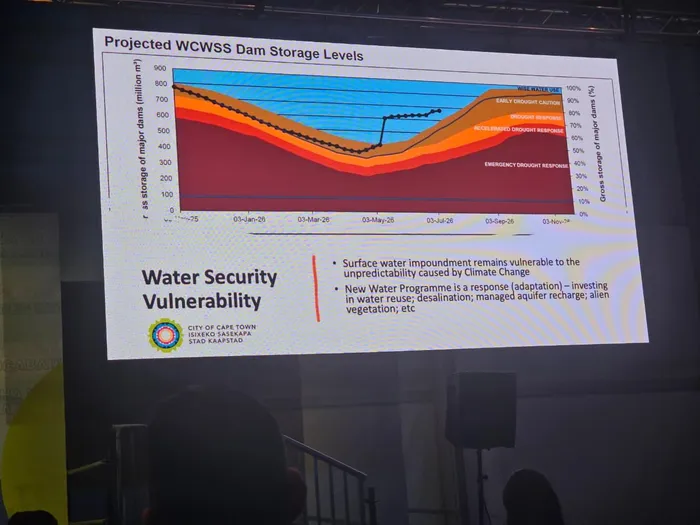
Manus said that there was one high-intensity rain event that Cape Town experienced this winter (in May), and the City would be in a “very different” situation with its water levels.
Image: Theolin Tembo
“It is a continuous struggle to keep our sewage system open. Now, if we have a systems thinking approach, then you realise that the sewage spill doesn’t happen in a vacuum.”
He said that a systems thinking approach would enable you to think about the environmental impact of the three Ps.
He added that “surely crime is not the responsibility of the Minister of Water and Sanitation, yet what prevents, most of the time, our colleagues from going into the areas to do their work and not be killed, robbed or threatened is crime”.
“We increased our budget by R40 million to allocate for law enforcement just to go with our colleagues to clean the sewage systems in the Cape Flats.”
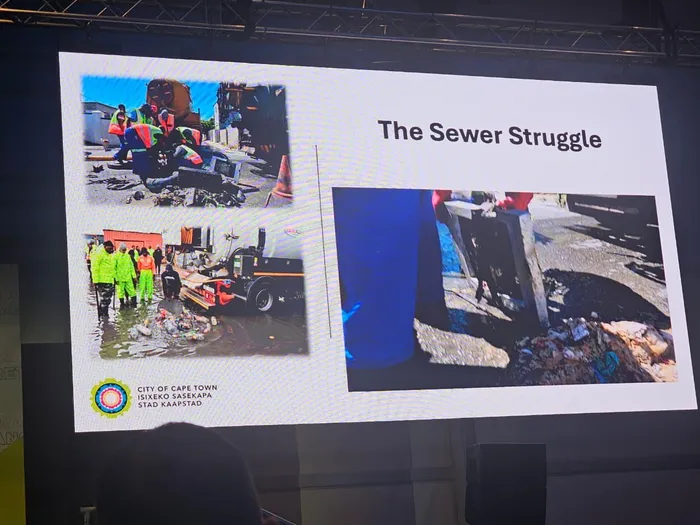
He explained, using an expression he claims came from his colleagues, that the sewage system is supposed to deal with three Ps - “pee, poo and paper”.
Image: Theolin Tembo
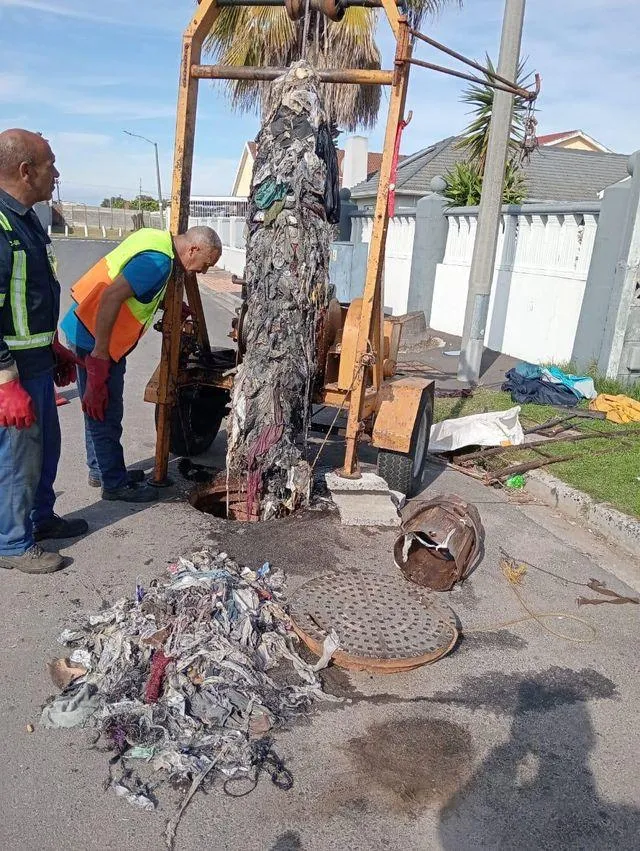
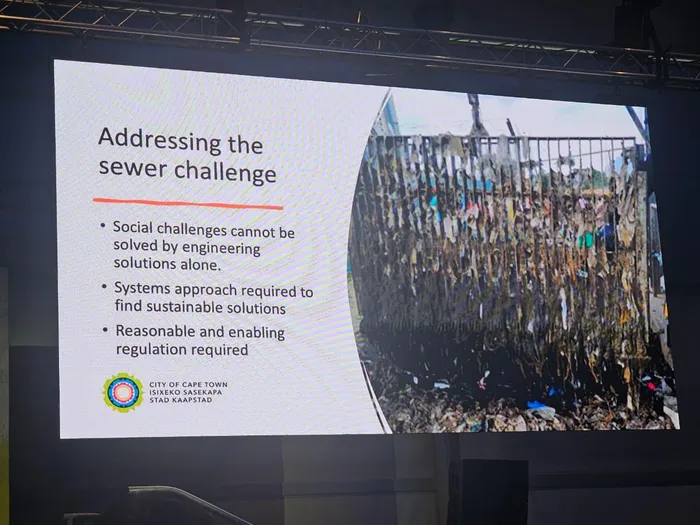
Manus explained that rags, cut in longitudinal shapes, end up clogging the screen, which catches items in the sewage system. Manus went out of his way to stress that he was not placing any blame on young girls, as the rags were a result of them not having sufficient access to sanitary products.
“We have found that this is being used by young girls for their menstruation cycles, because they cannot afford the sanitary pads.
“This sewage system that we are operating has never been designed to operate and manage this many rags.”
He explained, using an expression he claims came from his colleagues, that the sewage system is supposed to deal with three Ps - “pee, poo and paper”.
Image: Theolin Tembo
He said that as a result, these rags go into the pumps where “they burn the pumps, the pumps get out of order, and it spills,” or it gets through the pumps, it goes into the wastewater treatment (plant) and causes other damage to the systems.
He said that the causes of the problem are not being addressed, but that he was thankful to the colleagues, academics and civic organisations who came together to help come up with ways to manage the issues.
Manus added that it is not just going to depend on the City of Cape Town, but all municipalities and role-players to think in a systems-based approach to find sustainable solutions.
He added that some investments will have varying impacts, but that there should be investment plans so that companies, government and municipalities can invest in the right areas.