

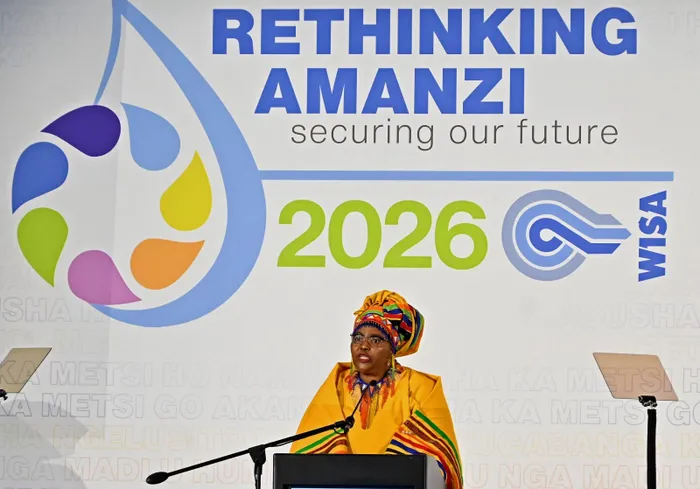
Minister of Water and Sanitation, Pemmy Majodina, delivered an opening address at the Water Institute of Southern Africa 2026 Biennial Conference & Exhibition, taking place at the Cape Town International Convention Centre in Cape Town.
Image: Bheki Radebe/ANA Studios
Minister of Water and Sanitation, Pemmy Majodina, was able to highlight the country’s water crisis, highlighting the need for better infrastructure and maintenance, and calling on public-private partnerships to help fund water investment.
More than 2000 professionals have gathered at the CTICC for a three-day flagship WISA 2026 Biennial Conference & Exhibition. Organised by the Water Institute of Southern Africa (WISA) until Friday, the conference brings together delegates from across the water sector.
This year’s event is taking place under the theme “Rethinking Amanzi – Securing Our Future”.
The conference programme opens on Wednesday with a welcome from the Chairperson of the WISA Organising Committee, Ian Palmer, followed by an address from the WISA Chief Executive Officer, Dr Lester Goldman, and the official opening by Majodina.
Newly-appointed deputy minister Dr Jack Bloom is also attending the conference, alongside Dr Sean Philips, Director-General of the Department of Water and Sanitation (DWS).
The technical programme features more than 80 sessions across specialist streams, workshops and high-level engagements, exploring issues including: microplastics, groundwater resilience and managed aquifer recharge, including the Cape Flats Aquifer, climate resilience, droughts, floods and alternative water services, water infrastructure renewal and more.
Majodina said that the timing of this conference is spot on, with 2026 having been declared by the United Nations as the year of water, and with President Cyril Ramaphosa declaring that South Africa has a water crisis.
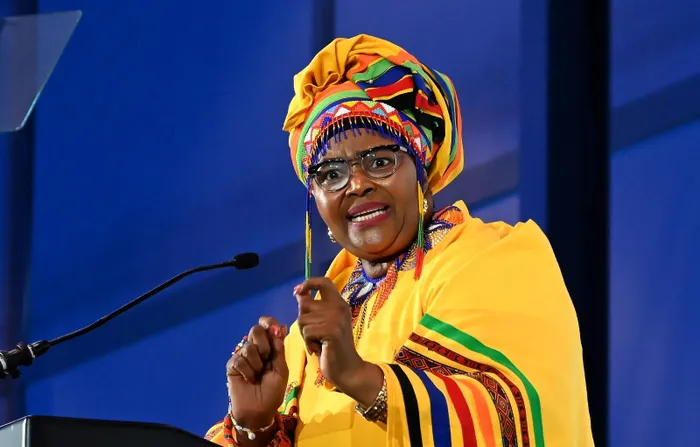
At the WISA 2026 Biennial Conference, Minister Pemmy Majodina addresses the critical state of South Africa's water infrastructure, urging collaborative efforts and investment to tackle the ongoing water crisis.
Image: BHEKI RADEBE / ANA Studio
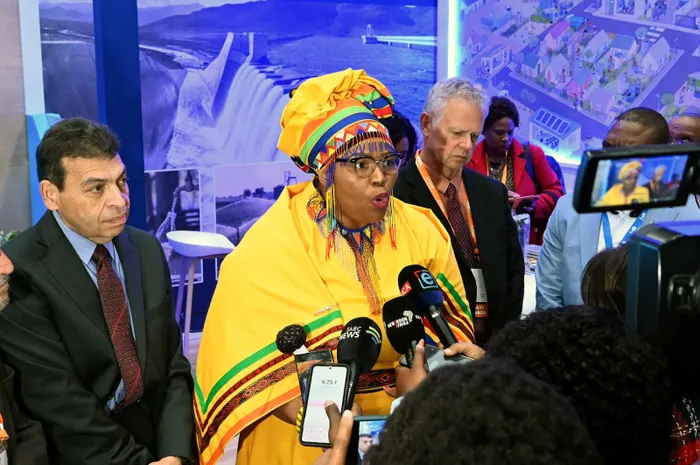
Minister Pemmy Majodina emphasises the urgent need for infrastructure upgrades and public-private partnerships in her address at the WISA 2026 Biennial Conference, as South Africa grapples with a severe water crisis.
Image: Bheki Radebe/ANA Studios
“That is an acknowledgement that we must move faster, better and smarter to ensure access to water and safe sanitation by all citizens. Over the next few days, this conference will interrogate some of the most pressing issues confronting the sector,” she said.
She said that the delegates will have to work together to examine new methodologies and technologies that help build climate resilience and resilient infrastructure.
“WISA has confidently demonstrated that sustainable water management requires a multi-disciplinary approach that brings together water scientists, economists, planners, environmental specialists, and social scientists collaborating.”
Majodina said that increasingly, we are facing challenges which cannot be solved by any single individual. “Water is everybody’s business. Water is partnership, water is us.”
She added that the theme therefore could not be more timely, because “when you rethink, you come up with new ideas, you rethink with the intention of changing what you have been doing, and improving on it”.
“You don’t rethink when all is well...Securing our water future reminds us that it will require more than additional infrastructure. It will demand new governance models, new financing mechanisms, new technologies and perhaps more importantly, a renewed commitment to collective action.
“Water is a catalyst for socio-economic development. Water cannot be replaced by anything. If water security is the destination, infrastructure remains one of the biggest hurdles. Yet infrastructure on its own cannot guarantee water security,” Majodina said.
She also touted the South African National Water Resources Infrastructure Agency (SANWRIA), “which creates a modern platform for planning, financing, developing, operating and maintaining major water resource assets with improved proficiency”.
She said that South Africa’s biggest infrastructure challenge is maintaining what we already have.
During a press briefing after her address, the minister said that by the time the conference ends on Friday, they want “to have clear commitments on how we are going to turn around the situation to ensure that this continent has water”.
She said that what comes out of this conference will help them build towards the 2026 United Nations Water Conference, co-hosted by the United Arab Emirates and Senegal, and convened in the UAE in December 2026. She said that South Africa will be championing water investment.
“We have made a name for ourselves. The delegates here are more than 2000. These are people who matter in the water sector. While we cannot work alone as a government, we need the private sector. The private sector is in massive attendance. The universities are also here. The researchers are also here, because we have to up our game in terms of research,” she said.
When asked about the challenges facing the country’s water supply, she said that water security is not an issue.
“We do have enough raw water. We are giving enough bulk water supply. However, the issue of reticulation and distribution - that's where the problem is. That is why the president has declared 2026 as the year of addressing the water crisis. The crisis is in the flow of that water from the tap.
“That is where the crisis is, and we need nothing less than R400 million to address that. But currently, the municipalities that are responsible for that don't have this money. Neither does the national government have this money. That is why we are reaching out to the public-private partnership to say, ‘Invest in water. Invest where your mouth is’, and the mouth of the private sector is in water.
“If we are to change the situation, we need proper investment in water. But also we do need the water service authorities; they must learn that they must ring-fence water sales,” she said.
“There are communities that are paying for water, but they get water disrupted time and again. They will be tired of paying, and those municipalities will collapse if they don't pay. So we have agreed in the Water Crisis Committee that a particular percentage is going to be ring-fenced.
“Hence, we are engaging the National Treasury, that as he releases this money, he must ensure that there's a percentage that is ring-fenced for reinvestment to the water sector.”