

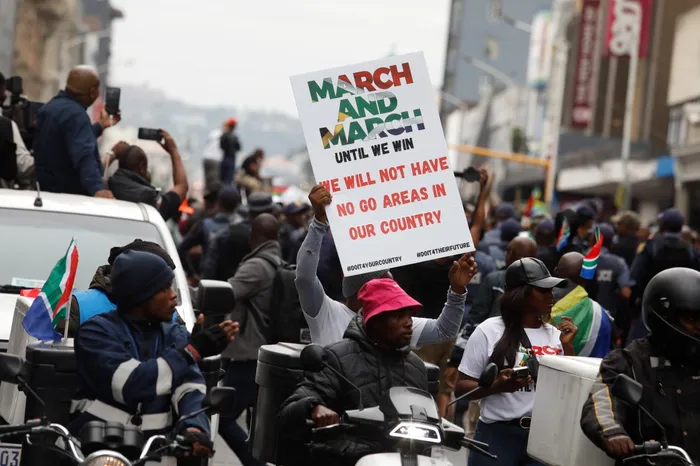
The IMC reiterates its unequivocal rejection of all forms of xenophobia, intimidation, vigilantism, violence and unlawful actions directed at foreign nationals, regardless of their immigration status.
Image: Doctor Ngcobo/ ANA Studio
The Inter-Ministerial Committee (IMC) on Migration says it has noted concerns raised by the Siyafana Sonke Action Campaign regarding the treatment of migrants and foreign nationals in South Africa.
The committee said the concerns include calls for stronger humanitarian support, greater protection for vulnerable people and clearer communication around repatriation processes.
Government said it welcomes constructive engagement with civil society and reaffirmed that migration management will continue to be guided by the Constitution, the rule of law, international obligations and the protection of human dignity.
It added that it remains committed to addressing humanitarian concerns while enforcing immigration laws in a lawful and orderly manner.
The IMC reiterated its rejection of xenophobia, intimidation, vigilantism, violence and all unlawful actions directed at foreign nationals, regardless of their immigration status.
It stressed that immigration enforcement, deportation and repatriation are the sole responsibility of the State and not private individuals or community groups.
Government warned that anyone involved in unlawful searches, harassment, intimidation, assault or the forced displacement of people would face legal consequences.
The committee acknowledged that many South Africans have legitimate concerns about irregular migration and said these would continue to be addressed through President Cyril Ramaphosa's Five-Point Plan on Migration Management, which focuses on stronger law enforcement, improved border security, migration system reforms, legislative changes and greater continental cooperation.
The IMC said humanitarian considerations remain central to government's migration response.
Through the Humanitarian Welfare and Social Sectors Workstream, national and provincial departments, municipalities, health authorities and humanitarian organisations have coordinated support for vulnerable foreign nationals affected by recent tensions.
According to government, assistance has included healthcare services, medical screening, food, water, sanitation, child protection services, support for women and other vulnerable groups, as well as coordination with embassies, consulates, faith-based organisations, NGOs and international partners.
Government also acknowledged concerns over displaced foreign nationals sleeping in open spaces and other unsuitable conditions.
It said South Africa has, in many cases, provided humanitarian and logistical assistance beyond what is ordinarily required under international repatriation arrangements, particularly where vulnerable people are involved or where receiving countries are still finalising logistics.
The IMC said misinformation surrounding repatriation has created confusion about South Africa's responsibilities.
It explained that repatriation is a voluntary process carried out in cooperation with the affected individual and their country of origin.
Government said South Africa's role includes identity verification, immigration compliance, security screening and facilitating lawful departure.
It said foreign governments and their diplomatic missions are primarily responsible for confirming nationality, issuing travel documents, arranging transport and receiving their citizens.
The committee added that delays in departures may result from administrative and logistical processes involving multiple stakeholders, including diplomatic missions, and should not be interpreted as a lack of commitment by South Africa.
Government thanked several African countries for working with South African authorities to facilitate the voluntary return of their citizens.
The IMC said previous updates had highlighted repatriation processes involving nationals from Malawi, Ghana, Nigeria, Mozambique and Zimbabwe, while engagements with other countries continue where necessary.
It said these efforts are being undertaken in the spirit of African solidarity and partnership, recognising that migration is a shared continental challenge requiring coordinated solutions.
The IMC said government remains committed to protecting everyone in South Africa from violence and intimidation, enforcing immigration laws fairly, working with foreign governments on orderly repatriation, providing humanitarian assistance where necessary and promoting social cohesion.
The committee also pledged to continue engaging with civil society organisations, including the Siyafana Sonke Action Campaign, as well as faith-based organisations, business, labour and community structures.
It said migration management and humanitarian protection are complementary objectives and that South Africa remains committed to pursuing both in a lawful, humane and constitutional manner.
IOL