

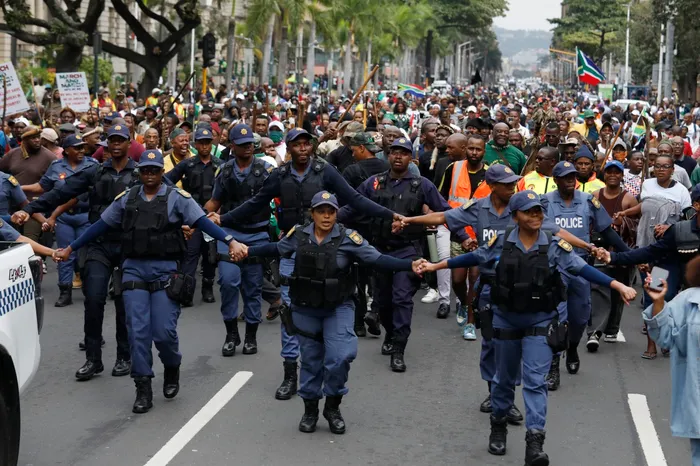
Reflecting on the lessons learned from the July 2021 unrest, South Africa's response to the June 30 protests showcases improved security measures and coordination among the government, law enforcement, and civil society, but challenges remain in addressing the root causes of instability.
Image: Doctor Ngcobo / ANAStudio
Five years ago, South Africa watched in horror as shopping centres burned, warehouses were emptied, trucks were torched, and entire communities were left to fend for themselves.
The July 2021 unrest claimed at least 354 lives, caused more than R50 billion in economic losses, and exposed deep failures in intelligence, policing, and government coordination.
Those memories resurfaced ahead of the nationwide anti-illegal immigration marches on June 30 as businesses tightened security, police reinforced potential hotspots, and many feared the country could once again descend into chaos. Those fears ultimately proved unfounded.
While there were isolated incidents of looting and public violence, South Africa avoided the widespread disorder that devastated KwaZulu-Natal and Gauteng five years earlier.
This outcome raises an important question: is this evidence that the state has become more capable, or did it simply manage this operation well?
Deputy National Commissioner for Policing and National Joint Operational and Intelligence Structure (NATJOINTS) Chairperson, Lieutenant-General Tebello Mosikili, said authorities spent weeks preparing for the demonstrations, identifying potential flashpoints, and deploying officers before protests began.
“Our law enforcement officers worked tirelessly throughout the night to ensure that peace, safety, and stability prevailed,” Mosikili said.
According to NATJOINTS, 120 marches took place nationwide, with 108 remaining peaceful. Police arrested more than 900 people on charges including looting, public violence, business robbery, and immigration-related offences after moving swiftly to contain isolated criminal activity.
For the business community, that outcome was a welcome contrast to the events of July 2021.
Road Freight Association Chief Executive Gavin Kelly said the logistics sector approached June 30 with fears of a repeat of the truck burnings, warehouse attacks, and widespread disruption that had crippled supply chains five years ago.
“It must be clearly stated upfront that the fear of a repetition of the July 2021 fiasco was foremost in the minds of most businesses,” Kelly said.
Yet, unlike in 2021, “we have not seen burning trucks, destroyed warehouses, local retailers being looted, and general wanton looting and destruction”.
Kelly credited stronger planning and cooperation between the police, private security companies, community organisations, and protest organisers for helping prevent a repeat of the devastation.
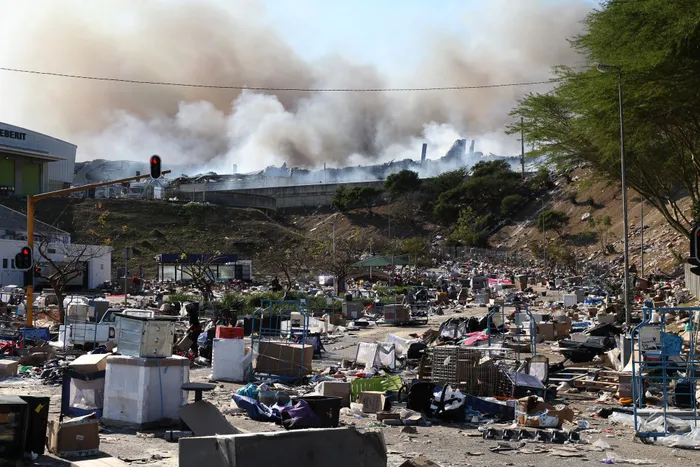
A warehouse in Durban was burnt and items looted during the July 2021 unrest.
Image: Doctor Ngcobo / Independent Newspapers
Institute for Security Studies police consultant David Bruce believes much of the difference from July 2021 lay in better operational planning and policing.
The response to the recent anti-immigrant mobilisation was led by the Acting Minister of Police, Firoz Cachalia, Bruce said. “The minister seems to have ensured that the SAPS and NATJOINTS were rigorous in collecting and assessing information to identify likely hotspots for protests and potential violence.”
Bruce said the police also appeared to have received the resources needed to sustain deployments where risks were greatest, while protest marshals appointed by organisers helped prevent crowds from descending into disorder.
If Bruce's assessment is that policing improved, governance specialist Professor Sandy Africa believes the bigger lesson lies in how the state coordinated its response.
“The state's response to the June 30 marches demonstrates that when there is a coordinated response across the government and in coordination with civil society, the state is more effective,” she said.
Africa said cooperation between the Ministries of Police, Justice and Constitutional Development, Home Affairs, Defence, and The Presidency gave the public confidence that the government was speaking with one voice.
“It also suggests that where the executive authorities provide strong leadership, communication to the public is clearer and more reassuring.”
She pointed to the work of the Inter-Ministerial Committee and NATJOINTS, saying executive oversight and operational coordination were among the clearest improvements since July 2021.
The machinery for operational coordination, specifically NATJOINTS, was clearly working very effectively, she said.
“The public received clear communication about their plans. They emphasised the right to protest but indicated that the law would be enforced.”
Africa said the highly visible deployment of police, with the South African National Defence Force on standby, showed contingency plans had been prepared well in advance.
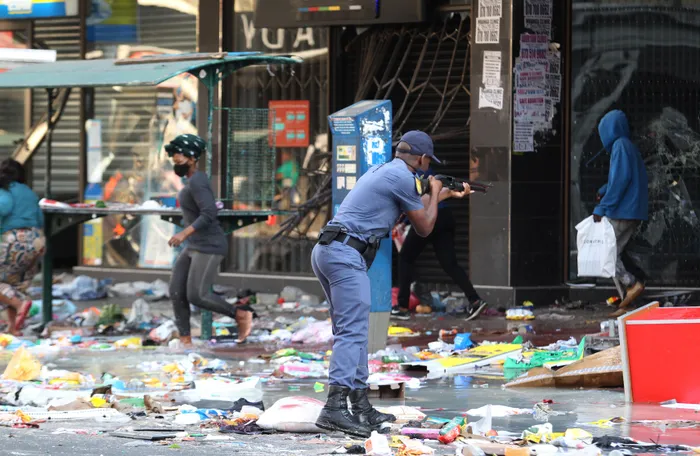
A police officer attempting to stop looting during the unrest that rocked KwaZulu Natal and Gauteng in July 2021.
Image: Doctor Ngcobo/ Independent Newspapers
She also credited the involvement of the private sector and community policing forums in strengthening the overall response.
Both Africa and Bruce, however, caution against interpreting June 30 as proof that South Africa has resolved the governance failures exposed five years ago.
“There are still serious problems within the police and in the Intelligence structures,” Africa said, pointing to evidence emerging from the Madlanga Commission of Inquiry and the Ad Hoc Committee.
“Long-term structural interventions will be required to address these,” she said.
Bruce was equally cautious. “I don't think there is evidence of significant reforms over the past five years.
“The SAPS has continued to stagnate. There was no rigorous process of analysing the response to the July unrest and learning lessons from this.”
He believed one of the few meaningful structural improvements has been the expansion of Public Order Policing units, but argued that political leadership, rather than institutional reform, made the greatest difference this time.
Africa said capable institutions remained just as important as effective political leadership.
“Effective, credible leadership is necessary across all levels of the state. But it is also important to build trust between the public and the institutions on the ground.”
She said this required properly resourced police stations and better support for officers serving communities every day.
The two experts also agree that June 30 was a very different challenge from July 2021. Bruce noted that the marches were planned in advance, allowing authorities to identify likely hotspots and deploy resources strategically.
The July unrest, by contrast, unfolded rapidly, combining political mobilisation, organised criminality, and opportunistic looting across several provinces.
Africa believed the state would respond more effectively because it had learned important lessons from June 30, but cautioned that no two crises are the same.
“I do think the state would respond more effectively, as they have had this experience as a 'dry run'. I do think that the lessons are being applied,” she said, adding that “each context is different”.
Africa said maintaining public order was only one part of managing a national crisis.
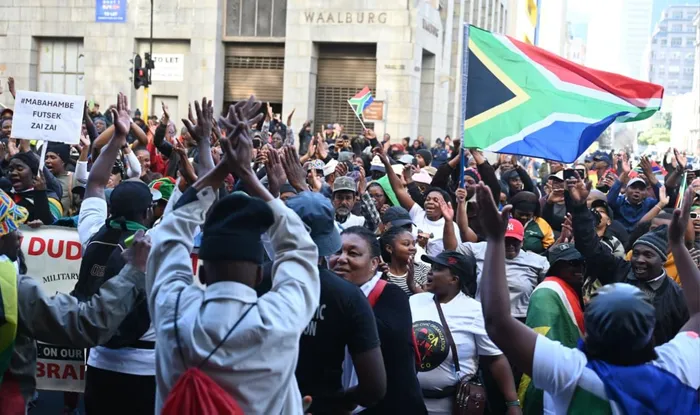
Members of March and March, Operation Dudula, LACO and supporters march through the Cape Town CBD on Tuesday, June 30, calling for stronger action against undocumented migrants and stricter enforcement of immigration and labour laws.
Image: Ayanda Ndamane / ANAStudio
The June 30 protests also exposed a humanitarian dimension, with thousands of migrants being internally displaced from communities where tensions flared.
She warned that a future crisis on a larger scale could leave even more people displaced, requiring a coordinated humanitarian response that extends beyond policing to include emergency shelter, food, healthcare, and other essential support.
“Whether we have the means to mount a major humanitarian response is something the state may need to work on,” she said.
For Africa, however, the biggest lesson extended beyond policing. “Prevention is better than cure,” she said. “But it is important that we don't rely on the security sector to resolve complex societal problems. The root causes of inequality and economic marginalisation must be addressed.”
Five years after the July 2021 unrest, the June 30 marches demonstrated that South Africa has become better at anticipating and managing a foreseeable security threat.
Stronger political leadership, earlier planning, and closer cooperation between the government, law enforcement, business, and civil society helped prevent isolated criminality from escalating into a national crisis. Whether those improvements would withstand another fast-moving, unpredictable emergency remains an open question.
For Bruce, the unanswered questions lie in policing and institutional reform. For Africa, they lie in governance, public trust, and the state's ability to address the social and economic conditions that fuel instability.
Both agree, however, that preventing another July 2021 will require far more than an effective security operation. It will depend on building a more capable state while tackling the inequality, unemployment, and marginalisation that continue to leave South Africa vulnerable to future unrest.
Have thoughts on this topic or other subjects you’d like us to explore? Want to share your experiences? Reach out to me at [email protected]