

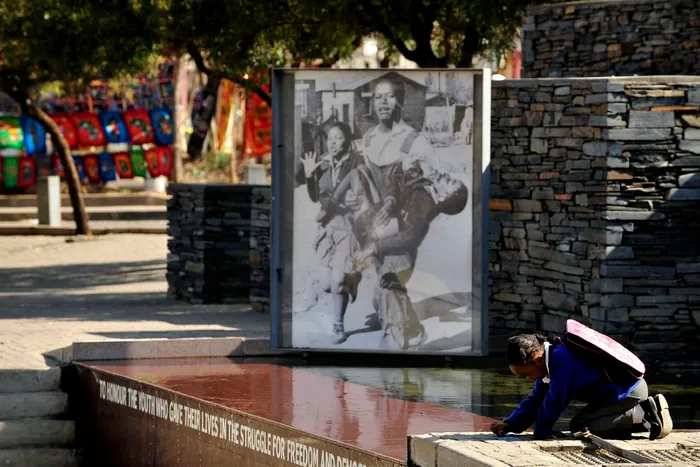
A child plays next to the 1976 picture at the Hector Pieterson Memorial in Soweto. Fifty years since the uprising, learners continue to face challenges, including water shortages and load shedding.
Image: Bongiwe Mchunu / Independent Newspapers Archives
The legacy of the June 16, 1976, Soweto uprising was that not only did the student revolt cause a ripple effect across South Africa, but it also left an indelible mark across the world, forcing it to sit up and recognise the injustices of apartheid.
June is observed annually as Youth Month, with June 16 commemorated as National Youth Day in honour of the role young people played in the liberation struggle. This year marks the Golden Jubilee of the Soweto uprising under the theme: “Reset@50 – The Future Calls”.
The uprising was rooted in the Bantu Education Act of 1953, which enforced an inferior education system for black South Africans, designed to prepare them only for labour and service roles in apartheid society.
In 1974, the government issued the Afrikaans Medium Decree, mandating that subjects like mathematics and social studies be taught in Afrikaans alongside English, a language largely unfamiliar to black students and associated with the apartheid regime. This policy was seen as a tool of oppression and sparked widespread resentment among students.
Speaking on what the international reaction was like, Department of Women, Youth and Persons with Disabilities spokesperson, Cassius Selala, said that most of the anti-apartheid political parties, non-governmental organisations (NGOs), countries and the United Nations strongly condemned the South African police’s actions in using maximum force that led to the massacre of the students.
The Soweto uprising remains a symbol of youth courage, resistance, and the fight for equality, education, and human rights in South Africa.
Image: Rowan Abrahams / ACMstudio
“Graphic images of police shooting students drew global condemnation, increasing pressure on the apartheid regime and strengthening support for anti-apartheid movements that took place around the world.
“The uprising is considered a pivotal moment in the struggle against apartheid, contributing to the eventual dismantling of the system in 1994. 16 June is now commemorated as National Youth Day in South Africa and internationally recognised as The Day of the African Child,” Selala said.
“On 16 June 1991, the Organisation of African Unity (OAU) initiated and celebrated this day as the Day of the African Child. This was to commemorate those unsung heroes who participated during the Soweto Youth Uprising in 1976, protesting against the low standard of education, Afrikaans as the teaching language, and demanding the right to be taught in their home language.
"The day was also aimed at promoting the awareness of the continuing demand for the advancement of education offered to African children,” Selela said.
“In December 1994, the Soweto Youth Uprising was officially renamed Youth Day, gazetted, and officially declared to be celebrated every year as a national public holiday in South Africa.”
Selela said that the uprising highlighted the importance of linguistic rights and educational justice, and it also exposed how language had been weaponised under apartheid to marginalise black South Africans.
Renowned anti-apartheid activist Reverend Dr Allan Boesak, who celebrated his 80th birthday earlier this year, was a 30-year-old graduating in the Netherlands with his PhD degree on 12 June 1976.
“I felt very good about myself, and was still in a jubilant mood. So you can imagine the shock that went through me when I saw what was happening at home.”
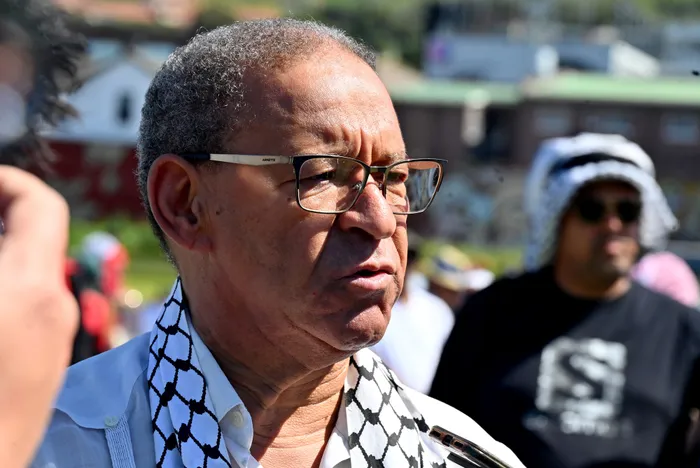
Renowned politician and anti-apartheid activist Reverend Professor Allan Boesak.
Image: File
He said that he had already announced to the university that he would be going home and bringing his family back with him to South Africa.
Boesak had already made a name for himself in government circles and had been going from town to town to preach and talking to the media because he learned to speak the Dutch language fairly quickly and fairly well.
Although he had been tempted to take up the position of being a pastor at a Dutch church, he ultimately knew that he didn’t want to stay.
“How could I stay in the Netherlands, safe with my family, whilst our children fight our fight for us for a better future, and they die on the streets. I have to be there (South Africa).”
Boesak said that up until 1960, the world had basically ignored the injustices of apartheid, but that Sharpeville began to open the eyes of churches.
“You will remember that, after Sharpeville, the World Council of Churches sent a delegation to come and talk to its member churches in South Africa as to what the church's reaction should be to this massacre. Then they wrote a report that became known as the Cottesloe Report.
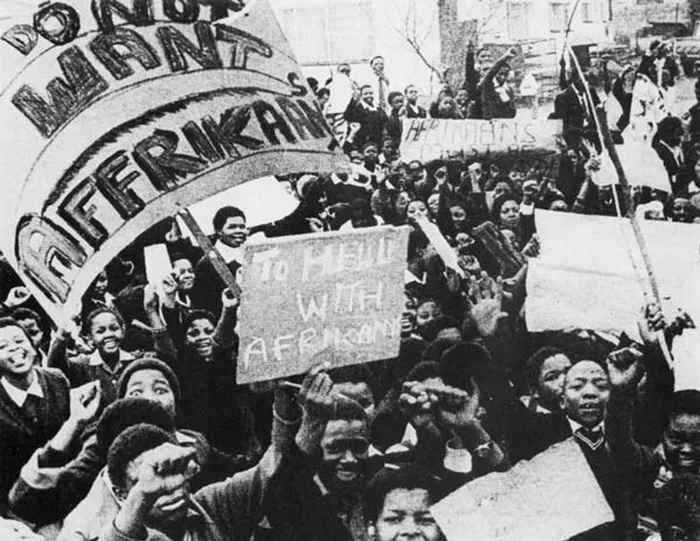
The brutal crackdown on Kathmandu’s youth mirrors the dark days of South Africa’s June 16 protests nearly 50 years ago.
Image: Independent Newspapers Archives
“As a result of this, Hendrik Verwoerd became so angry at the members of the White Dutch Reform Church, who were part of their delegation, and Beyers Naudé was one of those, that he totally condemned it, and the White Dutch Reform Church withdrew its name from ever having signed that.
“That's how serious that was, but it took much longer for governments to open their eyes.
“The only governments that really responded accurately and effectively were the governments of the Scandinavian countries. I'm talking about Sweden, Denmark, and Norway at that particular time,” Boesak said.
“Then, in 1976, however, when they were killing the children, I kept on referring to that moment, which opened even the eyes of the government; they began to understand, ‘we can no longer defend this’.”
“Soweto, the death of the children, and the ongoing resistance, even after so many hundreds were shot, and the resistance would not stop. That was what galvanised international opinion in the 1970s.
“By the time the UDF came around, we could build on an international awareness, but then we could sharpen very specifically international action in terms of boycotts and divestment and sanctions, which really came to a head in the 1980s,” Boesak said.
“I have no doubt in my mind that the moment of 1976 had brought about that kind of profound foundational change in the way in which the international community began to look at South Africa. It is very much the way in which Gaza is being seen, as having the beginning of this change that we now see in people's attitude, even in the Western world, against that murderous state they call the state of Israel.
“You cannot see a genocide happening in front of your very eyes, and then remain unmoved. You run out of excuses, you run out of justifications, because the blood of children always speaks louder than any justification or any argument.
“That is what happened after Soweto in 1976, in the international community, and that is what is happening right now,” Boesak said.
“Soweto was not so much a place. Soweto was a condition, and Soweto was that spark of the revolution that would take us from 1976 right through to the end of the 1980s.”