

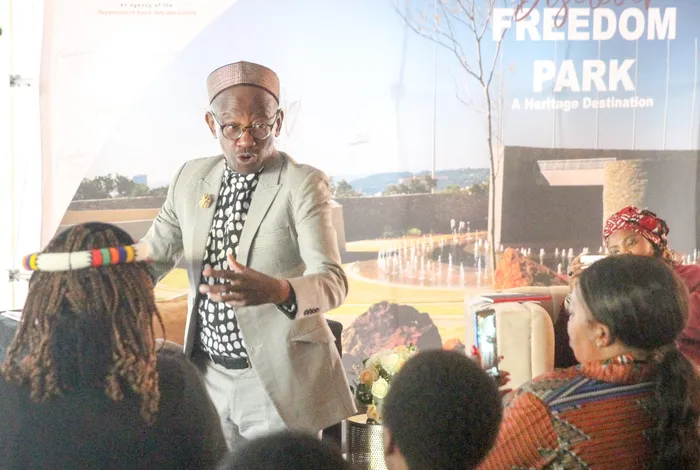
Seth Mazibuko, patron of the Seth Mazibuko Foundation, speaking at an intergenerational dialogue at Freedom Park.
Image: Jacques Naude/African News Agency (ANA)
Formally established in 2024, the Seth Mazibuko Foundation (SMF) is poised to honour a monumental milestone—the 50th commemoration of the June 16 Soweto uprising. The foundation, renowned for preserving and promoting the values and legacy of the pivotal 1976 protests, recently kicked off the celebratory events with a launch held at the historical Hector Pieterson Memorial in Orlando West, Soweto.
The memorial site serves as a poignant reminder of the courage displayed by students who in 1976, marched against the imposition of Afrikaans as a medium of instruction and who faced police brutality.
At the programme launch, the foundation's patron, Seth Mazibuko—who at the age of 14 became one of the youngest leaders of the student protests—expressed gratitude to his team of volunteers, including Busi Msimango, Mxolisi Phiri and Tracey Lee Miller. He noted that despite being a small team, their collective efforts have ensured that the SMF continues to operate effectively and capably.
"This team of young people working beside me has dedicated itself to the work of the foundation. What is even more amazing is that they have done this without a salary or a stipend," Mazibuko stated.
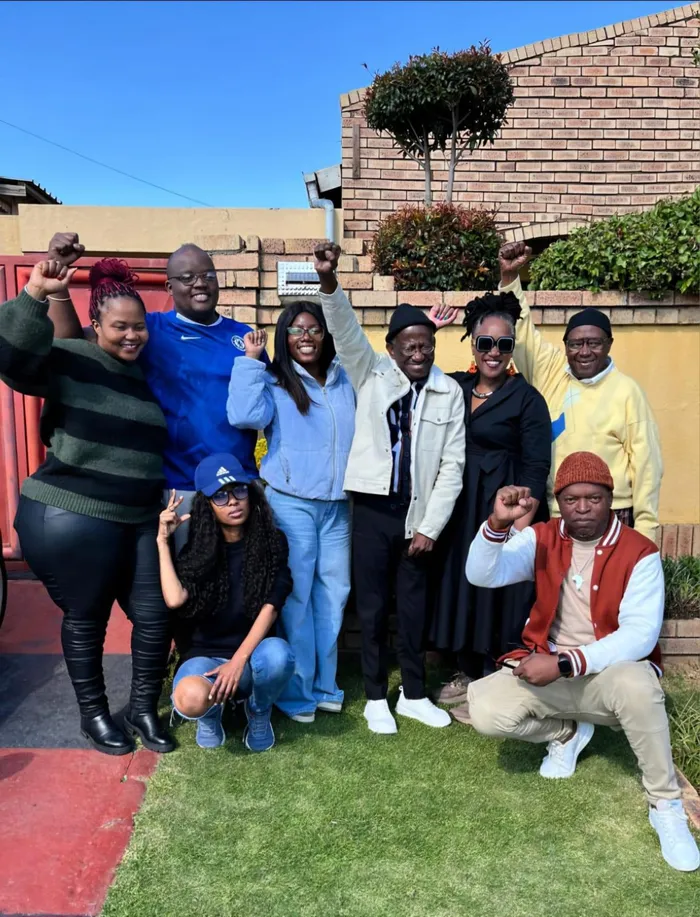
Members of the Seth Mazibuko Foundation come together ahead of the 50th anniversary of the June 16 Soweto student protests of 1976.
Image: Supplied
As the youngest member of the 1976 student action committee, Mazibuko has now entrusted the ongoing work of the foundation to a new generation of leaders, with campaign manager Tebogo Suping emerging as a prominent figure of social change.
Suping said that the foundation is a non-profit, non-partisan organisation founded on the lived experience of its patron.
Delving into the foundation's mission reveals its role as a "catalytic platform," which aims not only to host commemorative events but to spearhead meaningful frameworks for social change, specifically for the youth of South Africa.
This year's initiatives include intergenerational dialogues, to foster vibrant discussions between those involved in the uprisings of 1976 and the youth of 2026, with the dialogues culminating in a national Youth Manifesto, capturing the thoughts and aspirations of the youth.
50th anniversary of the June 16, 1976 Soweto uprisings.
Image: IOL
Suping said that the work of the foundation has been divided into several high-impact pillars designed to move beyond the "symbolic ceremony". Among this year's key programmes and projects are the intergenerational dialogues and the youth manifesto.
Additionally, the SMF is partnering with various heritage sites, including the National Heritage Council and the Robben Island Museum, to collect 50 oral histories that highlight the contributions of women and lesser-known activists during the 1976 uprising.
Suping notes that while funding remains an ongoing challenge, the foundation follows a broad coalition funding model. This approach draws support from multiple sources, ensuring the viability of key initiatives such as the digital archive, dialogues, and community-led fundraising efforts.
While funding continues to be an issue, Suping reveals that the foundation follows a broad coalition funding model, which is not reliant on a single source but is funded through strategic partnerships and institutional grants.
"There are organisations that raise their hands to fund-specific legacy pillars (e.g., the digital archive or dialogues, etc.). There is also public participation, small-scale donations, and community-led fundraising. While momentum is initially slow, we are beginning to see an increase in "multi-sectoral engagement" as the June 16, 2026, date approaches."
The foundation is also collaborating with organisations like the Tsietsi Mashinini Foundation to roll out the impactful #1976@50 campaign—underscoring the importance of this historic commemoration on the national stage.