

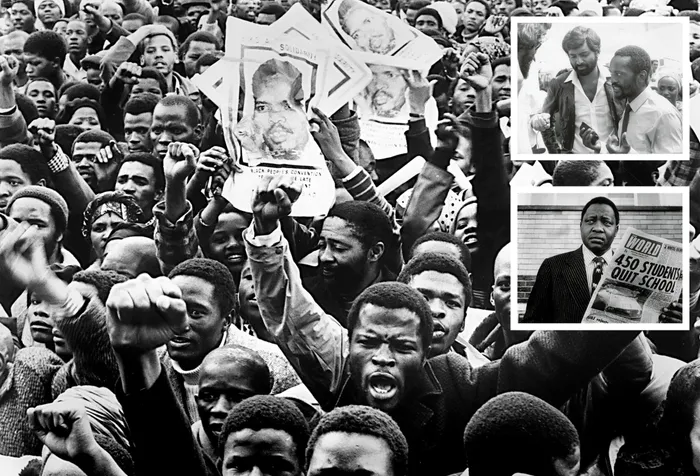
The BCM, founded by intellectuals like Steve Biko, championed the idea that self-worth is integral in the quest for liberation.
Image: Independent Media Archives
As South Africa prepares to commemorate the 50th anniversary of the Soweto uprising this June, the legacy of the Black Consciousness Movement (BCM) and the influence of Christian organisations in township schools emerge as vital cogs in the fight against apartheid.
This movement not only empowered the youth of the time but also set the stage for one of the most significant student-led protests in the nation's history.
When Afrikaans became compulsory as a medium of instruction in schools in 1974, the confluence of these two forces mobilised young South Africans who bravely stood against the oppressive system that sought to deny them their rights.
Students inspired by teachers of the time, belonging to the BCM, were initiated into fiery young activists through the formation of the South African Students Organisation (SASO) in 1968, crystallising what would become the biggest student-led uprisings, just eight years later.
Seth Mazibuko, one of the prominent student leaders of the time, reveals that Naledi High School and Morris Isaacson High School were two of the main schools with the strongest BCM proponents.
Of course, many other schools followed the lead of these. These included Phefeni Junior Secondary and Orlando High School, among many others.
At 15, Mazibuko, the Soweto-based student activist, was the youngest member of SASO, which was instrumental in planning the Soweto uprising. Following his arrest in July of the same year, Mazibuko and four others spent 18 months in Number Four at the Fort Prison in Braamfontein before being charged, tried, and sent to Robben Island.
South Africa gears up to mark the 50th anniversary of the Soweto uprising this June.
Image: Rowan Abrahams / ACMstudio
Reflecting on those formative years, Mazibuko notes that without the BCM, the fervent protests might never have taken root.
"And let me again mention this: Christianity played a role, and I say June 16 is a baby of the Black Consciousness Movement (BCM). If there were no BCM, I doubt that there was ever going to be a June 16," asserts Mazibuko, highlighting the inherent connection between the BCM's philosophy and the students' courage.
Mazibuko and many other young people would meet, mostly on Sundays after church, where the biggest elephant in the room would be the main subject in the coded language of the church and the BCM principles.
For Mazibuko and his peers, faith was intertwined with activism. He recalls an innovative way to mask the intensity of their meetings: instead of rallying cries of "Amandla!" ("Power!"). They would instead chant "Amen", a clever camouflage that allowed them to discuss critical subjects without drawing undue suspicion.
"The interesting part is that I was a Christian student leader. That time it was called SCM (Student Christian Movement). Now, the interesting part is that because we are scared of the police and all those things, you know, you would get into a meeting, instead of saying, 'Amandla!', you’d say, 'Amen'," Mazibuko remembers with a chuckle on his face.
Moreover, the role of youth clubs such as Teenage Outreach and the Student Christian Movement, and many other church formations, cannot be overlooked.
These organisations brought together young activists, nurturing their leadership potential and facilitating discussions on pressing community issues. Mazibuko recalls the vibrant energy of these clubs, which were catalysts for forging resilient bonds among themselves, ultimately fuelling the passion that would prop up the June 16 protests.
"And, of course, many of the songs that were sung there or in 1976 were most of them songs that were in somewhat or some way, um, Christian-based songs. And I always say another thing that made us leaders even at a tender age, and get into positions of leadership? It was Christianity and the way youth clubs in those years were," he adds.
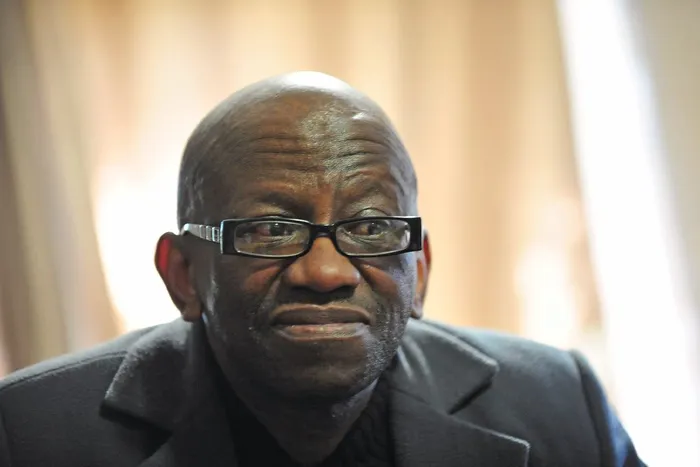
Ahead of the 50th anniversary of the Soweto uprising, former student and political prisoner incarcerated on Robben Island, Seth Mazibuko, speaks on the influences of BCM and the church in the build-up to the student -ed protest in 1976.
Image: Dumisani Sibeko / Independent Newspapers Archives
As the uprising expanded beyond Soweto to other parts of the province and the rest of South Africa, the community forged stronger alliances.
Parents and community leaders banded together, forming the Committee of Ten under the Black Parents Association (PCM), comprising respected figures like Dr Nthato Harrison Motlana, Winnie Madikizela-Mandela, and Ellen Kate Kuzwayo. This collective effort took the form of a liaison group that connected students and authorities.
Mazibuko says while the current generation of young people has championed the struggle for free tertiary education through the #FeesMustFall protests, there is more that needs to be done in order to realise a truly liberated South Africa.
"What we are missing in the current generation of young people is community orientation and the spirit of urgency. The June 16 generation of young people achieved what they did through action and not executive positions," remarks Mazibuko.