

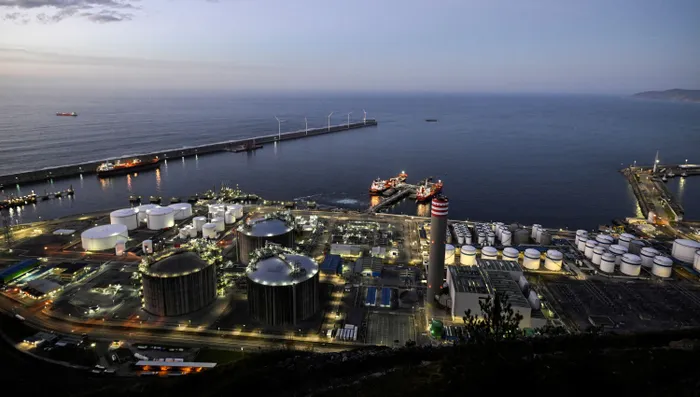
Financial markets entered the week cautiously after renewed conflict in the Middle East revived concerns over oil supplies, inflation and global interest rates.
Image: Ander Gillenea / AFP
Financial markets started the week on a cautious footing after renewed military strikes between the United States and Iran over the weekend revived concerns about oil supplies, inflation and interest rates.
United States futures traded lower on Monday morning following Friday's gains on Wall Street, while Asian markets weakened as investors assessed the latest developments in the Middle East.
Brent crude climbed about 4% to around $79 a barrel amid renewed concerns over the Strait of Hormuz, one of the world's most important oil shipping routes.
Despite the renewed geopolitical uncertainty, the rand remained relatively resilient, trading at R16.39 against the US dollar.
Neil Wilson, Saxo UK Investor Strategist, said the latest military exchanges suggested geopolitical risks would continue to support higher oil prices.
"Oil prices jumped as the US and Iran exchanged military strikes over the weekend, in a sharp escalation since Friday night. It points to a floor under oil prices for some time as geopolitical risk premia is baked in with Iran seemingly in no mood to back down over a couple of key points, control of the Strait of Hormuz and its nuclear programme," Wilson said.
He added that while a full scale military conflict remained unlikely, continued exchanges between the two countries would probably keep oil prices elevated.
"These tit for tat exchanges mean it is higher for longer, even if we are not back to the kind of peaks we saw earlier in the year."
He noted that European stock markets weakened in early Monday trade, although energy companies benefited from higher crude prices.
"European stock markets slipped in early trade Monday but the FTSE 100 is holding water thanks to Shell and BP gaining with oil prices, while housebuilders have bounced a bit after a very tough period. US futures are lower after Wall Street closed higher on Friday. Gold is lower and the US dollar is firmer."
The renewed jump in oil prices has also sharpened the focus on inflation and monetary policy ahead of several key events this week, including new Federal Reserve Chair Kevin Warsh's testimony before Congress and the release of United States inflation data.
"Higher oil prices puts the focus on inflation and rates," Wilson said.
He said investors would closely monitor this week's consumer inflation figures ahead of the Federal Reserve's policy meeting later this month.
"Even if the June reading ticks down the re escalation of tensions in the Middle East in recent days underscores the inflation risks moving towards the upside and expectations becoming entrenched at a higher level."
Wilson added that financial markets were not currently pricing in another United States interest rate increase this month.
"The market is not ready for a rate hike this month and one following at the September meeting, which I view as increasingly likely."
Beyond geopolitics, Wilson said investors were also becoming more cautious about lofty valuations across artificial intelligence related shares.
"The adoption of AI and return on investment is arguably looking slower than expectations driving stock prices indicated."
He pointed to sharp declines in several semiconductor companies despite continued strength in Taiwan Semiconductor Manufacturing Company's revenue growth.
"Semis and associated AI bets will struggle to lead the market and see it ride out geopolitical, inflation and rates shocks."
Locally, Friday's trading session reflected stronger investor confidence before the latest weekend developments unfolded.
According to Anchor Capital, the JSE All Share Index climbed 2.5% to close at 113 835.40, marking its strongest single day performance in several weeks as technology, banking, platinum mining and property shares rallied.
Technology counters led gains, with Naspers rising 6.4%, Prosus gaining 5.8% and Datatec advancing 3.4%. Banking shares also strengthened, with Standard Bank climbing 4.8%, FirstRand gaining 4.1%, Absa rising 3.6% and Nedbank adding 3.3%.
Real estate stocks benefited from lower bond yields, with Growthpoint, Redefine Properties, Fortress REIT and Hyprop all posting solid gains.
Anchor Capital said South Africa's 10 year government bond yield fell to 8.19%, its lowest level since before the Iran conflict began, supported by optimism around easing United States inflation and the South African Reserve Bank's recent interest rate cut.
Internationally, Wall Street also ended last week higher as earnings season gathered momentum. The S&P 500 rose 0.6%, the Nasdaq gained 0.8% and the Dow Jones Industrial Average added 0.4%.
UnitedHealth Group surged 8.7% after reporting stronger than expected quarterly earnings, while BlackRock announced record assets under management of $12.10 trillion.
Investors will also be watching developments in ceasefire negotiations after reports that United States and Iranian diplomats resumed discussions over the weekend, raising hopes that last week's escalation could still be contained.
For now, however, oil prices, inflation expectations and geopolitical headlines are expected to remain the primary drivers of global market sentiment.
Follow Business Report on Facebook, X and on LinkedIn for the latest Business and tech news.