

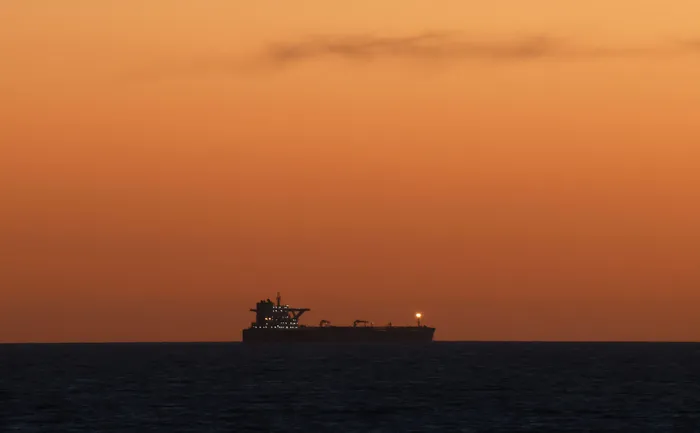
First tankers reportedly exit US blockade in the Strait of Hormuz ahead of US-Iran talks. A sweeping memorandum between the US and Iran could end months of conflict, reopen critical shipping routes and pave the way for hundreds of billions of dollars in economic investment.
Image: Mario Tama / Getty Images via AFP
A landmark Memorandum of Understanding between the United States and Iran has raised hopes of a lasting end to hostilities in the Middle East while setting the stage for the reopening of one of the world's most important energy corridors, the Strait of Hormuz.
The agreement, signed on 18 June, outlines a broad framework for ending military operations, lifting sanctions, restoring maritime trade and advancing economic reconstruction efforts that could reshape global energy markets and ease inflationary pressures worldwide.
Under the agreement, both countries committed to an "immediate and permanent cessation of military operations on all fronts" and pledged not to initiate future military action against one another.
The memorandum also commits both nations to respecting each other's sovereignty and territorial integrity while undertaking negotiations aimed at reaching a final agreement within 60 days.
One of the most closely watched aspects of the agreement relates to the Strait of Hormuz, a strategic shipping route through which a significant portion of the world's oil and gas supplies pass.
The memorandum states that the United States will begin lifting its naval blockade and end all obstruction of Iranian maritime activity, with the blockade to be fully terminated within 30 days.
At the same time, Iran has committed to facilitating safe passage for merchant vessels between the Persian Gulf and the Sea of Oman.
"The Islamic Republic of Iran shall make arrangements to the best of its ability to provide safe passage for merchant vessels, free of charge, from the Persian Gulf to the Sea of Oman and vice versa for a period of 60 days only," the memorandum stated.
The agreement further notes that merchant vessel traffic will commence immediately and be progressively restored over the next month, subject to mine clearance operations and the removal of military obstacles.
For global markets, the potential reopening of the Strait of Hormuz could provide much needed relief after months of disruption that contributed to elevated oil prices and renewed inflation concerns.
The memorandum also contains significant economic provisions.
The United States committed to developing, together with regional partners, a reconstruction and development programme for Iran worth at least $300 billion.
"The United States of America commits to developing, with its regional partners, a definitive and mutually agreed upon programme for the economic reconstruction and development of the Islamic Republic of Iran, providing at least $300bn," the document states.
The programme's implementation framework will be finalised as part of the final agreement negotiations.
Another major development is the commitment by the United States to end sanctions against Iran.
According to the memorandum, Washington agreed to terminate all forms of sanctions, including United Nations Security Council measures, International Atomic Energy Agency resolutions and unilateral American sanctions under a timetable to be negotiated as part of the final agreement.
The prospect of sanctions relief is expected to significantly increase Iran's participation in global trade and energy markets over time.
The agreement also addresses one of the most contentious issues in US Iran relations, namely Iran's nuclear programme.
Iran reaffirmed its commitment not to produce or acquire nuclear weapons and agreed to work with the United States and the International Atomic Energy Agency on resolving the status of its stockpiled enriched nuclear material.
"The Islamic Republic of Iran reaffirms that it will not produce or acquire nuclear weapons," the memorandum states.
The two countries agreed to discuss enrichment activities and Iran's broader nuclear requirements within a mutually acceptable framework to be finalised in the comprehensive agreement.
While many details remain subject to further negotiation, the memorandum represents one of the most significant diplomatic breakthroughs between the two countries in decades.
For investors, policymakers and businesses, attention will now turn to the implementation of the agreement, the restoration of shipping activity through the Strait of Hormuz and the pace at which Iranian oil exports and broader economic activity can return to global markets.
Should the agreement hold, analysts expect it could reduce geopolitical risk premiums in energy markets, support global economic growth and ease some of the inflationary pressures that have weighed on economies around the world in recent months.
Follow Business Report on Facebook, X and on LinkedIn for the latest Business and tech news.