

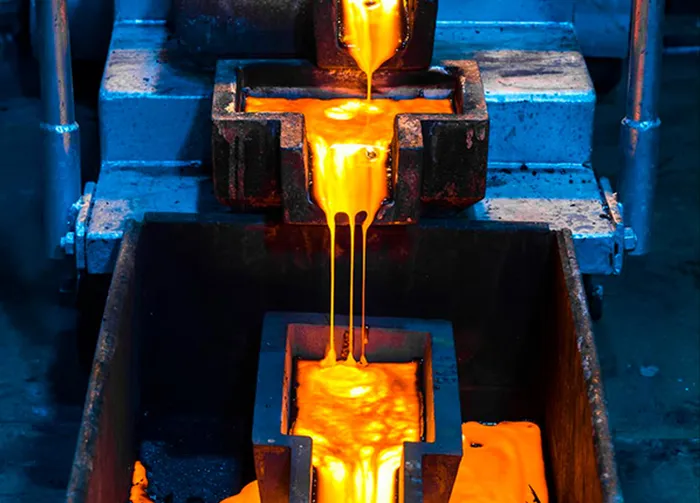
The combination of falling oil prices, a stronger rand and elevated gold prices has created a complex backdrop for investors as markets assess the economic implications of the US and Iran peace deal.
Image: Supplied
Gold prices remained firmly above $4,300 an ounce on Wednesday, defying expectations of a sharp retreat following the announcement of a peace agreement between the United States and Iran, as investors continued to seek protection against inflation and economic uncertainty.
The precious metal traded at $4,332.56 an ounce in early trading after gaining 0.5% on Tuesday, according to market data from Anchor Capital.
The resilience in gold prices comes despite a broad shift towards risk assets following the easing of tensions in the Middle East.
The improved sentiment helped propel the JSE All Share Index 2.5% higher on Monday to close at 115,556.20, marking its strongest close since the conflict related risk premium emerged during the Iran war.
South African gold mining counters were among the biggest beneficiaries of the market rally. Harmony Gold surged 11.2%, while Gold Fields gained 9.2% and Sibanye Stillwater advanced 8.9%.
The strong performance of gold producers reflected the continued attractiveness of bullion prices, even as investors welcomed signs of peace in one of the world's most strategically important oil producing regions.
Anchor Capital noted that gold rose as expectations for additional interest rate increases eased, helping sustain demand for the precious metal despite improving risk appetite across global financial markets.
The market reaction followed the announcement of a memorandum of understanding between Washington and Tehran, which is expected to culminate in a formal agreement later this week and ultimately lead to the reopening of the Strait of Hormuz.
The development has already had a significant impact on energy markets.
Brent crude oil fell 5.1% to $78.96 a barrel on Tuesday, dropping below the $80 mark for the first time since early March as traders removed much of the geopolitical risk premium that had supported prices during the conflict.
Bianca Botes, Managing Director at Citadel Global, said markets continued to embrace a more optimistic outlook following the agreement.
"The risk on mood continues following the memorandum of understanding between Iran and the United States," Botes said.
She noted that Brent crude had now fallen below $80 per barrel as markets looked ahead to Friday's expected signing of the agreement that would pave the way for the full reopening of the Strait of Hormuz.
While lower oil prices have reduced some inflation concerns, gold has retained its appeal as investors remain cautious about the broader economic outlook and await guidance from the US Federal Reserve.
"Gold clawed back ground, but gains were capped by today's Fed rate announcement. It is trading at $4,332 an ounce," Botes said.
Investors are closely watching the Federal Reserve, where Chair Kevin Warsh is expected to announce his first interest rate decision since taking over the leadership of the central bank.
The outcome could provide important clues about the future direction of US monetary policy and the outlook for precious metals.
Gold traditionally performs well during periods of economic uncertainty, inflation concerns and lower interest rate expectations. Although the prospect of peace in the Middle East has reduced immediate geopolitical risks, investors remain focused on inflation trends, global growth prospects and central bank policy decisions.
The stronger gold price environment has also provided support for South Africa's resource heavy market, with platinum producers joining gold miners in leading gains on the JSE. Impala Platinum rose 11%, Valterra Platinum climbed 9.7% and Northam Platinum added 8.6%.
Meanwhile, the rand strengthened alongside improving investor sentiment, trading at around R16.19 against the US dollar on Wednesday morning.
With gold continuing to hold above the psychologically important $4,300 level, analysts believe the precious metal remains well supported by a combination of economic uncertainty, inflation concerns and expectations that global interest rates could eventually begin easing.
For South Africa's gold mining sector, the combination of elevated bullion prices and renewed investor confidence has provided a significant boost, reinforcing the industry's importance to the country's market performance and export earnings.
Follow Business Report on Facebook, X and on LinkedIn for the latest Business and tech news.