

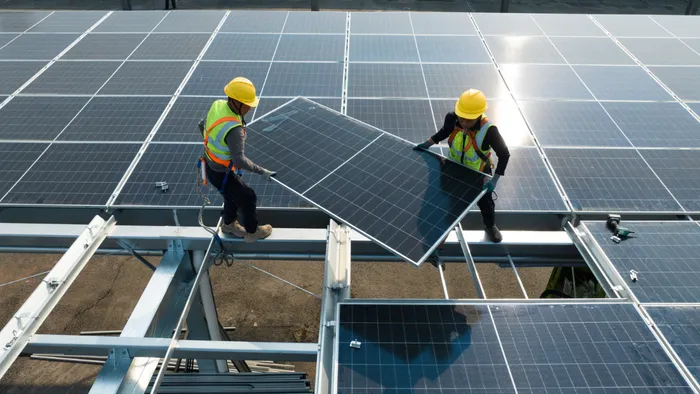
As South Africa grapples with increasing energy costs amid evolving supply chain dynamics, procurement leaders must rethink strategies to ensure resilience and operational stability, including investing in renewable energy systems.
Image: Supplied
Despite a notable reduction in loadshedding, South Africans are grappling with escalating energy costs that are placing additional strain on businesses already facing high operating expenses. In March 2026, the National Energy Regulator of South Africa (NERSA) approved substantial electricity tariff increases: 8.76% for Eskom direct customers and 9.01% for municipal customers for the 2026/27 financial year. This trend is forcing procurement and supply chain leaders to navigate a new landscape of energy challenges that goes beyond merely coping with power outages.
Paul Vos, Regional Managing Director of the Chartered Institute of Procurement & Supply (CIPS) Southern Africa, says the era of energy uncertainty has morphed rather than vanished. "Today, organisations are increasingly dealing with infrastructure failures, maintenance backlogs and localised network disruptions, particularly at municipal level, that are often less predictable than loadshedding itself. From a supply chain perspective, unpredictability creates significant operational risk," he says.
As these dynamics unfold, the impact reverberates across supplier networks. The increase in electricity tariffs is occurring against a backdrop of soaring fuel costs, amplifying the pressure on transport and logistics functions, as well as backup generation services. Vos elaborates, "This creates a double cost pressure. Suppliers are facing higher energy costs and higher logistics costs simultaneously. As a result, procurement teams are seeing greater pricing volatility, more requests for contract adjustments, and increased pressure on budgets."
Industries that are most susceptible to these challenges include heavy manufacturing, food production, cold-chain logistics, mining, chemicals, and other sectors reliant on energy-intensive processes that uphold essential goods supply chains. While many manufacturers have sought to absorb some of these increased costs through operational efficiencies, there are limits. "We continue to see gradual price increases across a range of products and services. Ultimately, a significant portion of energy-related cost escalation finds its way to customers and consumers," Vos notes.
Faced with these pressures, businesses are adopting more forward-thinking procurement strategies that focus on resilience rather than merely cost-cutting. Implementing measures such as supplier diversification, nearshoring, regional sourcing, and robust scenario planning is becoming more commonplace. Vos argues, "Procurement is shifting from a transactional function to a resilience enabler. Energy risk is increasingly being built into supplier selection and sourcing decisions, alongside traditional supplier evaluation criteria such as quality, delivery, and price."
Moreover, the drive towards renewable energy solutions is gaining momentum as entities seek to mitigate their dependence on conventional energy sources. Many organisations are now exploring power purchase agreements (PPAs), deploying embedded solar generation, investing in battery storage, and adopting hybrid energy models to enhance long-term cost predictability. "The conversation around renewable energy has changed. For many organisations, it's no longer primarily a sustainability initiative; it is now a business continuity and resilience strategy," argues Vos.
In tandem with these shifts, effective contract management is gaining importance as procurement contracts must evolve to address a more volatile environment. Vos emphasises the need for mechanisms such as energy-linked escalation clauses and risk-sharing provisions to foster transparency and collaborative risk management throughout the supply chain. "The objective is to ensure that risk is allocated fairly and managed transparently across the supply chain," he explains.
Looking towards the future, CIPS Southern Africa advises procurement leaders to fully acknowledge energy insecurity as a strategic business issue rather than just an operational concern. Immediate priorities involve conducting energy-risk assessments across supplier networks and enhancing engagement with suppliers. Over the long term, organisations will need to integrate energy risk into category strategies, cultivate stronger supplier partnerships, and align procurement practices with broader energy transition goals.
"Energy is no longer simply a facilities issue; it has become a core supply chain risk that requires co-ordinated leadership across procurement, finance, and operations," Vos concludes. As South Africa’s energy landscape continues to evolve, organisations positioned to embed resilience into their procurement strategies and operational frameworks will be better poised for sustained success.
IOS