

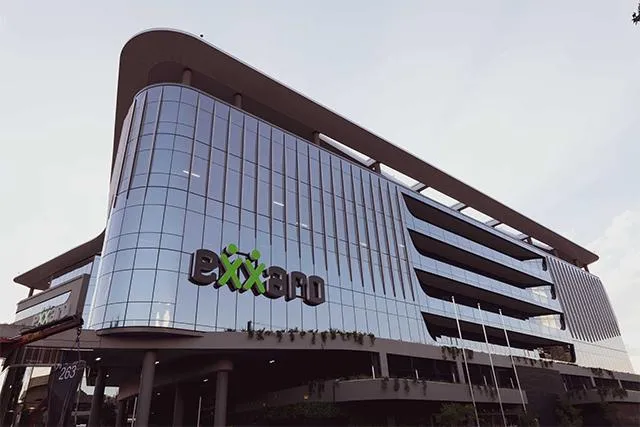
Exxaro resources said domestic coal demand has remained resilient in the six months to June 30, 2026, supported by stable offtake performance. This was attributed to proactive marketing strategies and effective customer relationship management during a period of heightened uncertainty, he said.
Image: Supplied
Exxaro Resources has marked higher coal production in its first half amid higher prices, this year's R5.5 billion manganese acquisition Tshipi Borwa Mine is operating well, but the group continues to face rail transport challenges.
The company’s financial director, Riaan Koppeschaar, shared these insights during an update to shareholders, highlighting both achievements and ongoing challenges.
Koppeschaar reported they anticipate a 10% increase in total coal production and a 6% rise in sales volumes for the six months to June 30, 2026.
The average benchmark API4 Richards Bay Coal Terminal (RBCT) export price also showed a rise, expected to average $105 per ton, an increase from $92 per ton in the first half of 2025. This reflects a responsiveness to the global market’s shifts, despite continuing logistical challenges.
Koppeschaar elaborated on the performance of Transnet Freight Rail (TFR), stating that it moved 25.25 million tons of coal to the Richards Bay Coal Terminal between January and May. This marked a 7% annual improvement, showcasing an enhanced rail system.
He acknowledged, however, that the Grootegeluk direct rail flow faced execution challenges, averaging only 3 to 4 trains per week against the contractual target of 11 trains.
To counter these logistical hurdles, Exxaro has engaged in multimodal logistics solutions, seeking partnerships with TFR. Exxaro is also turning its focus towards improving logistics for its Tshipi manganese mine, which it acquired earlier this year for about R5.5bn, including a 19.99% stake in Jupiter Mines.
With this acquisition, Exxaro now claims significant stakes in several manganese assets, establishing itself as the fourth-largest global producer, said Johan Meyer, executive head of the group’s Metals division. He spoke at a Capital Markets Day for investors on Monday.
Operational sustainability at Tshipi is a priority, with plans aimed at increasing production efficiency from its current capacity of 3.5 million tons per year.
Meyer said they hope to bring logistical and marketing benefits to he mine, which has a robust life-of-mine estimate of at least 25 years.
These, and the fact that most other global producers are underground miners versus Tshipi's long term sustainable, and lower cost, open pit operations. would help to secure Exxaro's competitive edge in a market where 80% of global manganese is redirected towards steel production, primarily in China. India demand was also growing well, also for coal, providing some long-term demand diversification,
South Africa boasts about 80% of the world's manganese reserves but produces only about 42% of annual global production.
Some 80% of global manganese production is being used in steel and stainless-steel production. Manganese was also increasingly being used in battery manufacture for renewable energy applications.
The broader economic landscape adds a layer of complexity to Exxaro's operations. Koppeschaar said commodity markets had responded to geopolitical tensions, particularly the ongoing Iran-US conflict, influencing global supply and demand dynamics. He forecasted a slowdown in global real GDP growth to 2.2% in 2026, down from 2.9% in 2025, with implications for the coal and manganese markets.
Exxaro's coal operations are showing resilience. Improved production figures, particularly from Grootegeluk, have been driven by favourable weather and power station demand, while metallurgical coal production anticipates a marked increase of 41% due to export demand. Capital expenditure in the coal segment is poised for a 69% rise as Exxaro invests in sustaining and improving its operations.
The renewable energy arm of Exxaro, Cennergi generated 329GWh of electricity in the first half of 2026. Their new Lephalale Solar Project has also commenced operations, reinforcing the group's commitment to diversifying its energy portfolio amidst ongoing commodity price volatility.
As Exxaro enters the second half of 2026, maintaining productive engagements with Transnet and strategically navigating logistical and market challenges will be pivotal in unlocking further capacity and achieving sustainable volume growth. Despite facing a volatile global energy landscape,
Exxaro is well-positioned to adapt and thrive in the coming months, shoring up its operational strategies for future resilience and growth.
BUSINESS REPORT