

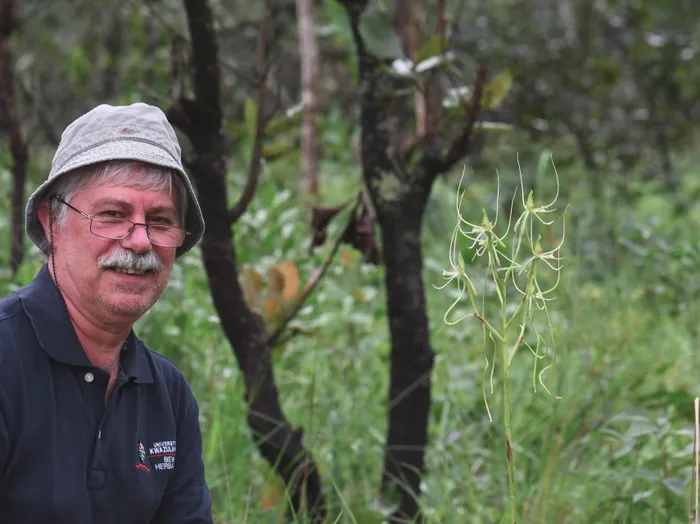
UKZN’s Professor Benny Bytebier in the field in Zambia. Bytebier is playing a key role in establishing and expanding the Western Indian Ocean Island Herbarium Network and in facilitating the digitisation of their collections.
Image: Supplied
The recently released State of the World’s Plants and Fungi 2026 (SOTWPF) report from the Royal Botanic Gardens, Kew, delivers a stark but necessary wake-up call regarding the biodiversity crisis. Despite our relatively limited grasp of the full extent of biodiversity loss, cutting-edge advancements in technology present a glimmer of hope in the battle to safeguard our planet's flora and fungi.
Published on June 16, the sixth SOTWPF report consolidates insights from over 400 scientists across 40 nations. Among them is Professor Benny Bytebier from the University of KwaZulu-Natal (UKZN), curator of the venerable Bews Herbarium in Pietermaritzburg. This facility, which has amassed over 250,000 plant specimens including flowering plants, ferns, and seaweeds over its century-long existence, plays a pivotal role in understanding and preserving biodiversity.
At the heart of the report's findings is the argument that technology can serve as an ally to nature. Digital tools — once considered niche — are now critical in exposing gaps in our scientific knowledge and identifying areas where urgent action is needed to protect plants and fungi. The SOTWPF has been a cornerstone of biodiversity assessments since 2016, aiming to illuminate the threats faced by various species and the policies needed to safeguard them.
Plants and fungi are indispensable to life on Earth, providing essential services such as climate regulation, carbon storage, and sources of food and medicine. However, the report warns that without reliable data on species distribution and climate change impacts, conservation efforts might overlook vulnerable species and miss critical opportunities for sustainable agriculture and new medicinal discoveries.
While the scale of the biodiversity crisis is alarming, the report identifies a pivotal turning point influenced by rapid advances in Artificial Intelligence (AI), digitisation, and global data-sharing mechanisms. Historically, herbaria — comprising pressed plants and fungi collected by scientists over centuries — were largely inaccessible. Now, millions of these specimens are being digitised, allowing researchers to share, compare, and correct misidentifications globally. This unprecedented scale of analysis is pivotal in transforming conservation strategies and instilling hope for the future.
However, despite international efforts, a mere 16% of the world's herbarium specimens have been digitised, resulting in significant gaps in our biodiversity understanding, especially in the Global South. These ‘silent herbaria’ — collections that are under-digitised — introduce uncertainties into global biodiversity models, leading to conservation decisions based on fragmented or biased data.
The Bews Herbarium's recent advancements in digitisation accentuate its significance. Collaborating with the Natural Science Collections Facility, UKZN's effort to image all 250,000 specimens and transcribe 25% of their labels into a comprehensive database is a breakthrough. This initiative makes critical botanical specimens accessible to researchers around the globe and facilitates improved conservation strategies.
Professor Bytebier's collaboration with the South African National Biodiversity Institute (SANBI) and international partners has further enhanced the digitisation of herbarium collections, which he views as vital for engaging African nations in these efforts. As he states, “This report is very important as it summarises how we are doing with describing, documenting and conserving our plants and fungi at a global scale.”
The alarming figures presented in the report indicate that the scale of extinctions may be even greater than previously thought, with 29,748 plant species and 411 fungi at risk of extinction. Alarmingly, only 18% of plant species and 0.6% of fungi have been assessed for their conservation status. Many unnamed plant species may have already disappeared before they were even identified.
There is a growing recognition that the conventional approaches to assessing extinction — viewing species as either living or extinct — are insufficient. This simplistic premise fails to accommodate the complexity of poorly recorded or rare species, leading to significant knowledge gaps. To counter this, the report emphasises the utility of digitised herbarium records in developing probability models, which can better accommodate this uncertainty.
The report highlights the implications of digitisation beyond conservation. AI analysis of eight million digitised herbarium specimens has enabled the first comprehensive global study of flowering times, revealing a concerning shift of an average of 2.5 days per decade over the last century — a stark indicator of climate change's impact on flora.
Furthermore, advances in genetic material collection from ancient fungi are yielding invaluable information, offering potential for new medicines, crop protection, and predictions of disease outbreaks. With over 90% of fungal species still unknown to science, unlocking their secrets could profoundly transform our understanding and utilisation of this vital kingdom of life.
The SOTWPF report says that enhancing and sharing biodiversity data globally is one of the most effective ways to bolster conservation efforts. Integrating herbaria, seed banks, and management plans digitally can dramatically improve conservation outcomes and facilitate quicker, more focused actions to prevent extinctions. The report calls for equitable data sharing and concerted global efforts to standardise and improve herbaria data to ensure that crucial information does not fall prey to existing biases and errors.
Amid the daunting challenges, the report indicates that innovative collaborations between the tech sector and environmental organisations, alongside enhanced governmental support, are vital in accelerating our collective response to biodiversity loss and guiding the recovery of our planet’s invaluable ecosystems.
IOS