

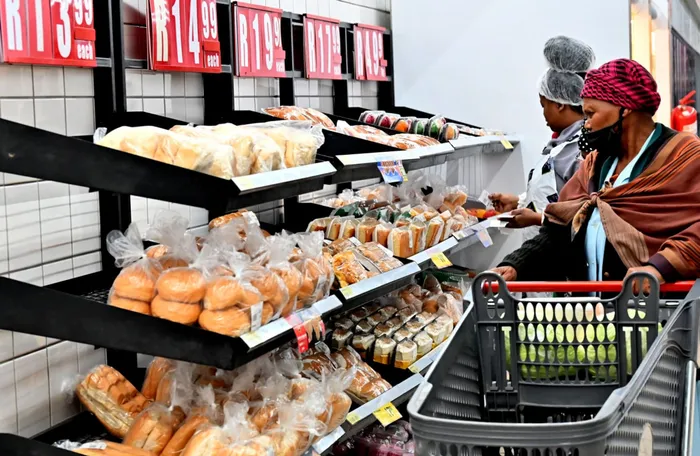
Common food items including maize meal, bread, baby food and tomato sauce were among products tested in an independent African Centre for Biodiversity study, which found pesticide residues in 37 of 43 supermarket food samples.
Image: Ayanda Ndamane / African News Agency
An independent study released on Thursday has raised concerns about pesticide residues found in everyday supermarket foods in South Africa, including maize meal, bread, baby food and tomato sauce.
The briefing, titled "What’s really in our food?," was commissioned by the African Centre for Biodiversity (ACB), researched and written by ACB research co-ordinator: Pesticides, Zakiyya Ismail, with editorial oversight and input by ACB executive director Mariam Mayet.
The study tested 43 commonly consumed food products bought from South African retail outlets between November 2025 and January 2026. The products were purchased unopened and in their original packaging, and sent to a South African National Accreditation System-accredited laboratory for pesticide residue testing.
According to the ACB, the testing was commissioned because South Africa does not routinely publish accessible pesticide-residue data for food sold locally.
"In the absence of routine, publicly accessible pesticide-residue data, independent testing is essential to understand the extent of pesticide exposure through everyday diets," the briefing states.
The study found that 37 of the 43 products tested, or 86%, contained at least one detectable pesticide residue on the testing panels applied. Across the samples, 37 unique pesticide active ingredients were detected.
Among the products tested were staple foods such as Impala, Ace, Iwisa and White Star maize meal, Snowflake Cake Wheat Flour, Sasko White Bread and Knorrox Soya Mince. Cereals and breakfast foods included Bokomo Pronutro, Futurelife, Nestlé Cerelac Wheat and Purity Cream of Maize.
The testing also included vegetables, fruit, tomato products, baby and toddler foods, tea and peanut butter. Among the baby and toddler products were Nestlé Cerelac Wheat, Nestlé Nido Baby Milk Powder, Purity Cream of Maize, Purity Apples, Purity Chicken & Butternut, Purity Vegetables & Beef, Purity Sweet Potato, WooliesBabes Chicken Bolognese with Pasta and WooliesBabes Mixed Berries.
The ACB said several pesticides of concern were detected, including malathion, glyphosate, AMPA, dichlorvos, imidacloprid, acetamiprid, carbendazim, epoxiconazole, piperonyl butoxide, propargite, tebuconazole, profenofos and novaluron, among others.
The briefing said 13 of the detected active ingredients met internationally recognised criteria for highly hazardous pesticides, with 26 detections across the sampled products.
The All Gold Tomato Sauce had the highest number of pesticide residues detected in a single product, with a total of 14 different residues identified. The briefing said additional highly hazardous pesticide detections in the tomato sauce included acetamiprid, carbendazim, imidacloprid, indoxacarb, propargite, tebuconazole and profenofos.
Malathion was detected in several staple and breakfast foods, including Impala Maize Meal, Purity Cream of Maize, Knorrox Soya Mince, Futurelife, Sasko White Bread and Bokomo Pronutro Original.
Glyphosate was detected in Impala Maize Meal, Snowflake Cake Wheat Flour, Sasko White Bread and Cerelac Wheat. Dichlorvos was detected in Snowflake Cake Wheat Flour.
The study also raised concerns about baby and toddler foods. Of the nine infant and toddler products tested, seven contained at least one pesticide residue.
Purity Cream of Maize contained malathion; Purity Apples contained acetamiprid; Nido Baby Milk Powder contained imidacloprid and fluquinazole; WooliesBabes Chicken Bolognese with Pasta contained imidacloprid, propamocarb and azoxystrobin; and Cerelac Wheat contained piperonyl butoxide, glyphosate and AMPA.
The report also warned that pesticide exposure in children required particular caution.
"Children are not just small adults," the report states, noting that children eat more food relative to their body weight and have developing organ systems.
The findings may also sharpen broader food-safety and public-health debates in South Africa, where organisations such as the Healthy Living Alliance (HEALA) have previously called for stronger regulation, clearer consumer information and policies that protect children from harmful food environments.
While HEALA was not listed as one of the organisations that conducted the study, the report’s focus on children, transparency and food-system accountability overlaps with wider civil society concerns about what ends up on South African plates.
Mayet said the results did not establish illegality or quantify individual health risk, but argued that they showed the need for stronger monitoring, public disclosure and child-protective residue standards.
"Taken together, these findings point to a pattern of widespread pesticide residues, including substances of great toxicological concern that are no longer permitted in other major economies, and raise serious questions about whether existing regulatory limits adequately protect consumers from cumulative and aggregate exposure," said Mayet.
The organisation has called for the phase-out of highly hazardous pesticides in food systems, the strengthening of child-protective standards, routine public testing, and a publicly accessible state-managed pesticide register.