

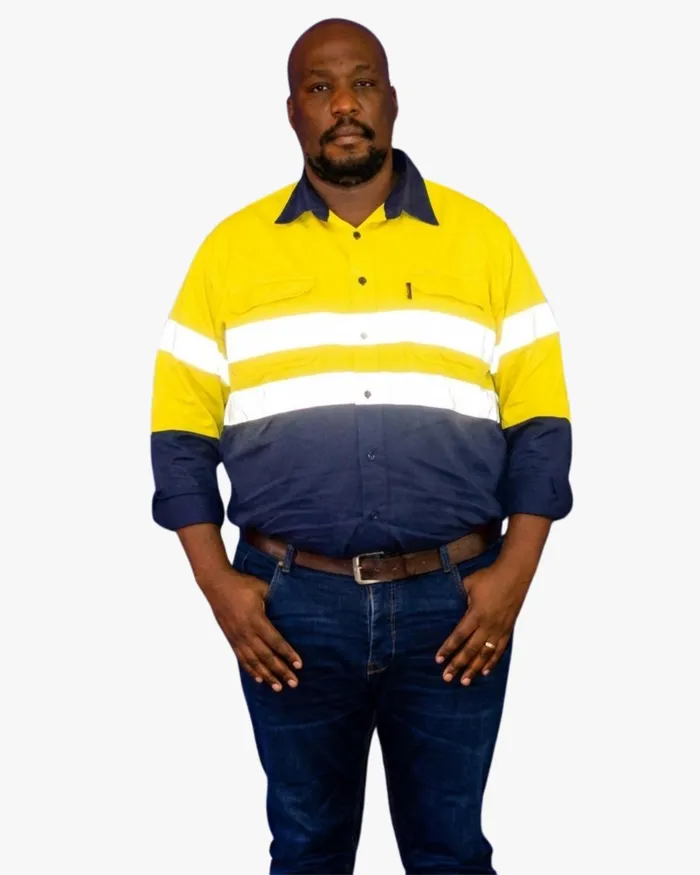
Raised in a small Northern Cape village, Shimmy Poloko turned firsthand experience of poor infrastructure into a thriving construction business dedicated to building safer roads and stronger communities.
Image: Supplied.
Growing up in the small Northern Cape village of Batlharos, Shimmy Poloko witnessed firsthand how neglected infrastructure could shape the lives of entire communities.
Roads riddled with potholes, limited access to services and the challenges of living far from major economic hubs left a lasting impression on him. Rather than accepting those realities, Poloko saw them as motivation.
Today, he is the founder and director of Sekatebo Holdings, a civil construction and road infrastructure company that has grown into a trusted partner for government departments and municipalities, delivering road rehabilitation and maintenance projects across South Africa.
For Poloko, the business is about far more than construction contracts.
"I watched how the physical environment around us either opened doors or closed them and I became fascinated by the idea of building things, fixing things and contributing to the kind of development that could change lives," he said.
"That seed planted in Batlharos never left me, and it is the foundation of everything Sekatebo Holdings stands for today."
Coming from a rural background gave him a deeply personal understanding of what infrastructure neglect costs communities.
"When I began exploring the civil construction and road infrastructure sector, I could see that there was enormous demand. South Africa has a massive infrastructure backlog, particularly in rural and peri urban areas, but the contractor landscape was still largely dominated by established players who did not always have a deep connection to the communities they were building in," he explained.
Poloko saw an opportunity to create a black owned construction business that combined technical expertise with a genuine commitment to community development.
"I identified an opportunity to build a company that combined technical competence with genuine community investment, a capable contractor that understood the stakes on a human level, not just a commercial one."
Launching the business, however, was far from easy.
Starting a construction company from a small village without inherited wealth or an established industry network meant overcoming significant barriers, particularly access to finance.
"Construction is capital intensive, and banks and financiers are notoriously cautious with emerging contractors. Getting that first meaningful contract when you have no track record is a paradox every new entrepreneur in this sector faces," he said.
To survive, Poloko relied on determination, relationships built through integrity and a willingness to take on smaller projects that many others ignored.
"I had to be extremely resourceful. I leaned on relationships I had built through hard work and integrity, sought mentorship where I could find it and treated every small job as an opportunity to prove ourselves."
Those early sacrifices paid off. Formalising the business, securing its first government contract and gradually building an independent fleet of plant and equipment became defining milestones for Sekatebo Holdings.
"Winning our first government contract was a defining moment. It told me that we belonged in this space," Poloko said.
Today, the company specialises in road construction and rehabilitation, routine and periodic maintenance, pothole repairs, resealing, stormwater systems and broader civil engineering projects.
Government infrastructure contracts have been instrumental in its growth.
"The public sector is the primary engine of infrastructure investment in South Africa, and being able to navigate and succeed in that environment has been central to Sekatebo's growth," he said.
"Government contracts have allowed us to scale our operations, build our track record and develop the internal systems and compliance frameworks that a growing construction business requires."
Yet for Poloko, the true reward is not the value of the contracts but the impact they have on people's daily lives.
"When community members tell you that the road in front of their homes is now safe to drive on, or that emergency vehicles can now reach them without being delayed by bad roads, those moments remind you exactly why you do this work."
His passion for infrastructure is closely linked to another issue he feels strongly about, road safety.
"It is impossible for me to separate the professional from the personal on this issue," he said.
"I grew up in Batlharos, where the roads connecting us to hospitals, schools and markets were not always in good condition. I know what it means to travel on roads that feel unsafe."
Poloko believes the connection between poor roads and road accidents is undeniable.
"Potholes cause sudden swerving that can push a vehicle into oncoming traffic. That split second reaction to avoid a pothole has cost many South Africans their lives."
He argues that proactive maintenance could significantly reduce accidents while also saving public money.
"When roads are inspected regularly, potholes are patched before they grow, drainage is cleared before it causes flooding and line markings are repainted before they fade, you dramatically reduce the risk of accidents. It is far more cost effective than waiting for a road to fail completely."
Looking ahead, Poloko hopes to build Sekatebo Holdings into one of South Africa's most respected infrastructure companies while creating opportunities for young people from rural communities.
"I want us to be the company that young people from villages like Batlharos look at and see themselves in," he said.
"I want to create a pipeline of skilled, employed and empowered people from rural and underserved communities who find their careers and their futures through Sekatebo."
For the boy who once watched poor infrastructure hold communities back, the mission remains deeply personal.
"Every road we build or maintain is a road where someone's life is safer. That is not just a business objective. For a boy from Batlharos who watched what poor infrastructure costs communities, it is a personal mission."
Follow Business Report on Facebook, X and on LinkedIn for the latest Business and tech news.