

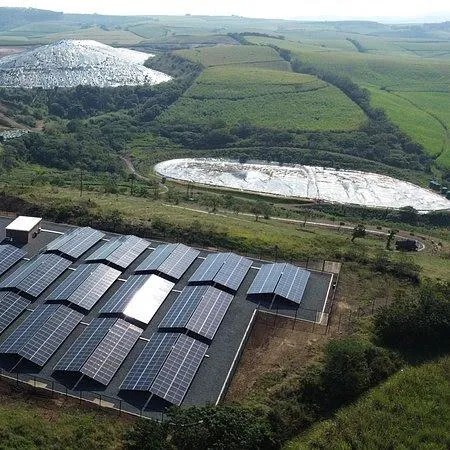
A new renewable energy project in KwaZulu Natal is expected to generate more than 826 MWh of clean electricity annually, reinforcing the role of private investment in supporting sustainable industrial operations.
Image: Supplied.
Renewable energy company Rhino Energy Solutions has commissioned a 648 kWp solar plant at Dolphin Coast Landfill Management, operated by Veolia, marking another step in South Africa's transition towards cleaner industrial operations while supporting more sustainable hazardous waste management.
The installation, located in KwaDukuza in KwaZulu Natal, is expected to generate approximately 826 MWh of renewable electricity annually, reducing the facility's dependence on the national grid while lowering carbon emissions and improving long term energy cost certainty.
The project was officially opened by the Deputy Minister of Forestry, Fisheries and Environment together with the Mayor of KwaDukuza. Developed alongside Dolphin Coast Landfill Management's advanced Liquid Treatment Plant, the solar installation reflects growing collaboration between private investment, engineering expertise and environmental stewardship.
Rhino Energy Solutions Chief Executive Rogan Davies said the project represented far more than simply installing solar panels.
"The DCLM project is a critical example of how true value creation extends beyond financial returns. The goal was not just a solar project. It was about building infrastructure that protects the environment, conserves precious resources, drives operational efficiency and leaves a positive legacy for future generations," Davies said.
Dolphin Coast Landfill Management is one of South Africa's leading hazardous waste management facilities, specialising in the treatment and disposal of both liquid and solid hazardous waste. The facility plays an important role in supporting the country's environmental objectives through responsible waste management and resource protection.
The addition of renewable energy aligns with the facility's broader commitment to environmental sustainability while strengthening operational resilience against rising electricity costs.
Building solar infrastructure at a hazardous waste landfill presented significant engineering challenges.
The corrosive environment created by hazardous waste disposal required a specialised design capable of withstanding decades of exposure. Rhino Energy Solutions installed a ground mounted solar array supported by 3CR12 stainless steel structures selected specifically for their corrosion resistance and durability over the system's expected 25 year lifespan.
The solar plant comprises 1,080 photovoltaic modules installed in an east west configuration, allowing greater module density while generating electricity more consistently throughout the day to better match the site's operational energy requirements.
Construction also had to be carefully coordinated to ensure the facility's waste management activities continued uninterrupted, with the electrical integration designed to comply fully with existing infrastructure and grid requirements.
According to Rhino Energy Solutions, industry standard PVsyst modelling indicates the system will operate at a performance ratio of almost 80%, reflecting strong efficiency under real world operating conditions.
The project is forecast to prevent approximately 778 tonnes of carbon dioxide emissions every year. That is equivalent to removing around 170 passenger vehicles from South Africa's roads annually or the carbon captured by nearly 12,800 tree seedlings grown over a ten year period.
Over the solar plant's anticipated 25 year operating life, total avoided carbon emissions are projected to reach approximately 19,450 tonnes.
By integrating renewable electricity directly into its treatment operations, Dolphin Coast Landfill Management will improve energy security, reduce exposure to rising electricity tariffs and strengthen its environmental credentials.
The project also highlights the increasing role renewable energy is playing across South Africa's industrial sector, where businesses are investing in cleaner energy solutions to improve competitiveness, reduce operating costs and support national decarbonisation objectives while maintaining critical infrastructure and services.
Follow Business Report on Facebook, X and on LinkedIn for the latest Business and tech news.