

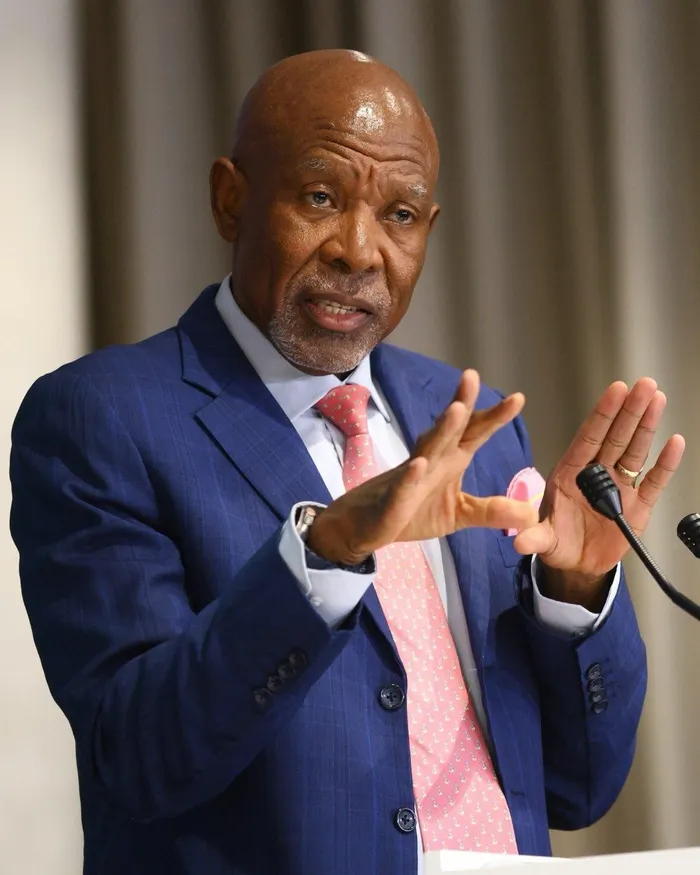
South Africa's inflation has surged to 5% in June, surpassing forecasts and intensifying speculation about a potential interest rate hike by the Sarb, as economists and property leaders weigh in on the implications for economic growth and housing affordability.
Image: Facebook/SARB
South Africa's annual consumer inflation accelerated to 5% in June, exceeding economists' expectations and reinforcing expectations that the South African Reserve Bank (Sarb) could raise interest rates by another 25 basis points at its Monetary Policy Committee (MPC) meeting on Thursday.
The latest inflation reading increased from 4.5% in May and came in above market expectations of 4.7%, as higher fuel prices, transport costs and persistent services inflation continued to place pressure on consumers.
FNB economist Ame Muller said the June data surprised on the upside.
"Headline inflation rose to 5.0% year on year in June from 4.5% in May, exceeding our forecast of 4.8% and market consensus of 4.7%. Monthly pressure was 0.7% month on month, mainly driven by core inflation."
Muller said underlying inflation also strengthened, highlighting that price pressures were becoming more entrenched across the economy.
"Core inflation lifted to 4.1% year on year, with monthly pressure of 0.6% month on month. Monthly pressure was driven by public transport and housing. Services inflation recorded 0.8% month on month and 5.2% year on year, while core goods inflation was negative 0.1% month on month and 1.6% year on year."
Looking ahead, Muller expects inflation to moderate slightly in July, although several risks remain.
"Our updated model, incorporating today's data, suggests that headline inflation will slow to 4.4% year on year in July, with a 0.5% month on month increase driven mainly by higher utility and electricity costs. Meanwhile, inflation in most of the other categories is expected to remain relatively contained."
She warned that geopolitical tensions in the Middle East continued to threaten the inflation outlook despite recent easing in oil prices.
Muller said rising inflation expectations also strengthened the case for tighter monetary policy.
"Against this backdrop, and the recent inflation expectations results that suggest that inflation shocks are beginning to influence medium to longer term inflation perceptions, we continue to expect a further 25 basis point increase in the repo rate at the upcoming Monetary Policy Committee meeting this week."
Despite the growing consensus among economists that another rate hike is likely, the property industry has urged the Reserve Bank to keep borrowing costs unchanged, warning that prolonged high interest rates are weighing heavily on economic growth and housing affordability.
Samuel Seeff, chairman of the Seeff Property Group, called on the central bank to pause its tightening cycle.
"Despite volatility in the oil price as a result of recent renewed tensions in the Middle East, the current average price is still about 15% to 18% lower than the May average when the Bank raised the interest rate. This gives room to pause."
Seeff argued that while inflation had edged higher, the increase was likely to prove temporary.
"Even with inflation expected to rise to around 4.7% for June, the projected average for the year is still at just below the Bank's upper target range of 4%, leaving room for the Bank to take a more considered approach."
He warned that restrictive monetary policy had become a major drag on the economy.
"The inflation spike is temporary while the impact of the higher interest rate on the economy and property market has been more prolonged. The restrictive monetary policy has contributed to the economic stagnation, with the economy largely stuck in a low growth pattern for several years now."
Seeff said high borrowing costs continued to suppress activity in the residential property market.
"Despite an improvement in market activity, overall property transaction volumes remain about 18% below what they should be."
He added that first time buyers had been particularly affected.
"Market data shows that 25% fewer young people aged 26 to 35 are purchasing property now while the average age has increased to 36 years. First time buyers as a percentage of home loan applications are also down by a notable 10%."
Seeff said these trends demonstrated why policymakers should avoid adding further pressure to consumers.
"All of this highlights the critical need for the Reserve Bank to do everything possible to hold the rate steady, and to restore affordability and market confidence as soon as possible."
Dr Andrew Golding, chief executive of the Pam Golding Property group, said that while another rate increase would add pressure to household finances, the residential property market had so far remained resilient.
"The hike is modest and unlikely to derail market activity in South Africa's resilient residential property market in the short term."
Golding said the Reserve Bank's primary concern remained preserving price stability.
"The Sarb's focus is not on reducing the unavoidable hikes in fuel prices but on protecting longer term price stability. By acting early, policymakers aim to prevent inflation expectations from drifting higher and to avoid the need for more aggressive action later."
He added that banks continued to support the housing market despite affordability challenges.
"Banks are working hard to offset deteriorating affordability by offering more zero deposit home loans and cost inclusive bonds."
Golding said there was currently little evidence that banks were tightening lending standards despite higher interest rates.
"The real risk would emerge only if banks start questioning the sustainability of household debt and respond by tightening credit. Encouragingly, there is little evidence of the banks taking such action at present."
He also noted that higher transport and fuel costs were reshaping buyer preferences.
"There is growing demand for smaller, well located properties close to workplaces, schools, retail amenities and public transport."
With inflation now sitting at the highest level in several months and core inflation continuing to accelerate, Thursday's Monetary Policy Committee meeting is expected to deliver one of the year's most closely watched policy decisions as the Reserve Bank balances rising inflation risks against an economy struggling to gain momentum.
Follow Business Report on Facebook, X and on LinkedIn for the latest Business and tech news.