

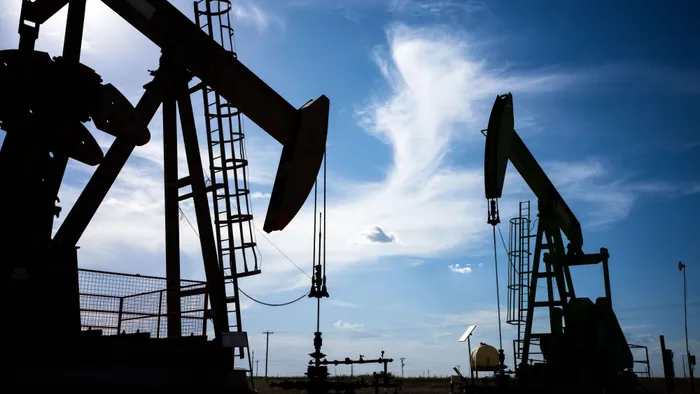
Brent crude climbed above $90 a barrel on Tuesday afternoon as renewed conflict between the United States and Iran heightened inflation risks, with economists warning the South African Reserve Bank could respond with another interest rate hike.
Image: AFP
Renewed conflict between the United States and Iran pushed global markets back into risk off mode on Tuesday, with Brent crude climbing to $90.37 a barrel on Tuesday afternoon as investors weighed the potential impact of prolonged supply disruptions through the Strait of Hormuz.
The jump in oil prices has intensified concerns about inflation globally and in South Africa, placing additional focus on the South African Reserve Bank's (Sarb's) Monetary Policy Committee (MPC) meeting on Thursday, where economists remain divided over whether policymakers will raise interest rates again.
Patrick Buthelezi, economist at Sanlam Investments, said renewed hostilities had added another layer of uncertainty to an already fragile global economy.
"Renewed hostilities between the US and Iran are testing the June memorandum of understanding. While diplomatic channels remain open, the situation continues to be fluid and fragile," he said.
Buthelezi said the conflict had already begun disrupting commercial shipping routes and reversing the decline in oil prices that followed earlier diplomatic efforts.
"The resurgence of tensions is once again disrupting commercial traffic and global supply chains and has reversed the early decline in international oil prices. Although oil prices have risen sharply, they remain below the peaks reached during the height of the conflict. However, a prolonged conflict will eventually weigh on inventories, which have so far provided a buffer against supply disruptions."
He added that higher energy costs and escalating trade tensions threatened to slow global economic growth despite continued strength in artificial intelligence driven investment.
"Global growth has remained resilient, supported largely by strong demand for artificial intelligence and its continued adoption. However, this resilience will be tested this year not only by higher energy prices but also by elevated trade tariffs."
While South Africa continued to benefit from ongoing economic reforms and relatively favourable terms of trade, Buthelezi said growth was still expected to remain subdued.
"In South Africa, continued progress on economic reforms and favourable terms of trade are expected to partly offset the drag from higher energy prices and US tariffs. Nevertheless, economic growth is likely to remain moderate."
He said central banks across the world would remain cautious as they monitored inflation risks linked to higher oil prices.
"The US Federal Reserve is likely to maintain a hawkish stance and could raise interest rates further, as inflation has remained above its 2% target since 2021."
Locally, Buthelezi expected the Reserve Bank to continue tightening monetary policy.
"The Sarb will likely raise interest rates again as inflation moves above target and geopolitical developments increase upside risks to the inflation outlook. While the MPC is expected to remain divided, we anticipate a measured and moderate hiking cycle."
Market sentiment remained cautious despite some optimism around ongoing diplomatic mediation efforts.
Bianca Botes, managing director at Citadel Global, said investors were closely monitoring developments in both financial markets and geopolitics.
"As the conflict drags on the backdrop remains relatively unchanged, with the S&P 500 closing 0.19% in the red while United States futures was in the green on Tuesday morning. This week, we will be keeping an eye on the slurry of mega cap technology earnings being released."
She said Asian markets had responded positively to renewed mediation efforts between the US and Iran.
"Asia took comfort in mediation efforts in the Middle East, with the MSCI Asia Pacific excluding Japan climbing by 0.25% on Tuesday."
Botes added that the rand continued to trade largely in line with global investor sentiment.
"The rand continues to take its cues from the global backdrop and risk appetite, and is trading steady at R16.44 against the US dollar, R18.81 against the euro and R22.15 against the pound."
Neil Wilson, investor strategist at Saxo UK, said energy markets remained highly sensitive to the expanding conflict.
"The conflict in the Middle East appeared to broaden and escalate further over the weekend," Wilson said.
He added that although oil prices had eased briefly following mediation efforts, risks remained firmly tilted to the upside.
"Risks now seem skewed towards higher for longer energy prices, inflation and rates."
Wilson said higher oil prices had once again weighed on broader equity markets.
"Higher oil prices weighed on the broader market to send the S&P 500 down 0.2%."
With South Africa's latest inflation data due to be released on Wednesday, followed by the Reserve Bank's interest rate announcement on Thursday, investors will be watching closely to see whether policymakers prioritise slowing inflation or supporting an economy already facing weak growth.
Follow Business Report on Facebook, X and on LinkedIn for the latest Business and tech news.