

The BER found that municipalities continue to generate about 75% of their operating revenue from their own tax bases, but are increasingly unable to collect the money they bill residents and businesses.
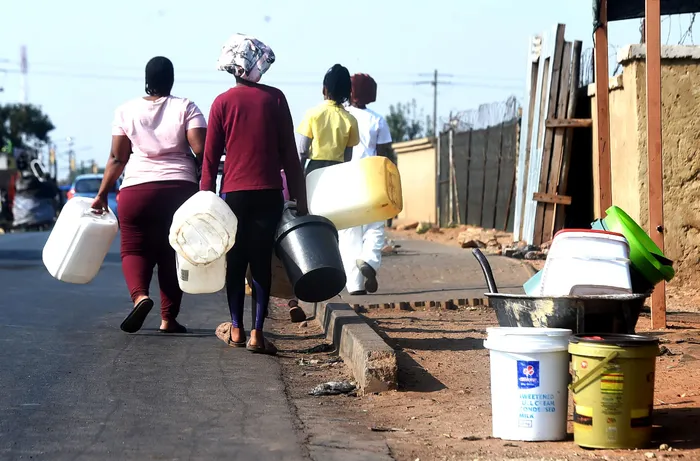
Image: Itumeleng English/ Independent Newspapers
South Africa's struggling municipalities are being held back by weak governance and poor financial management rather than a lack of funding, according to a new report by the Bureau for Economics (BER), which argues that meaningful municipal reform is essential to unlocking faster economic growth.
The report comes two weeks after Finance Minister Enoch Godongwana withheld national government transfers to 69 municipalities over governance and financial management failures, signalling a tougher approach by National Treasury.
Authored by BER economist Rose Murunzi and senior economist Roy Havemann, with technical assistance from economic writer Claire Bisseker, the report says municipalities, particularly metropolitan areas, are central to South Africa's economic performance.
“Metros (city regions) remain the most important from a population and growth perspective. Therefore, as large metros continue to struggle, this starts to weigh on overall economic growth,” the report stated.
The BER found that municipalities continue to generate about 75% of their operating revenue from their own tax bases, but are increasingly unable to collect the money they bill residents and businesses.
By December 2025, municipalities were owed R234.7 billion in outstanding consumer debt. At the same time, municipalities owed Eskom R70.1bn and water boards R25.9bn, creating severe cash flow pressures that have undermined infrastructure investment.
“As a result, many municipalities are unable to finance infrastructure investment and routinely underspend their capital budgets, even where funding has been allocated,” it said.
The BER welcomed Godongwana's decision to freeze transfers to poorly performing municipalities, saying it demonstrated that National Treasury was prepared to use its constitutional powers to improve governance despite political sensitivities ahead of next year's local government elections.
The report also endorsed reforms under Operation Vulindlela 2.0 and the ongoing review of the White Paper on Local Government but warned that government risks trying to implement too many reforms simultaneously.
“A shorter, clearly prioritised list of high-impact changes is arguably better than a long list.”
Among the report's key recommendations is strengthening intervention powers under Section 139 of the Constitution, arguing that current interventions have become "a revolving door rather than a recovery mechanism."
It recommends giving appointed administrators greater authority, including assuming the powers of municipal managers and chief financial officers, to restore dysfunctional municipalities.
The BER also called for ring-fencing municipal electricity and water services under financially sustainable utility models, professionalising the appointment of senior municipal officials, reviewing the local government funding model, and overhauling the municipal classification system.
The report noted that almost 70% of municipalities in the Free State, including Mangaung, had their transfers delayed, followed by 57% of municipalities in North West, while only three municipalities in the Western Cape were affected.
“Municipalities have significant revenue-raising powers and, in aggregate, continue to generate most of their income from their own tax bases. The challenge is that too little of this revenue is collected, converted into cash, and reinvested in maintaining and expanding municipal infrastructure.”
The BER concluded that South Africa's municipalities are "too important to fail" because they are where economic growth occurs and where citizens interact most directly with the state. However, without clear reform priorities and stronger governance, implementation risks being overwhelmed by its own ambition, the report warned.
“Yet the evidence in this note points to a governance and financial-management crisis rather than a funding crisis. Municipalities generate around three-quarters of their own operating revenue but suffer from massive cash-flow problems, leaving capital budgets underspent.”
BUSINESS REPORT