

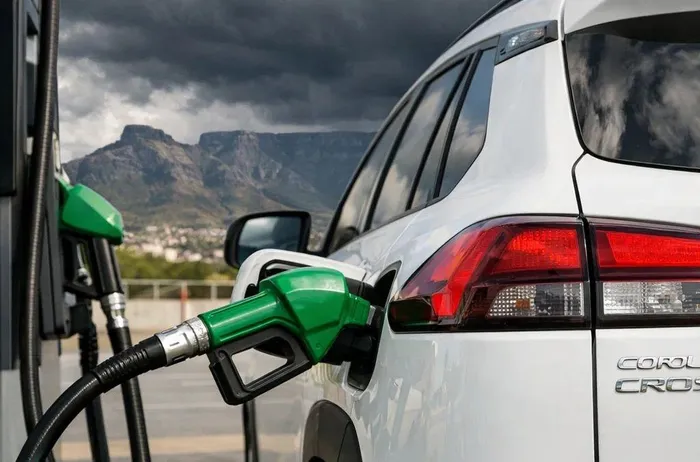
South Africans are expected to pay less for fuel in August, but economists warn that global oil market volatility could quickly reverse the relief.
Image: AI / Sora
South African motorists are expected to receive welcome relief at the pumps in August as lower fuel prices are forecast, according to mid-month data, but economists and financial experts have cautioned that the savings are unlikely to mark the end of household financial pressures.
The anticipated reduction follows a period of lower international oil prices and a relatively resilient rand, although continued geopolitical tensions and volatility in global energy markets mean the outlook remains uncertain.
KPMG South Africa Lead Economist Frank Blackmore said the expected decrease would provide some support to consumers, but warned that fuel prices remain highly sensitive to developments in international markets.
Blackmore said while recent movements in oil prices and the exchange rate had improved the outlook for motorists, ongoing geopolitical tensions, particularly in the Middle East, continued to pose upside risks to crude oil prices and could quickly reverse recent gains.
He noted that fuel prices remain one of the most immediate ways global events filter through to household budgets, influencing transport costs, inflation and the broader cost of living.
Blackmore said, "We must however be clear that there's still some time this month to go and the break in the ceasefire in the Strait of Hormuz means that the fuel prices are continuing to rise, so it can be that this over-recovery recorded at mid-month is absorbed between now and the end of the month when prices are higher."
Hayley Parry, Money Coach and Facilitator at 1Life's Truth About Money, said the expected fuel price cut was positive news, but consumers should avoid treating the saving as extra spending money.
"The expected fuel price cut in August is good news for South Africans, but it's important not to mistake temporary relief for long term financial recovery. While motorists may save a few hundred rand a month depending on how much they drive, most households are still navigating persistent financial pressures, from rising food prices and municipal tariffs to school expenses and debt repayments."
Parry said the financial challenges facing many South Africans extended beyond budgeting.
"The reality is that many consumers don't have a budgeting problem. They have a cash flow problem. That's why every bit of relief matters. The question isn't 'What can I buy with the savings?' but rather 'How can I use these savings to improve my financial position?'"
According to the 2026 1Life Insurance Generational Debt Survey, 99% of South Africans identified building wealth as a financial priority.
Parry said temporary savings offered an opportunity to improve long term financial resilience.
"The 2026 1Life Insurance Generational Debt Survey found that 99% of South Africans say building wealth is a priority. That's encouraging, but turning that ambition into reality starts with making intentional decisions when opportunities like this arise."
She encouraged motorists to use any savings from lower fuel prices to reduce debt or strengthen emergency savings rather than increase discretionary spending.
"Rather than allowing the fuel saving to quietly disappear into everyday spending, consider putting it to work. If your fuel bill drops by R300 this month, use that amount to make an additional payment on a credit card or personal loan to reduce the interest you'll pay over time."
"If debt is under control, channel the money into an emergency fund. Even setting aside R200 to R300 each month can help cover unexpected expenses without relying on credit. Consumers could also use the savings to put money away for December festivities, while others may choose to increase their insurance premiums to stay up to date, so essential cover doesn't lapse during difficult months."
Parry also warned that the current fuel price outlook could change rapidly.
"Consumers should also remember that fuel prices are influenced by global oil markets and the rand exchange rate, both of which remain volatile amid ongoing geopolitical uncertainty. Today's relief could easily be followed by increases later in the year. That's why it's wise to avoid adjusting your lifestyle every time fuel prices move."
She said motorists should instead view the lower fuel price as an opportunity to strengthen their finances.
"Think of this fuel price cut as a financial bonus, not one to spend, but one to strengthen your finances. Small, consistent decisions made during periods of relief often make the biggest difference when the next financial shock inevitably arrives. The goal isn't just to save money this month. It's to build habits that create lasting financial resilience."
Economists expect fuel prices to remain closely tied to developments in global oil markets, leaving motorists hopeful that geopolitical tensions ease and recent relief at the pumps can be sustained.
Follow Business Report on Facebook, X and on LinkedIn for the latest Business and tech news.