

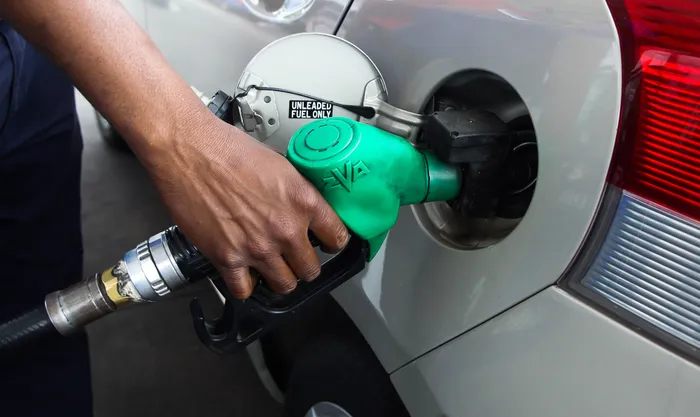
Experts believe that a fuel price decrease is expected in both petrol and diesel on Wednesday due to the decrease in the price of Brent crude oil
Image: Jacques Naude / Independent Media
South African motorists are set for welcome relief at the pumps on Wednesday, with economists forecasting sizeable cuts to both petrol and diesel prices as global oil prices retreat from recent highs despite the return of the full fuel levy this month.
The expected reductions follow a sharp decline in Brent crude oil prices after a ceasefire agreement eased tensions in the Middle East, reversing the spike in oil markets that drove steep fuel price increases in April and May.
Economists say the combined effect of lower international oil prices and a stronger rand has more than offset the impact of government's decision to end temporary fuel levy relief introduced during the recent oil price shock.
Professor Simphiwe Madikizela, an economist at the University of South Africa (Unisa), said a fuel price decrease this week was virtually certain.
“It's a given because the price of the crude oil price has come down significantly to the level before the middle east war and the peace deal has been signed although it's volatile.”
He noted that Brent crude was currently trading at around $75 (about R1 274) a barrel after briefly falling to around $72, compared with levels approaching $100 a barrel during the height of the conflict.
Madikizela said further fuel price reductions could follow if geopolitical tensions continue to ease.
“We are likely to see more petrol prices decrease if oil drops to level below $70 per barrel once the peace deal stabilises and the markets further adjust which will drop the inflation and interest rates as well, especially if the rand strengthens to the dollar in the coming months.”
Unisa economist Dr Eliphas Ndou said lower oil prices together with the rand's improved performance would more than compensate for the reinstatement of the fuel levy.
“In fact, their combined effect will dominate the adverse effects of reintroduction of fuel levy relief in July. I expect consumers and producers to get diesel and petrol price relief in July.”
Investec chief economist Annabel Bishop said the Middle East ceasefire had dramatically improved market sentiment and reduced concerns over disruptions to global energy supplies.
“The preliminary peace deal has seen the oil price reach $73.7(R1240)/bbl (Brent crude), $44.3 (R747)/bbl lower than oil price at the peak of the oil shock, while the rand is at R16.50/USD from R17.25/USD, which will reduce inflation pressures,” Bishop said.
She added that financial markets were increasingly confident that shipping through the Strait of Hormuz would normalise.
“The crude oil volatility index has fallen to levels recorded in January this year, on a path to return to its long-term average, with the base case one of a successful, lasting peace deal, although minor skirmishes are to be expected occasionally.”
Bishop expects oil prices to continue easing and eventually fall below $70 a barrel, although she warned that the economic effects of the earlier oil price shock would still filter through to economic growth and inflation over coming months.
Efficient group chief economist Dawie Roodt also expects significant reductions in fuel prices this week.
“It will probably be around R1,50 to R2,00 for diesel. The more good news is based on the current trajectory on the price of oil, I expect oil to fall to below $70 and we can expect more fuel prices to decrease in the coming months,” he said.
PSG senior economist Johann Els said current fuel price data pointed to an over-recovery of approximately R3 per litre on petrol.
“We know that R1,50 of that needs to be given back to get fuel subsidy out of the way so petrol should likely decrease by R1,50 a litre at the start of July.”
Els added that this is good news for consumers. “Diesel price decreases will be of a similar magnitude. This will help the inflation picture going forward and it's likely that the South African Reserve Bank will not hike interest rates in July.”
Ulrich Joubert, an independent economist, also forecast reductions in fuel prices, noting that petrol currently reflected an average over-recovery of around R3 per litre, while diesel's average over-recovery exceeded R4 per litre.
BUSINESS REPORT