

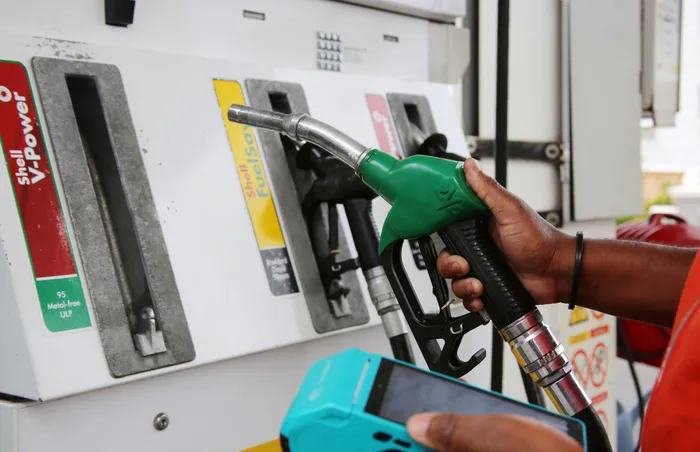
The reading was significantly higher than market expectations and reflects the impact of rising oil prices during the month amid heightened tensions in the Middle East.
Image: Tumi Pakkies / Independent Newspapers
South Africa’s producer inflation accelerated sharply in May, reaching its highest level in more than a year as a surge in fuel prices filtered through the manufacturing sector, raising concerns about potential knock-on effects for consumers and businesses.
Statistics South Africa (Stats SA) reported on Thursday that final manufactured producer price inflation (PPI) jumped to 7.8% year-on-year in May from 4.8% in April. On a monthly basis, producer prices increased by 2.6%.
The reading was significantly higher than market expectations and reflects the impact of rising oil prices during the month amid heightened tensions in the Middle East.
Investec economist Lara Hodes said the outcome surprised on the upside. Hodes said the oil price shock saw fuel prices increase notably again in May, with the Brent crude oil price averaging over $100 (R1,647) per barrel during the month.
“Specifically, petrol and diesel prices rose by a marked R3.27/litre and R5.27/litre respectively. The general fuel levy cut was extended into May, preventing larger upside pressure,” she said.
The coke, petroleum, chemical, rubber and plastic products category contributed 4.7 percentage points to the annual headline inflation rate and added 2 percentage points to the monthly increase.
Hodes said that progress has been made on ending the conflict in the Middle East; however, risks remain for a flare-up again.
“The Brent crude price has in turn fallen substantially, which will see fuel price cuts effected in July, even after fuel levy adjustments,” she said.
“Food products’ inflation, another key driver of PPI, rose by 0.1% m/m, lifting slightly to 0.9% y/y in May, from 0.3% y/y previously. The food products, beverages, and tobacco products category added 0.6% to the headline outcome,” she said.
“Oil prices have, however, dropped significantly, which could limit upside price pressure.”
Hodes added that disaggregation of the food basket indicates that meat and meat products’ inflation has eased significantly to 0.1% from 1.0% and 8.3% year-on-year recorded in April and March respectively, underpinned by base effects and increased slaughtering activity.
According to the Agricultural Business Chamber of South Africa (Agbiz), poultry production conditions are also favourable.
Agbiz said grain mill product prices fell by a further -9.1% in May, from -9.2% previously.
“Ample harvests are expected to continue exerting downward pressure on food prices this year. Specifically, the “summer grains and oilseeds production is forecast at a record 21.1 million tons, up 2% from the 2024-25 season,” according to Agbiz.
The Nedbank Group Economic Unit said the rise in producer inflation exceeded both its own forecast of 6.4% and the market expectation of 6.7%.
“The largest contributor to the rise was a sharp increase in fuel costs. PPI will remain elevated in June before starting to moderate in the second half of the year,” it said.
“Overall, the inflation outlook has improved following the reopening of the Strait of Hormuz, which has depressed the Brent crude oil price to near its pre-war level.”
Professor Waldo Krugell, an economist at North-West University said the increase was significant and warned that some of the higher costs would eventually be passed on to households.
“If it's in PPI a part of it will feed through to consumers in the end,” Krugell said.
Efficient Group chief economist Dawie Roodt said the increase was expected given the sharp rise in petroleum prices during May.
“PPI does not include any services, it's just underlying goods. What happened in May there was a huge increase in petroleum prices due to the increase in oil and that reflected in PPI,” Roodt said.
“This will filter through to the consumer price index but it does not mean that CPI will increase to 7.8% as PPI only includes goods but we can expect a filtering through.”
BUSINESS REPORT