

Grain SA in a statement on Friday strongly rejected the International Trade Administration Commission of South Africa (ITAC) Government Gazette recommendation this week that Dollar-Based Reference Price (“DBRP”) on wheat remain unchanged at $279 (R4558)/ton.
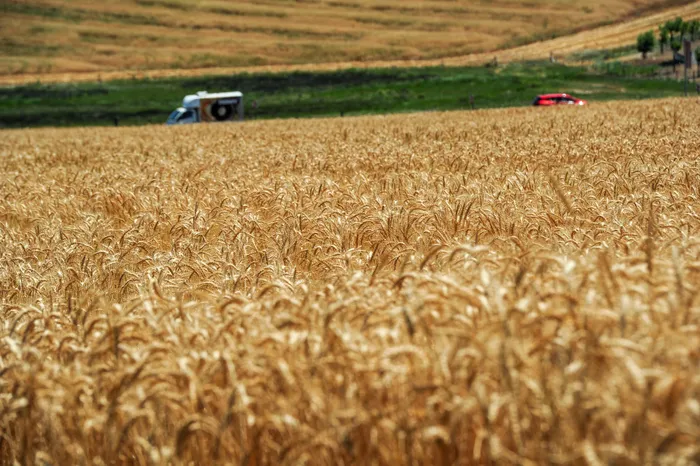
Image: Henk Kruger Independent Newspapers
Grain SA has strongly rejected a recommendation by the International Trade Administration Commission of South Africa (ITAC) to keep the Dollar-Based Reference Price (DBRP) for wheat unchanged at $279 (about R4,558) per ton, warning that the decision threatens the long-term sustainability of the country's wheat industry.
The recommendation, published in the Government Gazette last week, follows a 2024 application by Grain SA and the South African Cereals and Oilseeds Trade Association (Sacota) seeking an increase in the wheat reference price from $279 to $289 per ton.
The organisations argued that the adjustment was necessary to provide greater protection for local wheat producers facing mounting production costs and challenging market conditions.
In its findings, ITAC noted that South Africa’s total wheat supply had increased steadily over the past decade, averaging about 4.09 million tons and growing by 11.15% between the 2014/15 and 2023/24 seasons.
The commission also found that demand had risen over the period, peaking at 3.81 million tons before easing to 3.74 million tons in the 2023/24 season.
ITAC stated that since the DBRP was reduced in 2016, fluctuations in wheat production had largely been influenced by yield conditions rather than tariff levels.
The commission concluded that the current reference price continues to provide sufficient support to the industry by covering production costs and allowing for reasonable profitability.
“Considering the foregoing and based on the following additional factors, the Commission recommended that the DBRP for wheat remain unchanged,” it said.
However, Grain SA said the decision does not accurately reflect the realities facing wheat farmers and described the outcome as a major setback for the industry.
Grain SA CEO Dr Tobias Doyer said the organisation was dissatisfied with both the decision and the reasoning behind it.
“The decision fails to reflect the reality on wheat farms across South Africa. Producers are under pressure from rising input costs, volatile markets, high financing costs, logistics challenges, and unfair international competition.”
The organisation said it would explore all available options to challenge the decision and continue advocating for what it described as a fair and economically realistic wheat tariff framework.
According to Grain SA, South African wheat farmers are competing against international producers who benefit from extensive government support, subsidies and more favourable policy environments.
Doyer warned that the decision effectively requires local producers to continue operating under increasingly difficult conditions without adequate policy support.
“That is not sustainable. If South Africa wants local wheat production, then policy must recognise the realities of producing wheat in this country,” he said.
The organisation also expressed concern that the current policy approach undermines efforts to maintain the high quality standards for which South African wheat is known.
Grain SA said local producers consistently deliver wheat that is highly valued by millers and processors, yet farmers are not adequately rewarded for the quality they produce.
It further argued that declining wheat planting areas contradict ITAC’s conclusion that existing support measures are sufficient.
According to Grain SA, many producers are reassessing the viability of wheat as part of their farming operations, while policy uncertainty continues to weaken confidence in the sector.
Sacota also criticised the outcome of the lengthy investigation.
Executive director Dr André van der Vyver said it was disappointing that ITAC and the Department of Trade, Industry and Competition (the dtic) had taken 19 months to review the application only to leave the current system unchanged.
“Then they have the audacity to state that they will further investigate the implementation procedures looking for ways to increase the speed of the implementation of tariff changes,” he said.
“After all these years and months of complaints, do they now expect us to believe them? Together with Grain SA, we have requested the full ITAC report for further insight and analysis.”
Sacota pointed out that a zero wheat import tariff was triggered on 12 May 2026, but had still not been implemented by 18 June, representing a delay of 27 working days.
The association said the delay highlights ongoing inefficiencies in the administration of South Africa’s wheat tariff system and reinforces concerns that prompted the review in the first place.
BUSINESS REPORT