

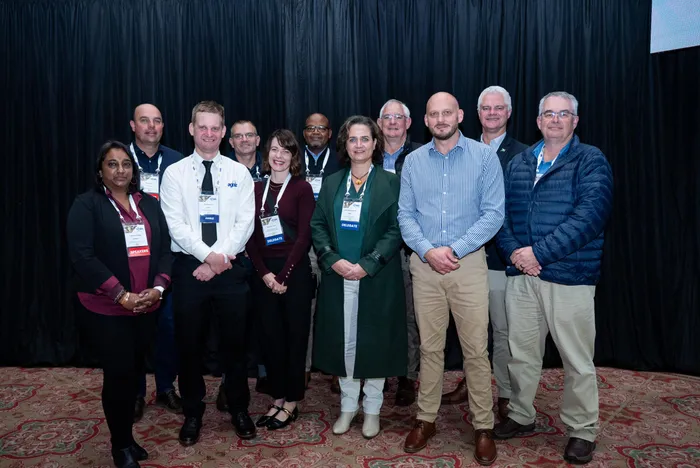
Agricultural Business Chamber of South Africa (Agbiz) newly elected leadership at its congress in Gqeberha , Eastern Cape
Image: Supplied by Agbiz
South Africa’s agricultural sector has called for a sharper focus on trade diplomacy, improved market access and infrastructure reform as geopolitical tensions and shifting global trade patterns reshape export opportunities for local producers.
These issues dominated discussions at the Agricultural Business Chamber of South Africa (Agbiz) Congress 2026, held in Gqeberha in the Eastern Cape, where industry leaders, government representatives and agribusiness executives gathered to chart a path for the sector’s future growth.
According to Agbiz chief economist Wandile Sihlobo, delegates agreed that South Africa must intensify efforts to maintain and expand access to key export markets while pursuing new opportunities in rapidly growing regions.
“The country must work to maintain and deepen access in these markets, while also expanding access for products that do not yet enjoy preferential or lower-tariff access,” Sihlobo said.
He noted that Africa, the European Union, the United Kingdom, the Americas and Asia remain vital markets for South African agricultural products. However, participants stressed the need to secure improved access for products that still face tariff barriers and limited preferential trade arrangements.
“These are the agricultural export growth regions, in addition to the access that the industry enjoys elsewhere. Securing better tariff access to several of these new markets will require South Africa to negotiate bilateral trade agreements with some countries,” he said.
Sihlobo said that it is in this desire for better access to new markets that the various participants and speakers at the Congress noted the need for South Africa to align its foreign policy and trade policy more rigorously going forward.
“Fortunately, the sector received a word of comfort from the Department of International Relations and Cooperation that the new Economic Diplomacy has begun to prioritise trade and investment much more strongly than before. There was, however, recognition that a stronger economic diplomacy strategy alone will not suffice,” he said.
Sihlobo added that they also need well-equipped people at South Africa's missions around the world.
“South Africa has over 100 missions globally, which should play a vital role in promoting trade and investment opportunities in South Africa, amongst other things. This is an area that agricultural stakeholders will continue to advance through various engagements with the government,” he said.
“Also prominent in the discussions in Gqeberha was the need to urgently review SACU, with the end goal of allowing South Africa some flexibility to engage in bilateral trade agreements.”
Sihlobo said that in the current setup, where South Africa must engage on trade issues collectively with other SACU members, the country has not moved quickly enough or with the necessary urgency to open new markets to serve South African business and society.
“The world is changing, and countries are forming new trade agreements. South Africa risks being left behind if their approach to SACU is not urgently reviewed. Moreover, trade agreements alone will not be enough to boost exports,” he said.
“Thus, they devoted one afternoon to focusing on reforms in the network industries. Improving the efficiency of ports and rail was the key issue that arose from the network industries discussion.”
Sihlobo added that the input from the Transnet leadership was that they are open to collaboration with organised agriculture, agribusiness, and private-sector stakeholders to ensure continued improvement.
“Rural crime is among the issues discussed, as it typically hinders agricultural growth and investment in the sector. Also worth noting is that the delegates at the Congress devoted time to discussing biosecurity, including both plant and animal health issues,” he said.
“South Africa has been plagued by foot and mouth disease and African swine fever, all presenting immense costs to the sector.”
Sihlobo concluded that discussion of long-term interventions to address these issues and improve plant health was part of the conference agenda.
“Overall, the Agbiz 2026 Congress’s discussions centred on deepening collaboration between government, business, organised agriculture, and other social partners to ensure the sector continues to grow.”
Minister of Agriculture John Steenhuisen said the theme of Agbiz Congress, “Embracing Collaboration”, was not simply a slogan.
“It is increasingly becoming an economic necessity. The next phase of agricultural growth in South Africa will not be delivered by the government alone, nor by the private sector alone. It will be built through practical partnerships focused on execution rather than an endless process,” he said.
BUSINESS REPORT