


On Youth Day, South Africa reflects on the legacy of young activists and the urgent need for innovative solutions to empower today's youth in a challenging economic landscape.
Image: Freepik
On 16 June, Youth Day, South Africa pauses not only to remember the courage of young people, but to confront the unfinished work of building a country worthy of their sacrifice.
Fifty years ago, Soweto learners protested an apartheid education system that sought to impose Afrikaans as a compulsory medium of instruction.
Their resistance was about far more than language. It was a demand for dignity, agency, access and the right to imagine a different future.
Today, Youth Day asks a different but deeply connected question: how do we give the country’s youth not only memory, but the means to build?
In a country confronted by persistent youth unemployment, the challenge before us is to innovate with intent and to architect a future rooted in solving the problems we live with every day.
According to Statistics South Africa’s Quarterly Labour Force Survey for Q1 2026, the national unemployment rate stands at 32.7%.
The burden remains disproportionately carried by young people, particularly those aged 15 to 24 face an unemployment rate of 60.9%, while those aged 25 to 34 face a rate of 40.6%. More than 3.9 million young people aged 15 to 24 are not in employment, education, or training. That alone, is reason to pause.
During my doctoral studies, I started my own foray into the architecture of language.
My work focused on developing a digital system that used artificial intelligence (AI) to scale educational resources in local languages.
Designed for a standard mobile phone, already accessible to many families, its ambition was simple: if language had once been used as an instrument of exclusion, technology could help make it an instrument of access.
At the time, rolling out such a system across the education sector was an enormous undertaking.
African-language translation technology was still emerging, investment requirements were significant, and accessible digital education infrastructure was limited. Similar barriers later kept promising public-service ideas stuck between prototype and scale.
Today, the kind of multilingual AI capability I worked towards has moved from research possibility into practical deployment.
At Telkom, AI-powered platforms such as Bafo, built on earlier investments in speech analytics and large language models that can operate in the African context, are improving contact-centre experiences and supporting more effective customer interactions.
Telkom’s 2025 Integrated Report records R46 million invested in research, development, and innovation, including FutureTech grants focused on large language models for South African languages, 5G technologies for essential services in remote areas, and IoT-enabled smart agriculture.
The lesson here is clear: local intellectual property does not scale by accident, it takes intent and most importantly, investment.
It scales when research is funded, when private and public institutions collaborate, and when we create deliberate pathways from knowledge creation to deployment.
The country is not short of ideas, but too often, our innovation pipeline is held back by the “valley of death” between ideation and commercial scale.
The SA MSME Access to Finance Report 2025 underscores the persistent finance gap facing small businesses.
Micro-enterprises are major contributors to job creation and often described as the “backbone of the economy” but remain among the most underserved by formal funding systems.
When early-stage ventures cannot access capital, local IP fails to cross into the market. The result is a country rich in talent but poor in scaled outcomes.
This commercialisation crisis is inseparable from SA’s broader decline in research and development investment.
The 2025 Science, Technology, and Innovation Indicators report noted that gross expenditure on R&D as a percentage of GDP declined from 0.76% in 2017/18 to 0.61% in 2022/23, moving us further from the national target of 1.5% by 2030. Business-sector contribution to R&D also fell from 45.9% in 2013/14 to a low of 30% in 2020/21, recovering only to 35.4% in 2022/23, while government now funds more than half of all R&D.
At Telkom, we continue investing in knowledge. Through the FutureTech programme, and together with the National Research Foundation, we are co-funding technology postgraduate research in AI and language technology, giving priority to historically disadvantaged universities.
Through FutureMakers, Telkom has also supported more than 2,600 Black-owned SMMEs. And in 2025 alone, we increased investment by 153% to support businesses run by young people and women, which have generated almost 74, 000 jobs.
These are examples of what becomes possible when innovation is connected to transformation, enterprise development, research capacity and skills development. But they must not remain isolated examples.
They must become part of a broader national compact to fund, protect and scale South African innovation.
As we mark Youth Day, we should ask ourselves whether the next 50 years will be shaped by imported platforms and externally owned intellectual property, or by African technologies built by young people whose languages, contexts and ambitions are treated as national requirements from the start.
Dr Mmaki Jantjies is tge Group Executive: Innovation and Transformation at Telkom.
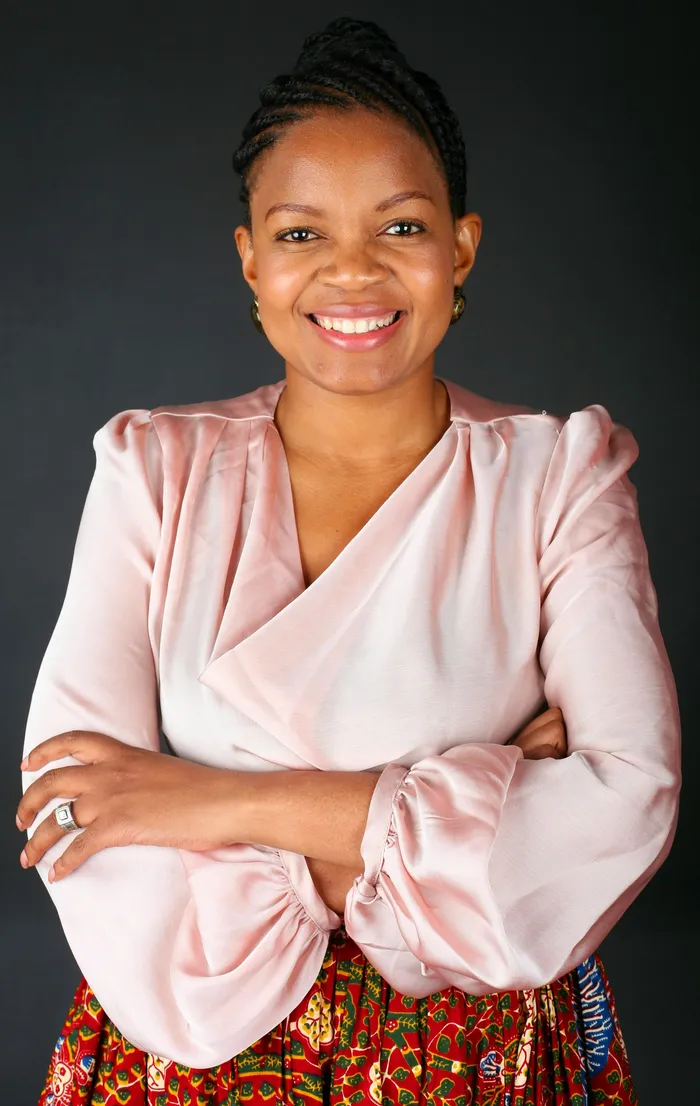
Dr Mmaki Jantjies.
Image: Supplied.
Follow Business Report on Facebook, X and on LinkedIn for the latest Business and tech news.