

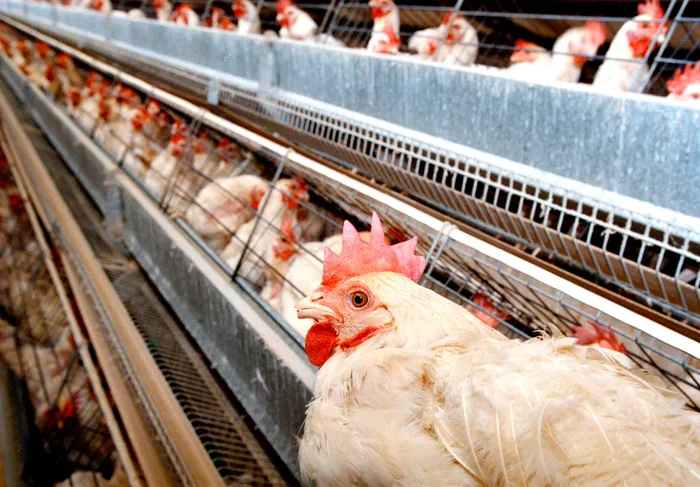
A webinar hosted by Fairplay on Thursday indicated that South Africa's poultry exports have not improved in recent years, with exports lower in 2025 than in 2019.
Image: File
South Africa's poultry industry is intensifying efforts to secure new export markets as producers seek to unlock growth beyond a stagnant domestic market, with industry leaders arguing that the sector has developed the capacity and competitiveness needed to become a significant global exporter.
The call emerged during a webinar hosted by FairPlay on Thursday, where industry representatives highlighted the gap between the poultry sector's growing production capabilities and its limited export performance.
According to FairPlay founder Francois Baird, South Africa's poultry exports have shown little progress over the past six years, with export volumes in 2025 remaining below levels recorded in 2019.
Francois Baird, founder of FairPlay, argued that global poultry markets remain heavily influenced by government support measures, particularly in major exporting nations, creating challenges for countries seeking to expand their international market share.
He cited research by the Organisation for Economic Co-operation and Development (OECD), which found that nearly 60% of Chinese companies' gains in global market share since 2005 could be attributed to subsidies. Global subsidies reached $108 billion in 2024, with more than half directed towards Chinese companies.
Despite these challenges, Baird expressed confidence in the future potential of South Africa's poultry sector.
“Fair Play will continue to fight predatory trade, particularly in poultry, because there are good reasons to do so. Chicken exports in 2025 were lower than in 2019. Thus, there has been little progress since 2019,” he said.
The South African poultry industry has undergone a significant transformation over the past decade, according to Izaak Breitenbach, CEO of the South African Poultry Association (SAPA).
Breitenbach said the industry was in a state of distress 10 years ago, struggling with rising imports and declining market share, leaving producers unable to invest sufficiently in expansion and modernisation.
“Per capita consumption was taken away by imports, so really an industry in distress, an industry not geared for exports,” he said.
“Since 2019, when the first master plan was signed, the fortunes of this particular industry have changed materially. This industry today has grown 26% since 2019.”
The industry has invested approximately R2.1 billion in new production capacity and significantly improved its operational efficiency.
According to Breitenbach, South African producers now boast one of the most efficient feed conversion ratios globally and have achieved a major milestone by producing chicken at a lower cost than producers in the United States for the first time.
“This industry has the lowest feed consumption ratio in the world. The industry has been producing chicken cheaper than the European Union for the last 13 years,” he said.
Breitenbach said that they have created 120,000 tons of cooking capacity for poultry meat that never existed.
He described exports as a strategic priority that could transform not only the poultry industry but also the broader grain value chain, given the significant demand for feed inputs used in poultry production.
“This industry is ready to export cooked meat to different countries in the world. But yet they are not doing it. The industry has local demand that is stagnating, and needs to open up new markets to export cooked meat,” he said.
“It can export vast amounts of chicken. The industry can compete globally in the markets that the sector has identified and become a net exporter of chicken meat. There is a need for more countries to inspect South Africa’s chicken so there can be more opportunities for global exports.”
Breitenbach said the sector was in discussions with the Department of Agriculture, Department of Trade Industry and Competition, and the Department of International Relations and Cooperation all the time to facilitate these processes.
Meanwhile, Gerald Walter, group executive at Sovereign Chicken, said export growth had become essential for long-term business expansion.
“There is a need to export because of the stagnated growth in South Africa. And for the business to grow, they need to get some sort of value somewhere else. The business has identified certain regions and certain areas,” Walter said.
“Initially, it was the Gulf area because of the access to get into the Gulf region. Many people don't understand in the industry that South Africa, besides its competitiveness, holds products that none of the world can actually supply.”
BUSINESS REPORT