

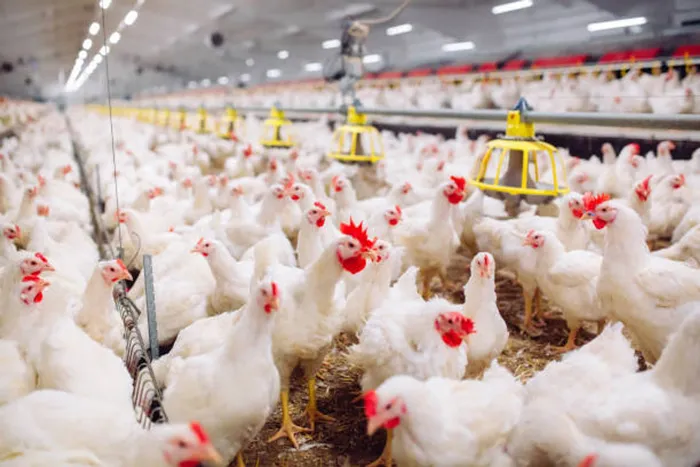
FairPlay’s founder Francois Baird said in a statement that the poultry farmers face many challenges including rising diesel price costs with urgent plan of action needed..
Image: File
Lobby group FairPlay has warned that soaring diesel and electricity prices are placing South Africa’s poultry industry under mounting pressure, threatening food security, jobs and the long-term sustainability of one of the country’s most important agricultural sectors.
FairPlay founder Francois Baird said urgent government intervention is needed to shield farmers and consumers from escalating costs linked to rising fuel prices and worsening infrastructure failures.
“The agricultural sector has repeatedly grown and created jobs when other sectors have struggled. Farmers are tough. They have faced and overcome Covid challenges, tariff wars, collapsing infrastructure such as electricity, water and roads, and disease, from avian influenza (bird flu) in poultry to foot and mouth disease in cattle.”
However, he warned that rapidly rising energy costs now posed a fresh and potentially devastating threat to the agricultural sector.
“The war in Iran has sent the price of oil soaring, causing higher petrol and diesel prices around the world,” he said.
“In South Africa, the Iran conflict has resulted in massive fuel price increases in April and May. Even if they come down a bit in June, the forecast is that fuel prices will stay high for a long time.”
Baird said that diesel prices were particularly concerning because diesel powers transport, production and distribution across much of the agricultural value chain.
“And diesel powers transport, production and distribution across large parts of the agricultural sector. Expensive diesel means higher costs for farmers and higher prices for consumers. The government and the body politics now have an urgent challenge to ensure that the agricultural engine does not sputter.”
The poultry industry, which supplies one of the country’s most affordable protein sources, faces additional pressures from dumped chicken imports, bird flu outbreaks and regulatory obstacles, according to FairPlay.
Baird said government should move urgently to tighten anti-dumping protections against unfairly priced chicken imports and simplify regulations that are delaying mass vaccination programmes against bird flu.
“It means the government should revisit overly complex regulations which are preventing mass vaccination against bird flu. It means the government should at last compensate farmers for the millions of chickens it has ordered to be culled during bird flu outbreaks.”
FairPlay also criticised the Competition Commission for pursuing what it described as unnecessary investigations into the poultry sector at a time when producers are already facing rising operational costs.
Baird said the ongoing poultry market inquiry risked undermining profitable producers and weakening the sector further.
FairPlay renewed its call for government to introduce VAT-free chicken products, particularly portions most commonly consumed by poorer households.
“The government has resisted VAT-free chicken for years, even as hunger and poverty worsened. The need is now critical. Fit for purpose is the strategic requirement. The government must improve the enabling environment for farmers – improved municipal services and infrastructure and measures to lower energy costs in the value chain.”
FairPlay outlined a list of urgent interventions it believes should form part of a coordinated national response under the revised Poultry Masterplan.
These include implementing VAT-free chicken, tightening anti-dumping measures, ending the poultry market inquiry, enabling a nationwide bird flu vaccination programme, closing loopholes that allow unfairly priced imports into South Africa and accelerating poultry export growth.
Baird said poultry exports would be critical to the long-term sustainability of the industry, warning that inadequate government support contributed to the failure of export expansion targets under the first phase of the Poultry Masterplan.
“That must not happen again in Phase 2, with exports identified as critical to the long-term prosperity of this strategic national industry. Soaring diesel and electricity prices could reduce the roaring agricultural engine to a spluttering two-stroke,” he said.
BUSINESS REPORT