

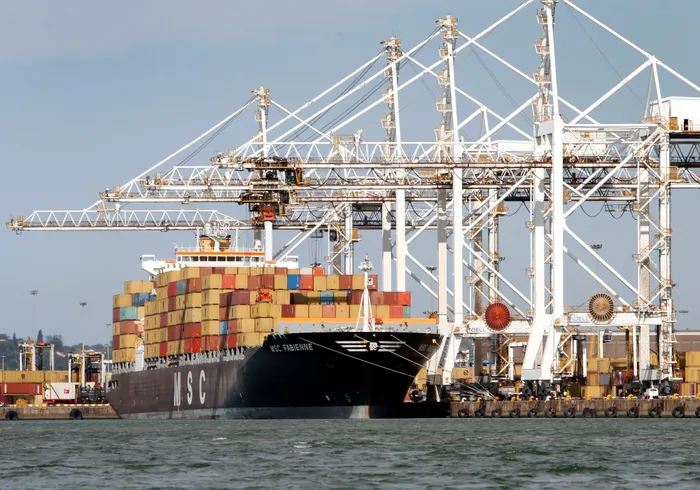
South Africa's economy expanded by 1.1% in 2025, according to StatsSA. Official GDP figures for the first quarter of 2026 are due to be released next Tuesday, with most analysts predicting modest growth despite ongoing resilience in parts of the economy.
Image: Shelley Kjonstad/Independent Media
South Africa’s economic growth is expected to have slowed in the first quarter of 2026, with economists forecasting that Gross Domestic Product (GDP) growth will come in below the levels recorded during the same period last year.
Official GDP figures for the first quarter of 2026 are due to be released next Tuesday, with most analysts predicting modest growth despite ongoing resilience in parts of the economy.
Nedbank on Monday said it expects real GDP growth to have eased from 0.4% quarter-on-quarter in the fourth quarter of 2025 to around 0.2% in the first three months of 2026.
According to Nedbank, services remained the key driver of economic activity, supported by strong performances in domestic trade and financial services. Agriculture also started the year on a positive note, benefiting from favourable rainfall conditions experienced last year, while mining output improved. However, manufacturing and electricity production continued to face challenges.
The bank expects agriculture to post stronger growth, supported by robust harvests of field crops and horticultural products. Nevertheless, the livestock sector, which accounts for more than 40% of agricultural gross value added, remained under pressure due to outbreaks of Foot-and-Mouth Disease and African swine fever.
Mining production also recovered, led by stronger output from platinum group metals and gold. In contrast, manufacturing weakened further as half of the country’s ten manufacturing divisions recorded contractions.
Although South Africa avoided load shedding during the quarter, electricity, gas and water production likely declined as electricity generation fell by 0.8% quarter-on-quarter and municipalities continued to grapple with worsening water supply challenges.
Construction activity is also expected to have remained weak, reflecting lower building activity and subdued confidence among hardware retailers, building material manufacturers and residential builders.
However, the bank expects positive contributions from government services and personal services.
Despite the softer first-quarter performance, Nedbank still forecasts economic growth to improve slightly from 1.1% in 2025 to 1.2% in 2026, supported largely by consumer spending and the benefits of earlier interest-rate cuts.
However, the ongoing conflict involving Iran poses significant risks to the outlook. The bank warned that higher fuel prices have already added inflationary pressure, prompting the South African Reserve Bank to raise interest rates, with further tightening remaining a possibility.
“This threatens to remove an important source of support for household spending and investment, leaving the risks to the growth outlook firmly skewed to the downside. Over the next three years, we forecast an average growth rate of around 1.7%.”
Professor Waldo Krugell, an economist at North-West University, expects year-on-year growth of around 0.8%.
He noted that first-quarter data is unlikely to fully reflect the impact of higher oil prices because fuel price increases only began taking effect in April.
“Fuel prices only started increasing in April. The impact of those on consumer spending will only really be visible later when the higher fuel costs and higher repo rate hit. So, the Q1 number should still reflect a bit of the optimism from the start of the year,” he said.
Ulrich Joubert, an independent economist, said rising electricity tariffs and fuel costs will increasingly weigh on economic activity.
He pointed out that earlier projections by the Bureau for Economic Research at Stellenbosch University suggested growth above 1.5% for the first quarter, supported by momentum from late 2025.
“That was based on the fact that we had some momentum going in the last quarter of 2025. Now we have these headwinds in the second quarter, which will surely slow down the growth,” he said.
Investec chief economist Annabel Bishop said while GDP growth will be afflicted by the global oil shock, they do not expect to see South Africa’s growth collapse.
Bishop is forecasting economic growth of 1.3% to 1.4% for this year as the increased demand for exports helps offset higher fuel import costs.
BUSINESS REPORT