

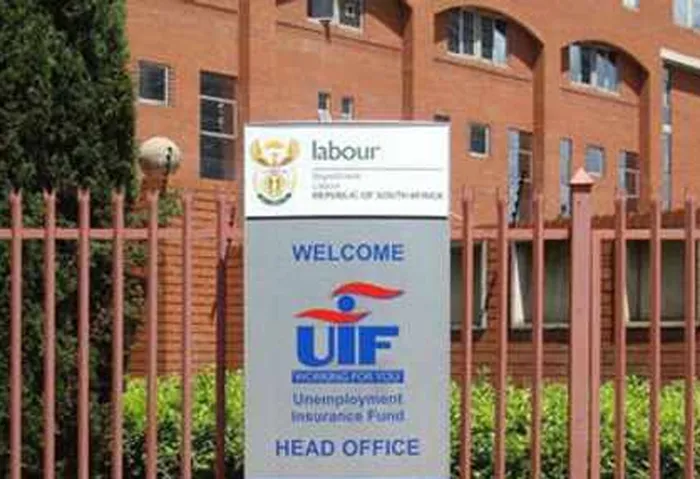
Business Unity South Africa and trade unions have raised concerns about alleged dysfunction and governance failures at the Unemployment Insurance Fund. The UIF says withdrawing from Nedlac structures does not promote engagement, constructive dialogue and adherence to institutional processes.
Image: Supplied
The UIF (Unemployment Insurance Fund) insists meaningful governance reform is possible inside established statutory structures and not through disengagement from the institutions created to facilitate oversight and social dialogue, such as Business Unity South Africa’s (Busa) recent disengagement from the UIF Nedlac structures.
The UIF, which operates under the Department of Employment and Labour, on Friday responded to Busa’s withdrawal from Nedlac UIF structures. The business representative organisation had also joined several trade unions in calling for the UIF and Compensation for Occupational Injuries and Diseases Fund to go under administration or new management - the trade unions had cited corruption and dysfunction as the main reasons.
Business Unity CEO Khulekani Mathe said last week they had withdrawn from the UIF structures following six years of “sustained effort” to help reform problems at the UIF. He also said that a forensic investigation was needed at the UIF to assess the “legality and appropriateness” of all fund expenditures. “The current situation is unsustainable,” he said.
Four trade unions, Cosatu, Federation of Unions of South Africa, South African Federation of Trade Unions, and National Council of Trade Unions, want the Hawks and Special Investigating Unit to be deployed to the UIF and Compensation Fund to probe “systemic and serious corruption.”
Responding to questions on the matter from Business Report, the UIF said: “Robust debate, differing perspectives, and critical scrutiny are integral components of good governance. However, these objectives are best realised through active participation in governance forums rather than withdrawal from them.”
Responding directly to an issue raised by Mathe, the UIF said it would, in the interests of transparency, explore “the publication of the names of Labour Activation Programme (LAP) partners and to present the LAP Impact Report to NEDLAC,” once it has been finalised, during the current financial year.
Mathe had expressed concern that UIF contributors were being left without support while UIF funds were redirected, delayed, or absorbed into programmes, such as the LAP’s, “that do not directly address the statutory entitlements."
He said the LAPs were being “continuously expanded” and appear to overlap with the mandate of the Department of Higher Education and Training, and Sector Education and Training Authorities.
The UIF said it acknowledged concerns about the frequency of reporting to the task team and said reports forming part of quarterly performance reviews were subject to “rigorous internal quality assurance and validation processes.”
“As such, requiring these reports on a monthly basis may compromise their quality and reliability. The UIF remains committed to providing timely and accurate information while ensuring that reporting standards are maintained,” it said.
The fund said during the governance engagements at Nedlac, the UIF had consistently advanced proposals aimed at strengthening institutional governance and improving labour market outcomes.
These included the need to improve employer compliance with the Unemployment Insurance legislative framework to protect contributors and beneficiaries, strengthen the financial sustainability of the Fund, and enhance service delivery.
The UIF said it has also consistently advocated for policy reforms that would enable government institutions to respond more effectively to internal and external economic shocks affecting employment, while supporting interventions that preserve jobs, facilitate labour market participation, and reduce unemployment.
“Unfortunately, the proposals by BUSA, which the UIF needed further information to engage further on, suggested coming up with processes that will change benefit processes. Especially because they are not in line with the UIF process,” the UIF said.
The UIF said during recent engagements with the social partners, it had proposed that the task team's Terms of Reference be reviewed to better reflect current labour market realities, recognising that the committee was initially established during the COVID-19 pandemic.
The UIF had further proposed that the task team prioritise improving the efficiency and timeliness of benefit payments by addressing the root causes of delays, particularly employers' failure to submit accurate and up-to-date employee declarations.
The UIF had further proposed to prioritise the strengthening of initiatives to expand access to UIF services, and improve communication strategies to ensure that workers and employers are better informed about available services.
It also proposed supporting initiatives to “revitalise the labour market” in response to high unemployment and economic conditions. Strategies to improve the resilience and labour intensity of the economy in the face of global economic pressures would also be explored.
“The UIF has, in all material times, held the view that the effective discharge of public governance responsibilities is best achieved through continued engagement, constructive dialogue, and adherence to established institutional processes,” the UIF said.
Visit:www.businessreport.co.za