

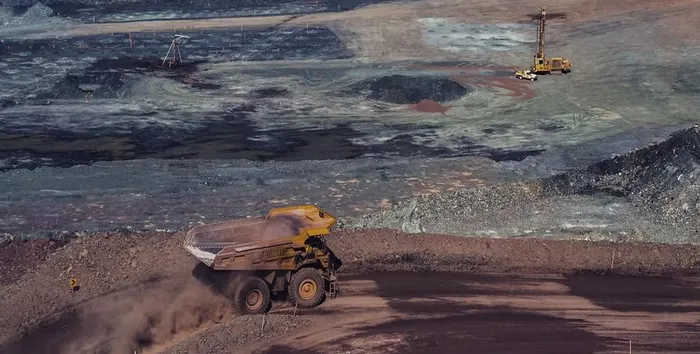
Located in central Zambia, the Kabwe Mine was among the world’s richest zinc and lead producers, operating from 1904 to 1994. Shuka Minerals says its initial drilling so far indicates ore body results that far exceed historical averages.
Image: Supplied
London AIM and JSE-listed Shuka Minerals, an African-focused mine operator and developer, said Wednesday it has completed its fifth drill hole at the No. 2 ore body at the Kabwe Zinc Mine in Zambia, and the sixth drill is underway.
“Having had a 100% hit rate at our No. 2 ore body, with results far exceeding historical averages, we turn our focus to other highly prospective areas of Kabwe. I look forward to updating shareholders as the results are received from the balance of Phase 1 drilling,” Shuka’s CEO Richard Lloyd said in a statement on Wednesday.
The fifth diamond drill hole was planned as a deep hole and was designed to intersect the ore body at about 320-350 metres depth and to test the western limb of the originally projected orebody.
Historical plans show remaining medium to high-grade blocks to a depth of 1650 feet (550 m) depth, with mine development at these depths.
"The deeper planned holes of any drilling campaign always contain some trepidation as you wait for expected ore zones to be hit. The skill of OX drilling, especially in light of intersecting historic mine workings and cavities, helped deliver further high-grade zinc and lead mineralisation. This deep hole gives us much more information about the orebody and its behaviour at depth, and we are now confident we can drill…to confirm the deepest reaches of the previously developed ore body,” said Lloyd.
Previously, a Behre Dolbear 2023 NI 43-101 report indicated that the No. 2 ore body has 3,1 million tons of ore remaining at grades of 11,4% zinc and 1.7% lead, plus silver and vanadium oxide.
The fifth hole, KBDD05, returned 38,90% zinc over 3,50m from 338m to 341.5m (down hole), based on an average of 10 individual portable XRF pinpoint readings.
The hole encountered a mining cavity between 324,90m and 327,75m downhole that was possibly associated with previous workings. A combination of karst (solution cavities) and the mining void contributed to a westward deviation to the hole. The skill of the drillers enabled drilling to continue to a final depth of 419m, said Lloyd.
Drilling on the sixth hole had commenced to intersect a previously unexploited orebody in the "Speaks" area about 1 kilometre from the Pit 2 area where studies had been focused to date. The anticipated depth of drill hole 6 would be at 250m - 300m.
“We can clearly see the mineralisation continues at depth and at the same time are successfully testing the western limits of the known ore body. This deep hole will enable us to accurately plan further deep holes to the east of, and below, the intersections recorded above,” said Lloyd.
He said the drilling aligns with the company's objectives for its 2026 exploration program aiming to increase the existing resource by 50%, subject to the results of the drilling programme.
The GeoQuest geological team are on site with Lloyd, who is overseeing the initial (2,000 m) phase of drilling. Drilling is being undertaken by Ox Drilling, a contractor operating in Zambia.
Shuka’s share price fell 4% to 72 cents on the JSE Wednesday afternoon, a price that has fallen substantially from R1,40 a year ago.
Visit:www.businessreport.co.za