

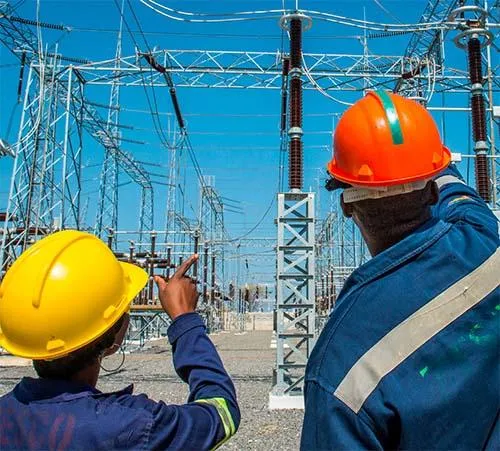
So far, Mission 300, which plans to raise $500bn for the electrification drive by 2030, has seen 30 countries out of 48 sign Compacts to enable its goals.
Image: Supplied
The World Bank Group and the African Development Bank Group announced in Cape Town on Tuesday the Mission 300 project has connected over 50 million people to electricity across 40 countries in sub-Saharan Africa, in just two years, while over $20 billion in funding has been raised.
So far, Mission 300, which plans to raise $500bn for the electrification drive by 2030, has seen 30 countries out of 48 sign Compacts to enable its goals. Together, the African Development Bank Group and the World Bank Group have mobilised nearly $15bn in financing commitments for Mission 300-related projects, while additional development partners have pledged more than $7bn in support of Africa’s energy sector.
Andrew Herscowitz, CEO of the Mission 300 Accelerator for The Rockefeller Foundation, and who spearheads the project, told Business Report in an interview six more countries were signing Compacts at the Africa Energy Forum conference in Cape Town this week: Burkina Faso, Gabon, Rwanda, Uganda, Djibouti, and the Central African Republic.
He said while South Africa has not signed a Compact, the country has provided great collaborative assistance for the project.
Mission 300 was launched in 2024 by the World Bank Group and the African Development Bank Group, supported by The Rockefeller Foundation, Global Energy Alliance for People and Planet, and Sustainable Energy for All, as well as governments, development institutions, and the private sector. Its aim is to provide electricity access to over 300 million people in sub-Saharan Africa.
Herscowitz said their aim was to connect 300 million across sub-Saharan Africa in an “accelerated manner” with expanded power grids, including off-grid solutions such as solar home systems. he said a previous project, Power Africa, had provided electricity access to 200 million Africans, but this was done over 11 years, and they now needed to speed up the provision of electricity access to take account also of population growth.
He said the 50 million people milestone reflects an acceleration of both on-grid and off-grid access rates achieved through investments across the full value chain, including generation, transmission, and distribution, to add and service more customers.
In Tanzania, for example, 7.5 million people had gained access to power since July 2023, a five-fold increase in the average annual pace of electrification prior to Mission 300, made possible by increased financing, policy momentum, and renewed focus on reaching rural communities through on-grid and off-grid solutions.
In Nigeria, over 4.5 million people had been connected under Mission 300, largely through off-grid solutions implemented predominantly by private sector providers, supported by grants, concessional financing, and guarantees that make it viable for suppliers to connect previously underserved populations.
He said wider electricity access is allowing children to study at night, shops to stay open longer, agricultural producers to replace expensive generators with more affordable solutions, and entrepreneurs to grow their businesses and hire more workers.
“The aim of it all is to create jobs in the region, to provide power for more industrialisation and job creation,” he said.
“Fifty million people connected to electricity means 50 million lives changed,” said Ajay Banga, President of the World Bank Group.
“Mission 300 is absolutely central to our jobs agenda. If Africa is to generate enough jobs for its growing population, it needs power – reliable, affordable power – for businesses to grow, for economies to compete, and for people to have higher levels of quality of life.”
“Progress must accelerate to reach 300 million people by 2030,” said Sidi Ould Tah, President of the African Development Bank Group, “through greater private sector engagement, stronger implementation, and unwavering support from governments, development partners, and philanthropic partners.”
Herscowitz said blended funding from philanthropic partners was essential, as it enabled projects to be developed at lower funding rates, than at commercial rates, thuis enabling affordable electricity access projects.
“Connecting over 50 million to electricity is a major milestone. It proves that African-led ambition, empowered by bold investment and partnership, can deliver results quickly and at scale,” said Rajiv J. Shah, President of The Rockefeller Foundation.
He said The Rockefeller Foundation, along with the Global Energy Alliance, had so far committed more than $100 million to Mission 300 because they knew that every new connection meant a family with new access to the jobs, education, and the dignity they deserve,.
The National Energy Compacts signed by over 30 countries enable the countries to strengthen utilities, expand least-cost power generation, scale renewable energy solutions, promote regional integration, and attract greater private sector participation.
Herscowitz said their main challenge was to put the funds they have available into projects on the ground as fast as possible, as there was, at this juncture, no shortage of funding.
He said the work ahead remains urgent as African populations continue to grow; as of 2024, close to 600 million people in sub-Saharan Africa lived without access to electricity.
BUSINESS REPORT