

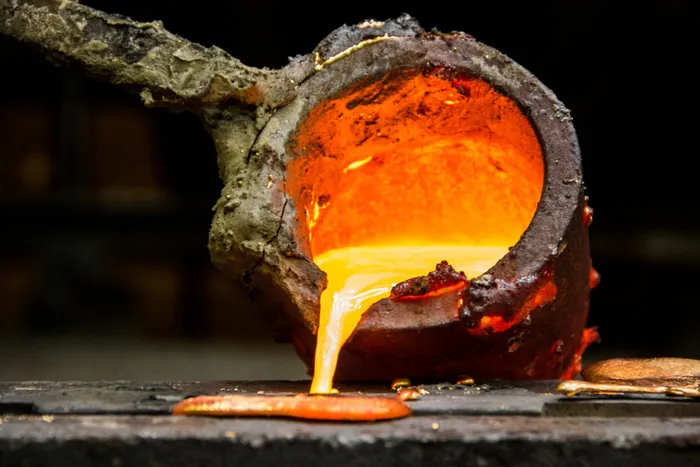
The value of global gold bar and coin surged to a new record in the first three months of 2026 as retail investors bought the yellow metal through a period of global geopolitical uncertainty as the conflict in the Middle East deepend.
Image: Supplied
Around the world, retail investors flocked to gold prices’ strong upward momentum and safe-haven appeal in the first three months of this year, driving bar and coin demand up 42%, while demand from China surged the highest by 67% to a new record.
Global sales of gold bar and coin that are typically bought by retail investors came to 474 tons in the quarter, but jewellery demand slumped, the latest World Gold Council Gold Demand Trends report showed.
Due to the higher price of gold, the value of demand surged 74% year-on-year, also to a record $193 billion, while overall global sales volumes increased modestly by 2% to 1,231 tons. African miners are responding with new investments.
“Gold’s volatility has markedly increased in 2026, with prices peaking above $5,400 per ounce in January before a significant but contained correction,” said World Gold Council Senior Markets Analyst Louise Street.
“The combination of price momentum and heightened geopolitical risk propelled investment demand, most notably in Asia, as investors sought security in physical gold. Alongside this, continued central bank buying offset tactical selling.”
Demand in China for bar and coins increased to 207 tons, much higher than the previous quarterly record of 155 tons in the second quarter of 2013. Other Eastern markets, including India, South Korea, and Japan, also saw an increase in bar and coin buying, contributing to a structural shift in gold demand, the World Gold Council said.
Bar and coin demand also saw strong growth in the US and Europe, up 14% and 50% respectively.
Physically-backed gold ETF demand remained positive: holdings increased by 62 tons, largely supported by strength across Asian-listed funds, which added 84 tons. Sizeable outflows in March, mostly from US-listed funds, tempered a very strong start to the year.
Jewellery demand fell sharply by 23% to 300 tons in reaction to the higher prices. Demand weakened across all major markets, notably in China (-32%), India (-19%), and the Middle East (-23%). However, in value terms, jewellery demand increased, indicating continued consumer willingness to spend on gold despite record prices.
“Market analysis suggests some jewellery consumption has moved into bar and coin demand, particularly in markets like China and India where jewellery can act as a proxy investment,” the report’s authors said.
Central banks continued to support overall demand, adding 244 tons, with growth at 3% year-on-year. Central Bank purchases exceeded the previous quarter and the five-year average despite an uptick in selling by a small number of institutions, including the Central Bank of Turkey, the Central Bank of the Russian Federation, and The State Oil Fund of Azerbaijan.
“Market activity underscored gold’s unique role as an indispensable reserve asset, accessible during times of extreme market turbulence,” said Street. Demand for gold used in technology edged up 1% to 82 tons, fuelled largely by continued growth in AI infrastructure.
Mine production reached a new first-quarter record, while recycling increased modestly by 5%, suggesting a relatively muted supply response and tighter overall market conditions.
“Looking ahead, the geopolitical risk premium should continue to support investment demand, though higher-for-longer interest rates may present headwinds, especially in Western markets. Jewellery spending is expected to remain resilient. On the supply side, mine production is expected to grow modestly, although potential energy shortages could temper that outlook,” said Street.
Energy Capital & Power, an investment platform for projects in Africa, said in a statement African gold producers are accelerating project development to capitalise on the market trends and drive their own GDP growth.
Ghana, Africa’s largest gold producer, aims to increase output to 6,5 million ounces from 6 million in 2025 by accelerating projects such as the Cardinal Namdini, Ahafo North, Black Volta, and Bibiani mines, alongside artisanal and small-scale gold mining (ASGM) operations.
Mali, Africa’s second-largest gold producer, seeks to increase production beyond the current 60 tons per year. Recent licence renewals and grants include Toubani Resources’ Kobada Mine, Barrick Mining’s Loulo-Gounkoto Mine, B2Gold’s Fekola Mine expansion, Compass Gold’s Massala Mine, and Roscan Gold’s exploration permits.
The Democratic Republic of Congo (DRC) aims to increase gold exports to 15–18 metric tons in 2026. Meanwhile, several projects across the continent have also reached final investment decisions. Beneficiation efforts to maximise the value of Africa’s gold resources include the DRC’s partnership with Lunga Mining to launch a pilot gold refinery in Kalemie.
Ghana’s Gold Coast also partnered with South Africa’s Rand Refinery to enhance local gold processing in Ghana. Egypt is collaborating with the African Export-Import Bank to develop an integrated gold value chain, while Mali is developing a refinery in partnership with Russian investors.
BUSINESS REPORT