

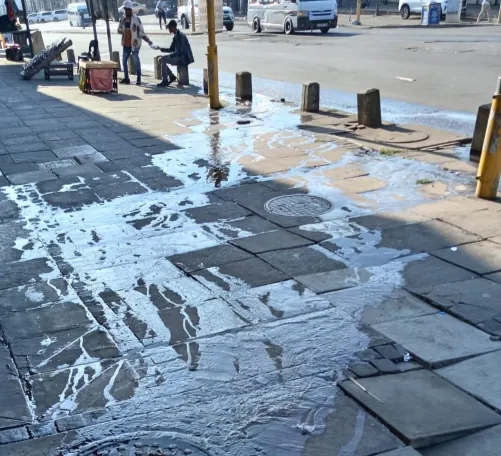
For many citizens, the quality and reliability of these services have declined as ageing infrastructure, inadequate maintenance, financial pressures and governance challenges have outpaced population growth.
Image: Supplied
The contrast between well-managed municipalities and those in persistent distress has widened.
This leaves many rural communities, informal settlements and smaller towns with unreliable water, deteriorating sanitation and limited refuse collection, says Dianne Davies, an independent advisor.
She says South Africa's municipal services tell a story of both progress and growing strain.
“Since 2015, millions more households have gained access to electricity, piped water and improved sanitation, reflecting a continued investment in essential infrastructure. Yet for many citizens, the quality and reliability of these services have declined as ageing infrastructure, inadequate maintenance, financial pressures and governance challenges have outpaced population growth."
"Rising municipal tariffs have placed increasing pressure on households, while many families now pay twice, first through municipal rates and service charges, and again for private alternatives such as solar power, water storage, boreholes and security,” Davies says.
The independent advisor says the evidence suggests that SA's challenge is no longer simply expanding access, but restoring dependable service delivery through competent leadership, preventative maintenance, transparent financial management and stronger accountability.
With the right reforms, the country has the technical expertise, institutional foundations and local success stories to build municipalities that deliver reliable, affordable and sustainable services for every household, she adds.
According to Old Mutual Alternative Investments, SA's water challenge is also a revenue and infrastructure efficiency challenge.
The private alternative investment manager says every lost litre erodes the revenue municipalities need to maintain the very network the losses flow from: weaker pipes, less revenue, delayed repairs, faster deterioration.
For investors, the company says this is where the opportunity becomes more practical and measurable.
“Smart metering, leak detection, pipe replacement, pressure management and performance-based models can help municipalities reduce losses while improving service delivery. When it comes to water, some of the most investable opportunities may come from making existing systems work better.”
Meanwhile, Christo Owen van der Rheede, an Current Adjunct Professor at University of the Free State Economics and Management Sciences Faculty says once the backbone of SA's fixed capital investment, the construction sector is undergoing a profound structural shift.
He says data from Statistics South Africa (Stats SA) shows the industry's GDP contribution fell from 4.2% in 2008 to roughly 2.3%, with total output shrinking from R156 billion in 2016 to under R100 billion.
Geographically, activity is shifting away from the country's main economic engine: Gauteng's share of construction income dropped from 39% in 2020 to 35%, while the Western Cape expanded its share to 24% reflecting changing regional investment dynamics, says van der Rheede.
“South Africa's construction sector is trapped in a difficult cycle: falling investment suppresses infrastructure capacity, site criminality deters capital, and fragmented jobs limit household spending. Reversing this trajectory requires decisive action: stamping out site extortion, expanding Public-Private Partnerships (PPPs) to de-risk major projects, and supporting SMME growth to build long-term economic resilience.”
Independent Media Property