

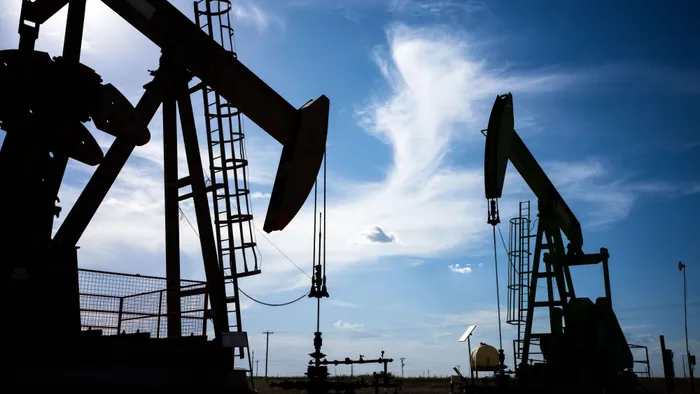
Oil prices continue to rise as the Mideast war intensifies.
Image: AFP
Any hopes that July's significant fuel price decreases were the start of a downward trend were shattered with the resumption of hostilities in the Middle East on July 7, which has sent international oil prices surging.
While prices remain below the levels seen before the ceasefire, Brent crude has climbed significantly, rising from around $72 a barrel in early July to approximately $85.
But how will that affect August fuel prices in South Africa?
It's bad news on the diesel front, however, with the projection points to increases of approximately 98 cents for 50ppm and R1.10 for 500ppm.
These predictions come with a big caveat, however, as the situation in the Middle East remains volatile and much can still happen during the remainder of this month.
For the record, a litre of 95 Unleaded now costs R25.23 at the coast and R26.11 in Gauteng, where 93 Unleaded retails for R25.94. The wholesale price of 500ppm diesel is currently pegged at R23.91 at the coast and R24.78 inland, with 50ppm costing R24.41 and R25.16 respectively.
Although petrol is still showing month-to-date over-recoveries of between R1.14 and R1.18 per litre, according to the Central Energy Fund (CEF), the latest daily data indicates under-recoveries of around 50 cents per litre. If current oil prices persist, those daily under-recoveries are likely to continue eroding the month's average, reducing the size of the expected price cuts to around 50 cents or less.
The bottom line is that any further, sustained fuel price relief will depend on a renewed ceasefire between the US and Iran.
The past week has seen the US resume airstrikes on Iranian military targets, while Iran has continued to threaten shipping in the Strait of Hormuz, as well as striking targets elsewhere in the Middle East.
Oil prices rallied, with international benchmark Brent North Sea crude powering above $85 a barrel, as the United States and Iran traded fresh attacks.
"Developments in the Middle East are getting worse by the hour."
The United States and Iran traded attacks on Friday, with Tehran targeting American assets across the Middle East in the biggest escalation since the two foes returned to outright war.
A month after the two sides agreed a memorandum of understanding aimed at ending the conflict that began in February, Iran accused US forces of hitting civilian and energy infrastructure on Friday including an airport, a railway station and two bridges, with state media reporting at least eight dead and 20 wounded in overnight attacks.
It signalled an apparent expansion of American strikes with a focus on Iranian infrastructure, which US President Donald Trump has previously threatened to hit, but there was no immediate comment from US officials.
However, with the economic costs mounting rapidly for all parties, there appears to be a willingness to avoid a prolonged war. US officials have indicated a willingness to negotiate, while regional mediators continue their efforts to restart talks, according to Al Jazeera.
But while the two sides continue to exchange strikes, fuel prices are likely to remain elevated for the foreseeable future.
Asian and European stock markets took their cue from Wall Street, where sharp falls in Nvidia and Amazon helped drag down the Nasdaq by more than one percent Thursday.
Netflix meanwhile plunged more than nine percent in after-hours trading as it warned of a second quarter of slowing sales growth.
With South Korea enjoying a holiday on Friday, Tokyo and Taipei - also heavily weighted toward tech - were at the forefront of Asia's latest selling heading into the weekend.
Japan's Nikkei ended the day down four percent with shares in semiconductor tester Advantest, Tokyo Electron and tech investment titan SoftBank each sliding more than seven percent.
Chipmaker Kioxia collapsed 16 percent, meaning it has lost around half its value since briefly becoming Japan's biggest firm by market capitalisation last month.
Taiwan's Taiex had shed 6.5 percent by the close Friday, as chipmaker TSMC retreated more than seven percent - a day after announcing record second-quarter profit and that it would invest a further $100 billion in the US state of Arizona.
There were steep losses also in Hong Kong, Shanghai, Singapore and Sydney, though Bangkok, Manila and Mumbai rose.
Europe's main stock markets were all in the red, though London held up reasonably well as the UK prepared for its new Prime Minister, Andy Burnham.
Shares in British energy giants Shell and BP climbed thanks to rising oil prices but luxury fashion brand Burberry slid more than five percent as investors felt its latest trading update did not show enough improvement.
"Burberry looked primed to strut its stuff based on one of its best quarters in years, but a cautious outlook and weak showing in certain markets saw the shares trip up," said AJ Bell investment director Russ Mould.