

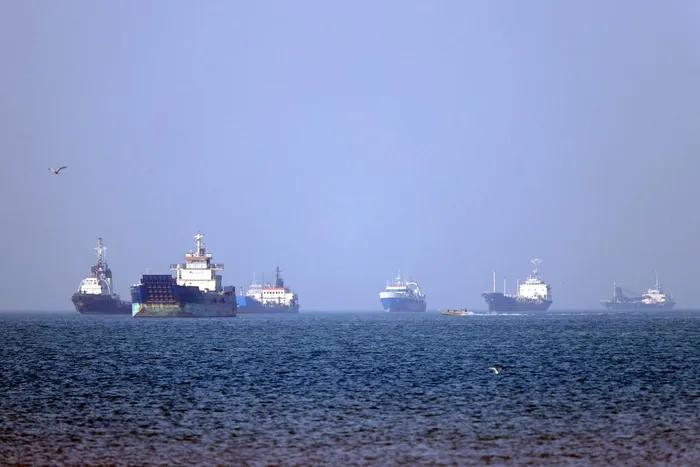
Economists are optimistic that fuel prices will come down now that the US and Iran signed a peace deal to open the Strait of Hormuz.
Image: ISNA / AFP
A peace agreement between the United States and Iran could offer a welcome boost to South Africa's economy, with economists predicting lower fuel prices, easing inflation and reduced pressure on interest rates if stability returns to the Middle East.
The agreement follows months of conflict that rattled global energy markets and pushed oil prices sharply higher amid fears of supply disruptions from one of the world's most important oil-producing regions.
Although economists caution that it remains early days and that the agreement still faces several hurdles, the immediate reaction from global markets has been positive, with oil prices retreating from recent highs.
Professor Raymond Parsons of the North-West University Business School said the agreement comes as a significant relief for the world economy.
"The global economy has experienced large-scale economic pain in various ways since the Middle East conflict started in February. Although it is still early days for implementation, the global oil price has already fallen significantly and supply chains now look forward to gradually becoming normalised as blockages are steadily removed," Parsons said.
However, he warned that the economic fallout from the conflict would not disappear overnight.
"It will probably take several months for the negative effects of the Middle East conflict to begin to unwind."
Parsons noted that South Africa's economy has already felt the impact of higher global energy costs, leading to revised lower economic growth expectations for 2026.
Despite this, he believes South Africa may avoid a more severe outcome if the agreement holds.
He pointed to three encouraging factors: the possibility of lasting peace between the US and Iran, South Africa's lower-than-expected inflation rate of 4.5% in May and recent fuel price over-recoveries.
"These factors suggest South Africa may avoid a worst-case scenario when it comes to inflation, growth and fuel prices for the remainder of the year," he said.
Economist Dawie Roodt also expects motorists to benefit from lower oil prices in the months ahead.
"I don't think the oil price is going to move in a straight line, but it is likely to trend lower over the next few months," Roodt said.
He believes oil prices could move below $70 a barrel and possibly even reach around $65, while the rand has remained relatively resilient.
According to Roodt, this combination should eventually translate into lower petrol and diesel prices.
"There are significant fuel price decreases that can be expected. That will be very good news for South Africa."
Roodt said consumers should not expect immediate relief, but the medium- to long-term outlook is becoming increasingly positive.
He also expects lower oil prices to reduce fertiliser costs and ease inflationary pressures, although food prices may remain under pressure in the short term.
"I don't think the Reserve Bank will need to increase interest rates again. In about 10 months' time there could be scope for fairly aggressive interest rate cuts, which would be very good news," he said.
Economist Ulrich Joubert said South Africans could begin seeing some of the benefits as early as July if current trends continue.
"If a peace agreement between the US and Iran materialises, it will have an impact on global oil prices, and we've already seen signs of that through fuel price over-recoveries during June," Joubert said.
He noted that diesel had recorded particularly strong over-recoveries, meaning diesel motorists could potentially benefit even more than petrol vehicle owners.
Joubert said lower fuel prices would benefit not only motorists but the broader economy.
"It affects the entire transport chain, from getting produce from farms to markets, to distributing goods to warehouses and retail stores. Lower transport costs can ultimately help reduce the cost of goods reaching consumers."
He said lower fuel prices would support efforts to bring inflation down while easing pressure on businesses and households.
However, Joubert cautioned that the rand-dollar exchange rate remains a key factor.
"A weaker rand could limit some of the fuel price relief, so we need to keep a close eye on currency movements."
He said improved stability in the Middle East could also help reduce fertiliser costs in the coming months, benefiting the agricultural sector and potentially lowering food inflation over time.
"Overall, improved stability in the Middle East would be to the benefit of the South African economy and the global economy. Lower fuel prices, lower inflation and a more stable interest rate environment would all support economic growth."
For South Africans grappling with the rising cost of living, economists say the agreement offers cautious optimism that relief may finally be on the horizon, even if it takes several months for the full benefits to be felt.