

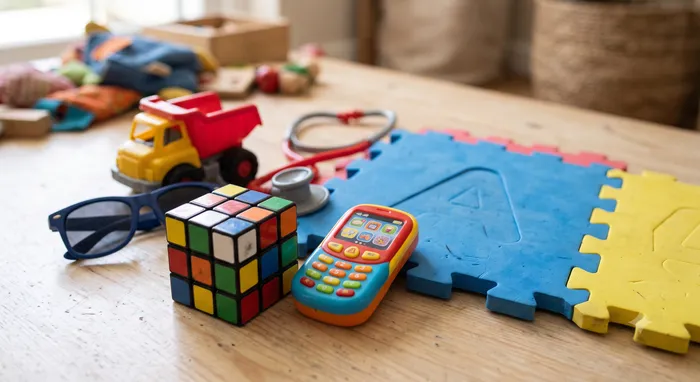
The research team uncovered chemical signatures for hazardous substances in everyday items, including Rubik’s Cubes, toy mobile phones, puzzle mats, sunglasses, toy vehicles and child car seats.
Image: Gemini
Dangerous toxic chemicals banned globally years ago are being found in children’s toys and products sold across South Africa, according to a sobering new study by the University of Cape Town (UCT).
Published in the journal Heliyon, the research exposes a deeply unsettling paradox of the modern green movement: well-intentioned plastic recycling is inadvertently pumping persistent organic pollutants back into consumer supply chains, directly targeting the country's most vulnerable citizens.
The study, titled “Legacy brominated flame retardants in children's products in South Africa: Evidence of toxic recycling in a global circular economy”, was conducted by Dr Rebecca Mlelwa as part of her doctoral research alongside her supervisor, Professor Andrea Rother, from UCT’s Environmental Health Division.
Using a handheld X-ray fluorescence spectrometer to screen 138 new and second-hand plastic items, the team uncovered chemical signatures for hazardous substances in everyday items, including Rubik’s Cubes, toy mobile phones, puzzle mats, sunglasses, toy vehicles and child car seats.
The investigation focused primarily on brominated flame retardants, such as polybrominated diphenyl ethers and hexabromocyclododecane. These chemicals were historically used to lower the flammability of electronic products but were later banned internationally under the Stockholm Convention due to their severe impacts on human health, which include endocrine disruption, neurotoxicity and cancer.
Alarmingly, bromine was detected in 38% of the products analysed., with concentrations peaking at a staggering 7,223 milligrams per kilogram. Furthermore, antimony—a chemical agent frequently paired with these flame retardants—was detected in 90% of those contaminated items. Based on estimated levels of the restricted chemical decabromodiphenyl ether, roughly 85% of the bromine-positive products breached the Basel Convention’s lowest threshold of 50 milligrams per kilogram, a limit reserved for hazardous waste materials requiring specialized, careful management.
The highest concentrations of these poisons were found in items children interact with most intimately: Rubik's Cubes, a toy mobile phone and a foam puzzle mat. According to the UCT authors, the specific chemical cocktails discovered strongly suggest that the contamination stems from recycled electronic waste rather than intentional manufacturing choices.
“This study provides preliminary evidence that legacy pollutants are potentially re-entering children's products through recycled plastics in South Africa,” Mlelwa and Rother said in a joint statement.
“The combination of bromine and antimony, together with concentrations that are too low to serve a flame-retardant function, strongly suggests contamination through the recycling process rather than intentional use in these products.”
While the global push towards a circular economy is vital for reducing waste, the researchers stress that environmental sustainability must not come at the cost of public safety. Children are uniquely susceptible to chemical exposures because their organs and nervous systems are still developing, and their bodies are far less efficient at detoxifying hazardous substances than adults.
Because children spend prolonged periods handling toys and frequently put objects in their mouths, they face significant risk. Previous data confirms that exposure occurs not just through direct mouth contact and skin absorption, but also by youngsters ingesting contaminated dust in their play environments.
The study adds to an escalating body of international evidence proving that the global drive to recycle must be met with equally robust safeguards to stop legacy toxins from being spun back into the consumer market.
Dr Mlelwa warned that South Africa currently faces significant regulatory challenges in managing this public health risk, calling for an urgent, coordinated response from the National Consumer Commission, the Department of Health, and the Department of Forestry, Fisheries and the Environment.
Striking a definitive note on the path forward, Mlelwa argued that protecting children from exposure to legacy pollutants requires immediate, multisectoral action. Regulatory oversight and mandatory product screening will be critical to preventing hazardous substances from continuing to circulate in new products, while greater transparency and improved public awareness will finally allow parents to make informed, safe choices for their families.