

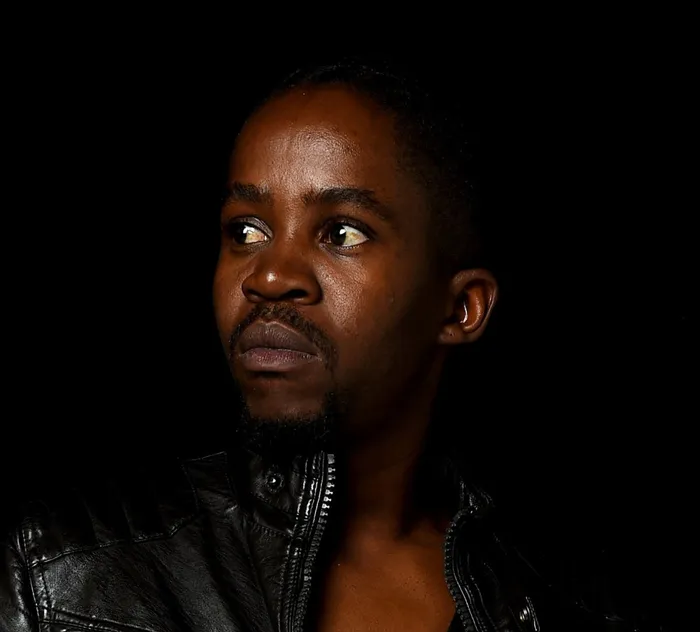
Rabbie Serumula, author, award-winning poet, journalist.
Image: File
In healthy countries, rumours die quickly. They collide with trusted institutions and fall apart.
In South Africa, rumours often survive because they find shelter in uncertainty.
This week, a daughter was expelled by her father, a police general was reportedly arrested and then apparently was not, and another senior police officer warned that a war was underway. Three reminders that South Africans are increasingly struggling to determine not only what is true, but whom to believe.
The expulsion of Duduzile Zuma from the MK Party is, on the surface, a family matter played out in public. Yet beneath the drama lies a deeper question about authority. Political movements built around powerful personalities often project an image of unquestionable loyalty. But when discipline reaches one's own household, it suggests something else: a leadership trying to demonstrate that it remains in control.
Whether one agrees with Jacob Zuma or not, the message was unmistakable. No one is bigger than the organisation. Not even a daughter.
Elsewhere, reports circulated that the head of Crime Intelligence had been arrested. The reports spread rapidly before being publicly denied. The details will matter to investigators and journalists. What interests me is something else entirely.
Why did so many people immediately believe it?
Rumours do not thrive in a vacuum. They flourish where trust has withered. They spread when institutions have become so battered by scandal, factional battles and contradiction that almost any claim appears plausible. The speed with which South Africans accepted the possibility of another dramatic arrest tells its own story about public confidence.
Then came the warning from KwaZulu-Natal Police Commissioner Nhlanhla Mkhwanazi that the police are facing a war.
Perhaps he meant a war against organised crime. Perhaps he meant a struggle against forces seeking to undermine law enforcement. Whatever the precise target, the language resonated because many South Africans already feel as though unseen battles are being fought behind closed doors. Battles involving criminals, politicians, intelligence operatives and competing factions of power.
The result is a nation that often experiences events through speculation before it encounters facts.
This is more than a political problem. It is a democratic one.
Every society will have disagreements. Every political party will have internal conflict. Every police service will face crises. The real danger emerges when citizens lose faith in the referees, the scorekeepers and the institutions responsible for separating fact from fiction.
When that happens, every rumour sounds like news.
Every denial sounds like a cover-up.
Every headline becomes another piece of an unfinished puzzle.
At that point, the referee is no longer trusted; not because the game has changed, but because the crowd no longer believes the whistle means what it used to.
Perhaps that is the true crisis facing South Africa. Not the wars within parties or the battles within the police, but the gradual erosion of certainty itself.
And so the country finds itself like a neighbourhood awake at three in the morning, lights flickering on behind curtains, people peering through windows, listening for sirens in the distance, trying to guess what happened before the official story arrives.