

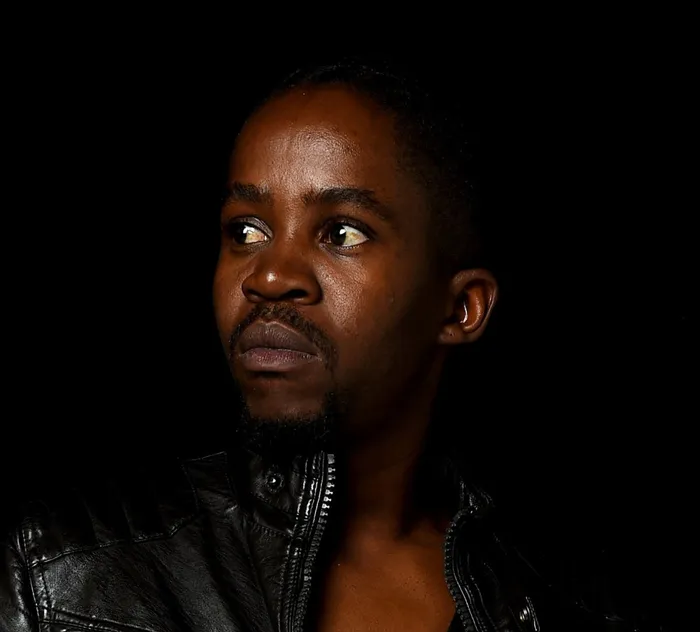
Rabbie Serumula, author, award-winning poet, journalist.
Image: File
South Africa treats foreigners like stains on a shirt it cannot afford to wash. Every few years, the country gathers itself into another angry chorus about “illegal foreigners”, and suddenly the state discovers urgency.
Police vehicles arrive. Raids are televised. Press conferences multiply. Ministers speak in the language of operations and enforcement. Communities march beneath South African flags as if patriotism itself has become a weapon.
Meanwhile, the sewage still leaks. The taps still cough air. The lights still disappear. And millions of unemployed South Africans still wake up every morning to the humiliation of being economically unnecessary.
This week, developments in Durban exposed the fragile relationship between poverty, frustration and migration in South Africa. Foreign nationals camped outside police stations and refugee centres, claiming they feared attacks linked to anti-migrant mobilisation ahead of a planned national shutdown on 30 June.
Police used teargas and rubber bullets to disperse crowds at Durban Central Police Station while humanitarian groups scrambled to provide food and shelter. Some migrants are now asking for United Nations intervention. But beneath the smoke grenades and political slogans lies a darker truth: South Africa is not only angry at foreigners.
South Africa is angry at its own collapse. Foreigners have simply become the nearest mirrors.
It is easier to blame the Zimbabwean shopkeeper than the councillor who stole housing money. Easier to threaten the Ethiopian cashier than confront a political elite that converted liberation into procurement. Easier to scream at a Nigerian barber than admit that thirty years after democracy, millions remain trapped outside the economy, looking in through the glass. And so liberation begins to eat itself.
The tragedy of modern South Africa is that the language of liberation no longer matches the lived experience of liberation. The governing class still speaks in struggle songs and historical memories while ordinary people speak the language of rent, transport fares, expired contracts and empty fridges. History once united the poor.
Hunger now competes against hunger. This is the dangerous space where xenophobia grows. Not from pure hatred, but from political exhaustion.Anti-illegal immigration movements like March and March and Operation Dudula rise because they offer something the democratic state increasingly fails to provide: the illusion of control. They identify visible targets in invisible crises. They simplify complicated pain. They transform economic despair into something physical: a face, an accent, a passport.
But South Africa should be careful. A country that becomes addicted to scapegoats eventually loses the ability to diagnose itself honestly. The immigrant did not break Eskom. The refugee did not loot municipalities. The asylum seeker did not capture the state. And yet foreigners carry the emotional burden of national disappointment because they are easier to remove than corruption, unemployment or inequality.
Maybe this is what national exhaustion looks like: a society so overwhelmed by its own hardship that it begins to turn inward, suspicious of everyone standing outside the circle.