

South Africa’s deputy president Paul Mashatile has stressed that small, medium, and micro enterprises are central to inclusive growth for developing economies. I
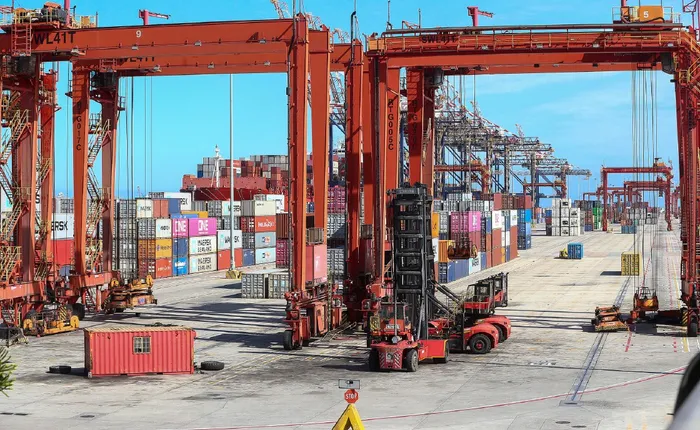
Image: Leon Lestrade | Independent Newspapers
South Africa’s deputy president Paul Mashatile speaking at the South Africa-India Technology, Trade and Investment Roundtable in New Delhi, India last month, stressed that small, medium, and micro enterprises are central to inclusive growth.
South Africa and India are represented in many multilateral formations that are committed to the development of the Global South, including membership of the Non-Aligned Movement, BRICS, IBSA, G20 and IORA.
The high level delegation saw Mashatile accompanied by the Ministers of health, Aaron Motsoaledi, Small Business Development Stella Ndabeni and the Deputy Minister of Science and Technology Dr Nomalungelo Gina amongst others.
The visit was aimed at highlighting the importance of India’s role in global affairs and its contributions to the African Agenda, advocating for India as a key investment partner.
Amid shifting global trade patterns, India and Africa are transforming their partnership from aid and extraction into industrial collaboration, supply chain resilience, and geoeconomic influence.
Mashatile highlighted the importance of deeper cooperation between the two countries in turning global challenges such as unilateralism, climate change and resource depletion into opportunities.
“Our collective task is therefore to transform these shared challenges into opportunities, to turn climate action into renewal, technology into empowerment, and global governance into a voice for all.
“This is the call of our time to face the limits of our planet with courage, to harness the power of innovation with wisdom, and to defend the dignity of nations with unity,” said Mashatile.
India has numerous supply chain advantages that can benefit African countries, including Digital Public Infrastructure (DPI): India is exporting its tested tech stacks (such as UPI), which streamlines digital transactions, cuts cross-border remittance costs, and enhances supply chain visibility; Multimodal Logistics: Mega-projects like the Bharat Africa Setu initiative (spearheaded by DP World and the Indian government) are building direct, structured transport corridors linking Indian ports to African markets and Resilient Networks: Instead of relying on a single manufacturing hub, India is helping establish distributed supply chains designed to bounce back quickly from global disruptions.
The benefits for Africa include Value-Added Manufacturing which sees trade shifting from a one-way flow of raw materials to cooperative industrial growth. Indian capital and tech transfer help African nations build local production, agro-processing, and pharmaceutical capacities.
Other significant benefits include India investing of billions in Africa's resource-rich regions. This creates symbiotic partnerships where African countries monetise raw materials (like cobalt and lithium) while fostering local jobs and technology absorption; Access to Affordable Goods: India’s highly competitive Micro, Small, and Medium Enterprises (MSMEs) provide affordable, cost-competitive technology, automobiles, and engineering services tailored to African market needs and the Leveraging the African Continental Free Trade Area (AfCFTA): Indian companies are increasingly using Africa as a regional base, driving job creation and cross-border intra-African trade.
India’s Union Minister of Commerce and Industry Piyush Goyal, speaking at the 105th Annual General Meeting of the Associated Chambers of Commerce and Industry of India (ASSOCHAM) in New Delhi last year said the country was creating opportunities for investment and technology collaboration.
Goyal stressed the critical importance of assessing and strengthening supply chains to ensure long-term resilience and sustainability. He said that recent global disruptions have highlighted the need for countries and industries to build secure, diversified, and self-reliant supply networks. Shri Goyal observed that India must carefully evaluate every link in its supply chains—from raw material sourcing to production and distribution—to reduce dependence on a few geographies and avoid potential vulnerabilities.
“The Indian government has been actively encouraging industry stakeholders to map their supply chains and identify areas where domestic capacities can be enhanced.
“Through greater collaboration between the public and private sectors, India can develop robust value chains that not only meet domestic demand but also serve as reliable partners in the global trade ecosystem.”
Goyal noted that this effort aligns with the government’s broader vision of “Aatmanirbhar Bharat,” aimed at promoting self-reliance while integrating India more deeply into global value chains.
Small, medium and micro enterprises are central to inclusive growth in developing economies and India’s globally competitive MSME ecosystem and Africa’s industrial and entrepreneurial base offer powerful complementarities as they look at future collaboration.
* Professor Govender is an academic and a keen observer of issues related to international relations.
** The views expressed do not necessarily reflect the views of IOL or Independent Media.