

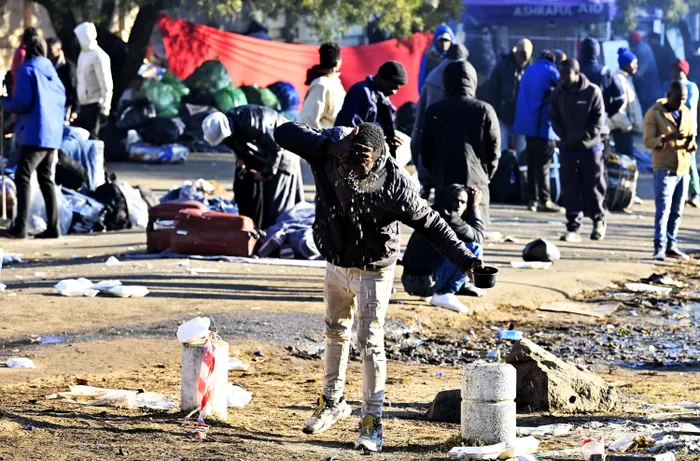
Hundreds of Malawians continue to endure freezing nights outside their consulate in Woodmead, near Sandton, as they eagerly await to be deported back home.
Image: Itumeleng English / ANAStudio
For the past few weeks, in the shadows of the Malawian Consulate in Woodmead, a grim scene has been unfolding as scores of Malawians huddle together, courageously braving the biting winter nights in their desire to return home.
As tensions surrounding illegal immigration escalate in South Africa, the urgency for these individuals to leave grows with each bus trip, driven by fear and uncertainty that have shaken their lives.
Their long wait for buses taking them to Musina for processing and deportation comes in dribs and drabs, but their determination to return home following the June 30 deadline calling on illegal migrants to leave South Africa continues to be their only solace.
According to the latest reports, the Musina Temporary Repatriation Processing Centre has facilitated the processing of 70,000 undocumented migrants since it was opened over two weeks ago.
Most Malawian nationals in Woodmead admitted that they are in South Africa illegally, with many of them citing challenges in acquiring travel documents legally in their own country.
Despite harbouring dreams of financial stability and employment in the face of hunger in Malawi, these individuals further reveal that for them, being in South Africa had become their only way to survive.
"It is difficult to get the right papers in Malawi. Without money and jobs readily available in our country, South Africa has become our only hope," said Steve Changulu, who worked in Mayfair until recently.
For 46-year-old Cynthia Mbewe, another Malawian seeking refuge at the consulate, having worked as a domestic worker in Vereeniging for nine years, has not made her immune to the current situation.
Mbewe arrived in Woodmead earlier this week, leaving her five-year-old child in the care of her sister, who has already left for Malawi.
"It has been tough sleeping in the cold for the past three days," she acknowledged.
However, despite these sentiments, she added: "One cannot be too angry against South Africans who want us gone. It is their country, and we have to see what we can do when we get home."
When asked about her previous working conditions, Mbewe bluntly stated: "You know, we are exploited heavily by our employers in the kitchens.
"They refuse to pay us the R3,500 minimum wage, while South Africans are paid that or even more. In fact, I would say, South Africans are treated much better in the homes of their employers than we Malawians."
One of those eager to leave was 28-year-old John Tete.
Tete, who has spent eight years in the country without papers, travelled overnight on Tuesday from Pietermaritzburg to Park Station, landing in Woodmead by 7 am, where he joined scores of countrymen and women looking to return home by the end of the weekend.
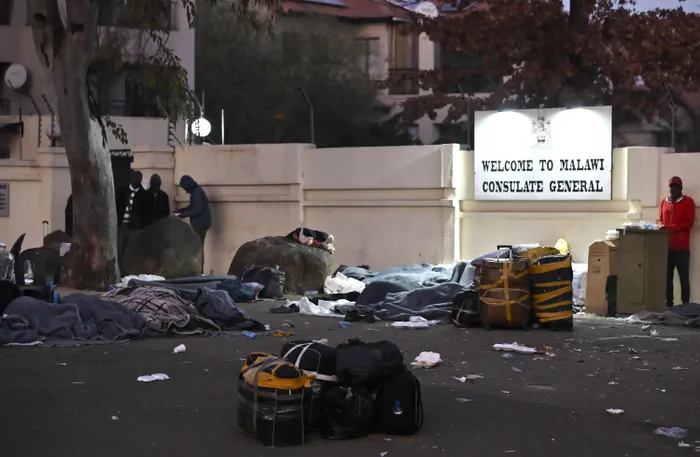
Malawian nationals eager to go back home continue camping outside their Woodmead Consulate.
Image: Itumeleng English / ANAStudio
Upon his arrival, Tete indicated that, having worked for more than eight years, he was forced to flee after the increasingly volatile situation affected other illegal foreign nationals, who became vulnerable due to ongoing protests.
"It has been a terrible time for some of us. Almost every day, I have had to deal with anti-illegal migration sentiments at work or in the location where I have been staying for the past eight years. This week, I decided my life is not worth the risk and decided to pack up and leave; as you can see, I have lost everything," he stated.
Arriving with her six-year-old child in time for the day's registration process, Sylvia Mhango detailed her frustration at having to start from scratch, including finding a school for her boy child in Malawi.
"I have not been home since giving birth to my child. He was doing well at school, but right now, we do not know what is going to happen with school. It is going to be a challenge finding a good school for him at this time of the year.
When asked why she did not take a normal bus home, Mhango stated: "It is very expensive to go home, costing about R2,500 for one person, excluding large luggage and food for the trip.
"For someone who was working as a domestic worker, that is R10,000 that I do not have."
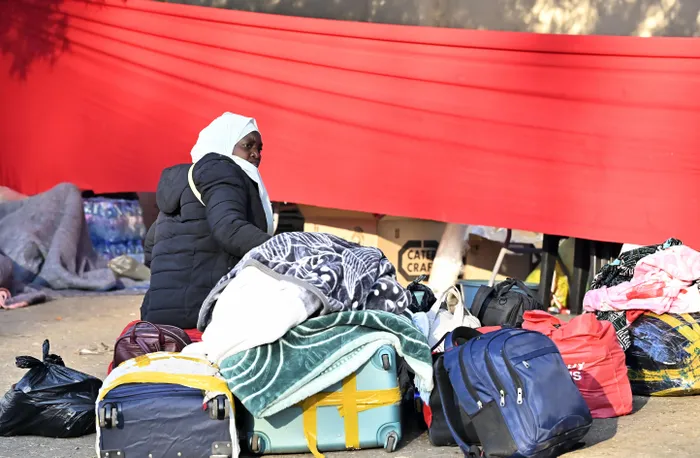
A mother of a Grade 3 learner has detailed her frustration as she prepares to depart from South Africa to Malawi, where uncertainty awaits her and her boy child.
Image: Itumeleng English / ANAStudio
"For many, there is no choice left," explained Faizel Hoomer from Islamic Relief South Africa, a humanitarian organisation that has stepped in to aid those affected.
"Initially, we saw about 15 displaced Malawians in Sherwood, but that figure quickly ballooned to over 15,000," he lamented.
The organisation has been providing meals and support since the deportation processes began.
Addressing the plight migrants face, Hoomer continued: "We’re making the process more coordinated now, but the cold at night doesn’t make it easier."