


Sewage water flowing through a yard
Image: Itumeleng English / African News Agency (ANA)
South Africa's local government financial crisis has reached a point where the National Treasury has taken one of its most severe constitutional interventions yet, temporarily withholding July 2026 equitable share allocations from 69 municipalities after finding repeated and serious failures to comply with public finance laws.
The unprecedented move affects municipalities in all nine provinces, from struggling rural councils to some of the country's largest metropolitan governments, including Johannesburg, Buffalo City, Mangaung and Nelson Mandela Bay.
At the centre of Treasury's decision lies a troubling financial picture. Since the 2021/22 financial year, municipalities have accumulated R24.12 billion in fruitless and wasteful expenditure, R145.21 billion in irregular expenditure and R118.13 billion in unauthorised expenditure.
Together, those figures paint a picture of a local government system struggling with weak financial controls, poor governance and inadequate accountability. Billions of rand have been spent outside prescribed procurement processes, committed without approved budgets or lost through expenditure that could have been avoided through reasonable care.
For communities already grappling with unreliable water supplies, electricity interruptions, deteriorating roads and collapsing sanitation systems, Treasury argues the intervention is aimed at preventing the crisis from worsening.
Treasury said the municipalities had demonstrated "persistent and serious non-compliance" with the Municipal Finance Management Act (MFMA) despite years of engagements, technical support and previous interventions intended to improve financial management.
"The withholding is corrective rather than punitive. It is intended to encourage municipalities to comply with the applicable financial management legislation. Once municipalities demonstrate compliance with the conditions imposed, the withheld allocations may be released," Treasury said.
The intervention is being implemented under Section 216(2) of the Constitution, which empowers the National Treasury to stop the transfer of funds to an organ of state that commits serious or persistent breaches of prescribed financial management measures.
Treasury said the objective is to ensure the proper management of public funds, address unauthorised, irregular, fruitless and wasteful expenditure, and hold municipal officials and political office-bearers accountable where legislation requires.
The decision represents one of the strongest financial enforcement measures available to the national government and signals growing concern over the deteriorating state of municipal governance.
Years of warnings ignored
While Treasury's announcement has drawn national attention, the intervention did not emerge suddenly.
For years, the Auditor-General of South Africa (AGSA) has repeatedly warned that local government finances were deteriorating, governance structures were weakening, and municipalities were increasingly failing to deliver basic services.
When releasing the 2021/22 Municipal Audit Outcomes, Auditor-General Tsakani Maluleke described a local government sector trapped in a cycle of financial instability and institutional dysfunction.
"Local government has been characterised by dysfunctional municipalities, financial mismanagement, council and administrative instability, and crumbling municipal infrastructure," she said.
"This leads to deteriorating standards of living and service delivery failures, resulting in service delivery protests. I firmly believe that service delivery improvements will be enabled by capable, accountable and citizen-centric municipal leadership delivering on their mandates to improve the lives of ordinary South Africans."
Three years later, her assessment had changed little.
Presenting the 2024/25 General Report on Local Government, Maluleke said municipalities continued to struggle with weak governance, deteriorating infrastructure and worsening financial health.
"Over the past four years, mayors and councils of the sixth administration have made limited progress to strengthen governance and improve service delivery, as residents and businesses continue to experience unreliable service delivery, environmental hazards and deteriorating infrastructure. They further oversaw municipalities with deteriorating financial health."
Her report found that only 39 municipalities, representing 15% of those audited, achieved clean audits.
At the same time, 38 municipalities regressed compared with the 2020/21 financial year, including three metropolitan municipalities.
Financial reporting also remained a significant concern.
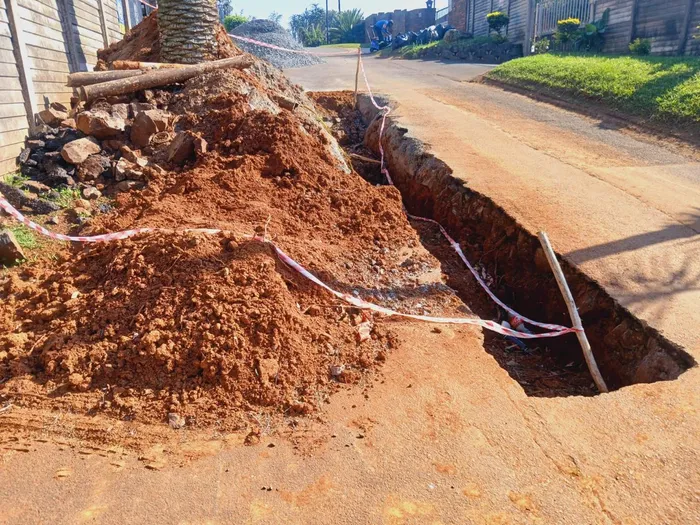
The Auditor-General’s latest report on local government paints a troubling picture of municipalities increasingly relying on outside expertise while failing to achieve meaningful improvements in financial reporting and accountability.
Image: Supplied
According to the report, 195 municipalities, or 76%, submitted annual financial statements containing material misstatements, while 99 municipalities, representing 39%, ultimately received modified audit opinions.
Without corrections made during the audit process itself, only 24% of municipalities would have achieved unqualified audit opinions.
The findings suggest that many municipalities continue to depend on external audit processes to identify and correct serious weaknesses in their financial reporting instead of detecting those problems internally before submitting their statements.
Political analyst Professor Ntwanano Mathebula said the Treasury's intervention reflects years of deep-rooted governance failures that have repeatedly been identified by the Auditor-General without meaningful consequences for those responsible.
"The decision points to the governance failures that have always confronted South African municipalities, particularly in the use of public funds and the persistent non-compliance with the Municipal Finance Management Act," Mathebula said.
He noted that the Auditor-General has consistently highlighted irregularities in municipal finances, but said the absence of consequence management has allowed the same problems to recur year after year.
"What we have seen is that these reports are accompanied by a lack of consequence management, and hence we have seen the recurrence of these tendencies to undermine the laws of the country."
According to Mathebula, the problem extends beyond breaches of the Municipal Finance Management Act, arguing that municipalities are also failing to meet their constitutional obligation to use public resources effectively, efficiently and economically.
He described Treasury's decision as "a step in the right direction" because it signals the need to overhaul municipal governance and strengthen the legislative framework governing the management of public finances.
"This is a state of collapse that we have seen in local government over a long period of time," he said. "Sadly, what we have not seen is accountability. Political office bearers and administrators have not been held to account for the misuse of public funds that should have been channelled towards service delivery."
Billions lost through avoidable expenditure
Among the three categories of financial misconduct, fruitless and wasteful expenditure has shown one of the most worrying increases.
During the 2018/19 financial year, municipalities recorded approximately R2 billion in fruitless and wasteful expenditure.
By 2020/21, they incurred another R1.96 billion in new losses while more than R11 billion in historical cases remained unresolved.
The trend accelerated during the current local government administration.
Municipalities recorded R4.74 billion in fruitless and wasteful expenditure during 2021/22, a year in which only 38 of South Africa's 257 municipalities achieved clean audits.
That figure climbed to R7.41 billion during 2022/23.
Treasury now estimates the cumulative total at R24.12 billion since the beginning of the 2021/22 financial year.
Unlike irregular expenditure, which generally involves procurement processes that fail to comply with legislation, fruitless and wasteful expenditure represents money that was unnecessarily spent and could reasonably have been avoided.
The Auditor-General has consistently linked these losses to recurring failures within municipalities.
"Municipalities were also not careful with their spending practices. The main reasons for the continuing financial losses and waste were poor payment practices, uncompetitive and uneconomical procurement practices, limited value and benefit received for money spent, and weaknesses in project management."
Maluleke has also warned that weak budgeting practices continue to undermine municipalities' financial sustainability.
"Unfunded budgets and high unauthorised expenditure clearly show the weaknesses in financial planning. As a result, the financial health of municipalities remains weak."
Treasury's latest assessment reinforces that concern.
According to the department, 116 municipalities adopted unfunded budgets during the 2024/25 financial year, collectively committing themselves to approximately R288.17 billion in expenditure without sufficient revenue to finance those budgets.
Such budgets place municipalities under immediate financial pressure, often resulting in unpaid creditors, deteriorating infrastructure maintenance and growing dependence on emergency financial interventions.
The Auditor-General's latest report indicates that the financial position of many municipalities continues to worsen.
Only 35% were assessed as having good financial health.
A further 40% were classified as being in a concerning financial position, while 25% were assessed as having unfavourable financial health.
The consequences extend well beyond accounting reports.
According to the AGSA, 174 municipalities lacked sufficient cash to pay their creditors, while 123 municipalities did not have enough current assets to cover their short-term liabilities, raising questions about their ability to continue meeting their day-to-day financial obligations.
These financial weaknesses increasingly affect municipalities' constitutional responsibility to provide basic services, including water, sanitation, electricity distribution, refuse collection, stormwater management and the maintenance of local roads.
Much of this work is financed through grants such as the Municipal Infrastructure Grant, making sound financial management essential for sustaining infrastructure investment.
The Auditor-General warned that weakening municipal finances inevitably translate into deteriorating public services.
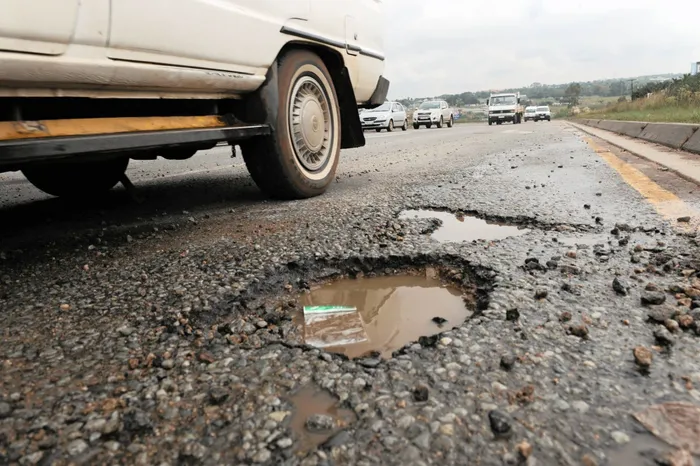
Potholes Potholes remain South Africa's most reported infrastructure problem, according to CityMender data tracking nearly 5,000 service delivery complaints.
Image: Boxer Ngwenya/Independent Newspapers
"Poorly managed local government finances directly affect municipalities' ability to deliver the promised services to their communities and place further pressure on the already constrained public purse."
Mathebula argued that the intervention should not stop at withholding funds. Instead, he said individuals responsible for financial misconduct should face personal consequences.
"We want to see chief financial officers, municipal managers, mayors and members of mayoral committees personally held liable for unauthorised, irregular and wasteful expenditure," he said.
While he believes the Treasury's action could improve financial discipline, Mathebula warned that it would also have unintended consequences for residents who depend on municipalities for basic services.
"It is corrective, but it is also punitive because it will affect service delivery. The people who have done nothing wrong will ultimately suffer through interruptions to water supply, sanitation, refuse removal and other essential municipal services."
He added that the intervention comes only months before the local government elections, where service delivery is expected to dominate political debate.
"We are heading towards local government elections, and we have long heard allegations of clientelism and the use of municipal resources for political campaigning. This decision is likely to disrupt that in municipalities where public funds have been abused."
Mathebula said residents in municipalities already battling severe service delivery failures, including the Ditsobotla Local Municipality, the City of Johannesburg and the City of Ekurhuleni, have increasingly lost confidence in local government.
"People are looking for clean water, proper sanitation and refuse removal, but instead they are seeing governance failures. That loss of confidence is likely to be reflected in voter turnout."
He also criticised the reactive nature of oversight, saying the Auditor-General often conducts "a post-mortem" after money has already been lost, while oversight institutions that should detect financial problems early are failing to do so.
"There is a lack of planning and coordination, municipalities continue approving unfunded budgets and councils often prioritise political interests instead of implementing integrated development plans," he said.
Mathebula concluded that while Treasury's intervention may curb financial abuse, lasting reform will require stronger enforcement powers for the Auditor-General and binding consequences for officials who misuse public funds.
"It is about time government strengthens the powers of the Auditor-General and makes its recommendations binding so that there are real consequences for unauthorised, irregular and wasteful expenditure."