

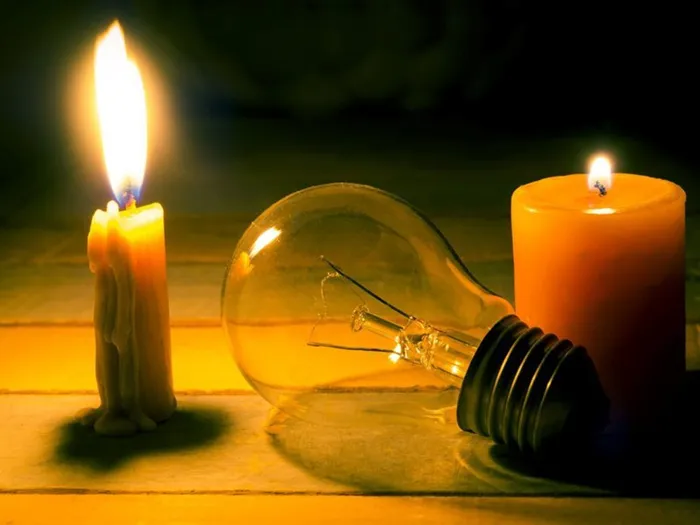
City Power has called on government departments to honour their electricity debts or face darkness
Image: Independent Media Archives
City Power Acting Chief Executive Officer Charles Tlouane has issued a stern warning to government institutions across Johannesburg, saying those that fail to settle their electricity accounts risk disconnection and threaten the sustainability of essential public services.
Speaking at the conclusion of City Power's two-day Government Accounts Indaba on Tuesday, Tlouane said mounting debt owed by government departments was placing increasing pressure on the utility's finances and its ability to maintain reliable electricity infrastructure.
Government institutions currently owe City Power more than R270 million in unpaid electricity bills, with public hospitals and clinics accounting for a significant share of the outstanding debt. Combined with arrears owed by residential customers, businesses and Large Power Users (LPUs), the utility is now owed a staggering R13.3 billion.
"As government, we have a responsibility to lead by example," Tlouane told delegates.
"We cannot expect residents and businesses to honour their payment obligations if government institutions do not do the same. The purpose of these engagements is to resolve challenges collaboratively, but ultimately we must act because sustainable service delivery depends on sustainable revenue."
City Power emphasised that the Government Accounts Indaba was intended to encourage engagement rather than confrontation, giving government customers an opportunity to resolve billing disputes and enter into payment arrangements before credit control measures are implemented.
However, Tlouane made it clear that while the utility had prioritised dialogue over enforcement, that approach could not continue indefinitely if outstanding accounts remained unpaid.
City of Johannesburg Group Chief Financial Officer Tebogo Moraka echoed the sentiment, saying the engagement formed part of the city's broader strategy to strengthen relationships with government customers while improving revenue collection.
Moraka said initiatives such as the Meter-to-Cash programme and enhanced digital customer engagement platforms were helping simplify billing, speed up the resolution of account queries and reduce the administrative challenges that have contributed to mounting debt.
The Government Accounts Indaba followed Monday's Key Customer Forum, which brought together Johannesburg's largest commercial and industrial electricity users.
Those customers contribute about 45% of City Power's monthly revenue, generating roughly R2.3 billion of the utility's approximately R5.1 billion in monthly collections.
Addressing the forum, City of Johannesburg Executive Mayor Councillor Dada Morero outlined plans to transform City Power into a modern energy utility through reforms aimed at strengthening its financial position and expanding its role in the city's energy future.
"In 2024, we took a decision to migrate billing directly to City Power, and we implemented it in 2025," Morero said.
"Now City Power is responsible for the billing function. The next stage is looking at how we ring-fence the revenue coming from City Power, so that it is meaningfully reinvested back into City Power as an entity."
City Power officially assumed responsibility for electricity billing from the City of Johannesburg on 1 July 2025, a move intended to address longstanding billing challenges that had frustrated customers for years.
Chief Commercial Officer Thamsanqa Mathiso said the transition had already produced measurable improvements.
"There were approximately 8 000 queries when City Power took over the function in July 2025, and now we are sitting below 2 000. We are monitoring those queries on a daily basis to ensure they are resolved," he said.
Mathiso acknowledged, however, that improving communication with customers remained a priority.
The two-day programme also focused on Johannesburg's evolving energy landscape.
Mathiso urged customers with rooftop solar installations and Small-Scale Embedded Generation (SSEG) systems to register their installations, stressing that the process was intended to improve safety, ensure regulatory compliance and guarantee accurate electricity metering.
"We are not penalising customers. We are saying customers must register their solar systems so that we can check the installation, ensure it is safe and make sure meters reflect what has been imported from City Power and what has been supplied back into the grid from the customer," he said.
Morero also revealed that City Power is investing in electric vehicle charging infrastructure as part of its long-term strategy to diversify its services and support South Africa's transition to cleaner transport.
"We are now investing capital into EV charging stations because the world is moving into electric vehicles, and we cannot be left behind," he said.
City Power further confirmed that its approved 2026/27 capital budget will fund a range of infrastructure projects, including upgrades to substations and high-voltage networks, cable replacement programmes, smart meter rollouts and broader improvements to the city's electricity distribution system.
The investments are aimed at improving network reliability and addressing many of the concerns raised by customers during the engagement sessions.
Closing the Indaba, Tlouane linked the utility's financial health to Johannesburg's broader economic future, urging all stakeholders to work together to ensure the city's electricity network remains sustainable.
"We should partner in investing in sustainable energy. Energy is the centre of everything, of the future. Without energy, there won't be any growth," he said.
"We cannot turn a blind eye while problems persist in our schools and hospitals. We must stabilise the grid, honour our payment obligations, and work together, because Johannesburg cannot fail."
IOL News