

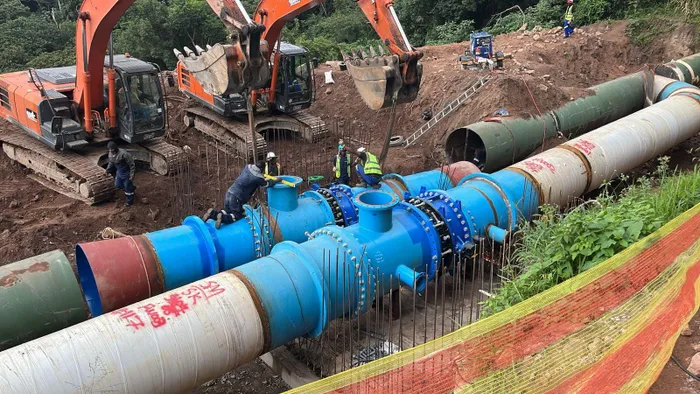
The eThekwini Municipality's Electricity and the Water and Sanitation Trading Service will submit Business and Investment Plans and Performance Improvement Action Plan Version 2 (PIAP V2) to the National Treasury.
Image: eThekwini Municipality
eThekwini councillors have approved the Business and Investment Plans and Performance Improvement Action Plan Version 2 (PIAP V2) for the Electricity and the Water and Sanitation Trading Service at a council meeting on Monday.
Councillors were warned that failure to approve the plans would undermine the intended institutional reform trajectory and weaken accountability arrangements for the National Treasury Metro Trading Services Reform Programme (MTSRP). The city also could have been excluded from the MTSRP and lost approximately R1 billion in performance-based incentive grant funding.
The municipality, in its report before council, has successfully progressed through the initial compliance requirements of the MTSRP and has received the first tranche of incentive funding.
The current programme milestone requires the municipality to submit council-approved documentation by June 30, 2026, as evidence of compliance with minimum commitments for both electricity and energy, and water and sanitation trading services.
The municipality explained that the business and investment plan provides the annual planning framework for each trading service to ensure financial sustainability, business turnaround and performance improvement.
The plan will be used to track performance and refine the model over the remainder of the programme period as the trading service improves.
The PIAPv2 is the implementation and performance management instrument for each trading service under the MTSRP. It sets out how the trading services implement their reform strategy, achieve the required reform objectives and improve accountability, financial and operational performance over the programme period.
Sunitha Maharaj, who represents the Minority Front in eThekwini, said although the National Treasury will monitor compliance, it was still imperative that all councillors are part of the process.
“We are important stakeholders who have to account to our suffering communities. The tranche is massive, and it is hoped that the plan includes people with the right skills to get the jobs done timeously,” she said.
Aslam Shaheed, the leader of the Truly Alliance (TA), said the realities laid bare in the document are deeply concerning.
“For years, this municipality has operated under a cloud of systemic and structural inefficiencies. Our historical reporting mechanisms masked the true depth of our crises. We spent years believing our electricity losses were at a manageable 12%, only for a financially auditable reconciliation to reveal that our true total electricity loss stands at a staggering 25.2%,” Shaheed stated.
He added that more than a quarter of the city's bulk electricity purchases are vanishing into thin air due to theft, tampering, billing inaccuracies, and administrative failure. He said the municipality was struggling to execute capital budgets effectively.
“While we must remain fiercely critical of past failures, we must also be fiercely pragmatic about our survival. We cannot allow our frustrations to blind us to the severe financial risk before us. The document before us represents a critical pivot,” he added.
Shaheed said the document transitions the trading services to a Single Point of Management Accountability (SPOMA) model under a designated Director, removing the red tape of corporate centralisation.
He said the document maps out a robust, data-driven framework through the Advanced Distribution Management System (ADMS) and an Advanced Metering Infrastructure (AMI) revitalisation to claw back those 25.2% non-technical losses through smart utility platforms.