

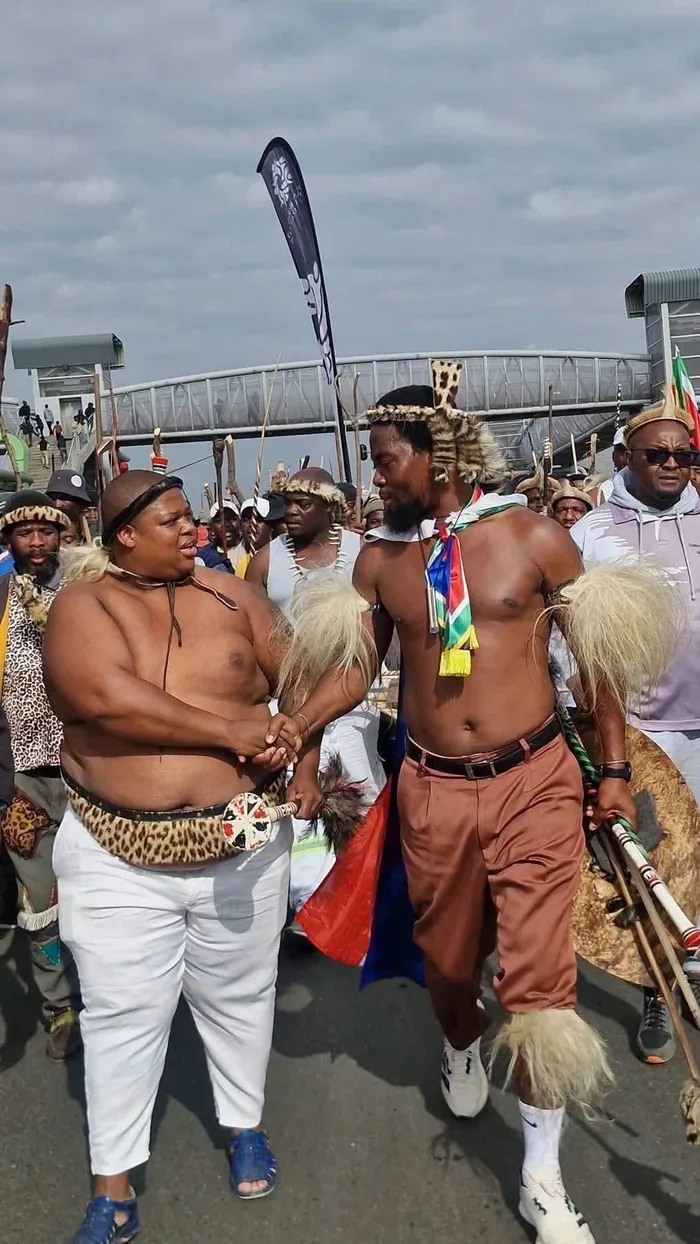
An immigration expert says South Africa should create dialogue platforms with both documented and undocumented immigrant communities to better understand the causes of migration and develop lasting solutions following nationwide anti-illegal immigration protests.
Image: Facebook
The South African government should engage both documented and undocumented immigrant communities through structured dialogue to better understand the drivers of migration and identify opportunities for immigrants and South Africans to contribute to the economy together.
This is according to immigration expert Dr Gideon Chitinga, who spoke to IOL News following nationwide protests calling for the removal of undocumented foreign nationals.
More than 20 civic organisations, led by the March and March movement, called for undocumented foreign nationals to leave South Africa.
Protests were held across all nine provinces, with organisers maintaining their demand that undocumented foreign nationals leave the country.
The organisers had set an unofficial June 30 deadline for undocumented immigrants to self-deport.
Many migrants who came to South Africa in search of better opportunities say they are now living in fear as hostility towards foreign nationals intensifies.
Protesters argue that undocumented immigrants are taking jobs from South Africans, placing pressure on healthcare services and schools, and failing to contribute to the economy through taxes.
Despite repeated government calls for calm, demonstrations have continued.
Acting Police Minister Professor Firoz Cachalia said the government spent R600 million on security measures for the nationwide protests.
A heavy police presence, supported by private security companies and other law enforcement agencies, was deployed across the country to maintain order during the demonstrations.
Although March and March leader Jacinta Ngobese-Zuma and other organisers pledged that the protests would remain peaceful, incidents of looting and shootings were reported in some areas.
Several people were injured during the unrest and taken to hospital.

March and March leader Jacinta Ngobese-Zuma addresses supporters in Durban, where she announced that the movement will continue staging weekly protests until the government removes undocumented immigrants from South Africa.
Image: Doctor Ngcobo
Ngobese-Zuma has since announced that the movement will march every Thursday until the government removes undocumented immigrants from South Africa.
Speaking to IOL News, Chitinga said the protests had succeeded in amplifying the national conversation around immigration, its associated challenges and the need for government intervention.
"I think what is probably most important is what will happen with respect to how the different institutions that are constitutionally mandated to deal with immigration are going to conduct themselves. President Cyril Ramaphosa had to reaffirm the South African government's approach towards immigration.
"I think there is significant focus on law enforcement institutions in terms of enforcing immigration laws while ensuring that the rule of law prevails."
Chitinga said broader structural issues also needed attention, including the external drivers of irregular migration and improving the efficiency of institutions responsible for processing immigration into South Africa.
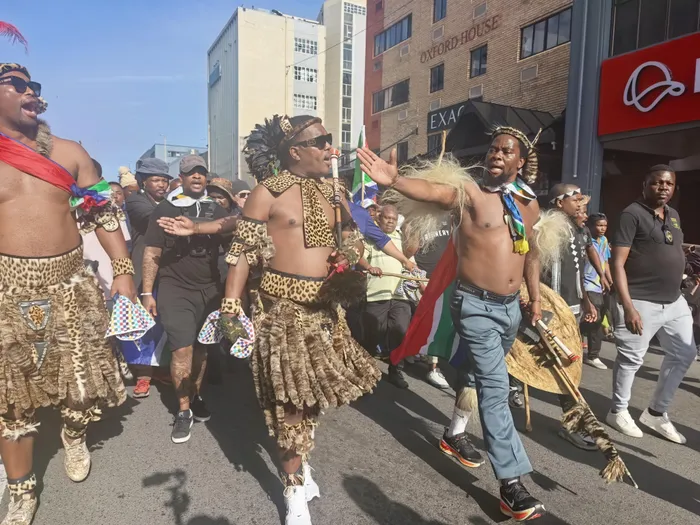
Thousands of protesters march through Durban during nationwide demonstrations calling for the removal of undocumented immigrants from South Africa.
Image: PEDRO MAPELO/ISOLEZWE LESIXHOSA
“I don't know whether those issues can be addressed immediately, but there are also significant factors the government has to consider, particularly relations with neighbouring countries from which many undocumented immigrants originate. External drivers of migration must be addressed within a broader framework that also considers related regional issues.
"So diplomatic relations, regional trade and regional integration are important. South Africa is the biggest exporter to its neighbouring countries. Any deterioration in those relationships could significantly affect trade and, over time, harm South Africa's economy."
Chitinga said the immigration debate is shaped by two distinct issues.
"One is the noise. There is simply too much noise around immigration, the institutions driving the debate and the interests behind them. There is a lack of transparency between what should ordinarily be civic movements and political interests, and that complicates the conversation. Social media has only amplified the noise.
"At the policy level, there should be meaningful engagement within immigration institutions, between government departments and with civil society, including activists, academics, think tanks and other interested stakeholders."
He reiterated that government should establish dialogue platforms with communities of both documented and undocumented immigrants.
"These communities have a deeper understanding of what is happening within their own neighbourhoods and the sectors in which they participate economically.
"It will also create opportunities to understand why they left their countries for South Africa and, where they contribute to the economy, identify ways in which they can work together with South Africans within those communities."
Chitinga said the protests had generated greater public debate than any immediate shift in policing.
"In terms of policing, we will have to see what happens over time. In the short term, we have seen efforts to manage the protests, maintain law and order, preserve stability and reduce violence.
"But we want to see whether there will be a shift in policing over the medium to long term, and what direction that shift will take."
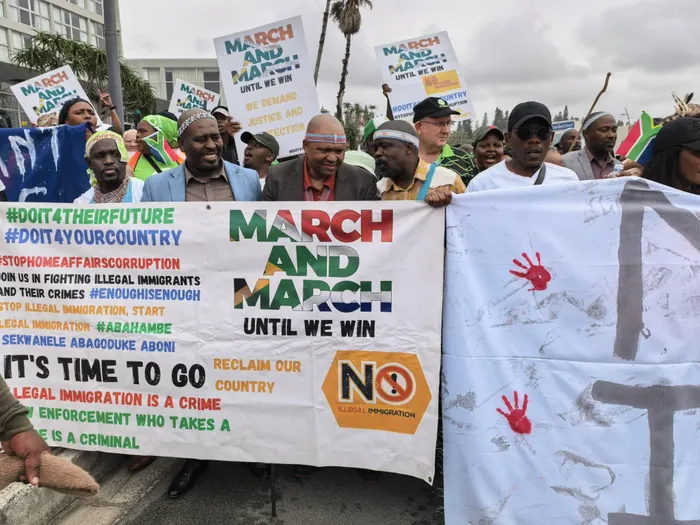
Thousands of protesters march as part of a nationwide campaign demanding stronger action against undocumented immigration.
Image: Pedro Mapelo
He said the demonstrations have placed considerable pressure on both the government and the country's immigration system.
"On one hand, the system has to respond to the demands of the protesters. Some of those demands are unreasonable and unfounded, but the relevant institutions still need to demonstrate that they are addressing immigration issues."
Chitinga said there were also significant administrative, policy and procedural challenges within the immigration system that could not be resolved overnight.
"Some require substantial financial resources. Others require institutional restructuring, while some are simply matters of improving processes. Governments always face pressure, but these protests have intensified scrutiny of the entire immigration system.
"Beyond the political cycle and elections, the government must continue developing long-term solutions to immigration. That means considering not only domestic conditions but also diplomatic and foreign policy relations with neighbouring countries and the broader African continent, while upholding international human rights obligations,” he said.
Forum for South Africa (FOSA), which has also been vocal on immigration, said the nationwide protests had succeeded in increasing pressure on the government.
FOSA national leader Tebogo Mashilompane said concerns over undocumented immigration had long existed and predated the March and March movement.
"You'd realise that the issue of illegal immigration is not new. It was being raised long before March and March," he said.
Mashilompane claimed successive governments had failed to respond.
"The issue has always been there, but the government has not been listening."
He said March and March had brought renewed attention to the issue by mobilising a broad coalition of civic organisations and political parties.
"March and March approached the issue differently, and that drew support from civic movements, political parties and ordinary South Africans. The aim was to increase pressure on the government to respond."
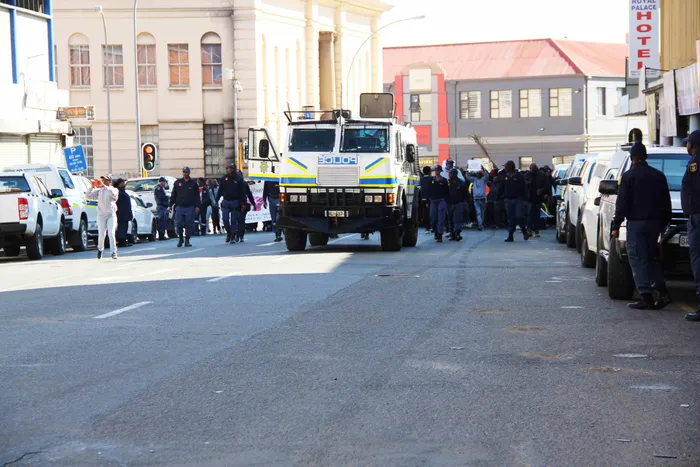
Police officers and other law enforcement agencies monitor anti-illegal immigration protests as demonstrators march on Tuesday.
Image: Sandi Kwon Hoo / DFA
Mashilompane said FOSA believed the protests had achieved that objective.
"We believe the marches have put pressure on the government, but we must also guard against selective praise."
He said recognition should be given to all civic organisations that participated in the nationwide demonstrations.
"I don't think it is fair to single out certain organisations while overlooking others that worked on the ground to ensure marches took place across the country."
Mashilompane said while March and March led the campaign, many other organisations played a significant role.
"The marches took place in all provinces because other civic organisations stood in solidarity with March and March. FOSA, for example, mobilised support in the North West and worked with its alliances to organise both preparatory and main marches."
He urged leaders to avoid remarks that could alienate other organisations.
"As leaders, we must be careful not to offend others. We have been involved in campaigning against illegal immigration long before March and March emerged, and we continue to do so."
Mashilompane argued that the gap between the protesters' demands and government action was deliberate.
"When we talk about immigration, we refer to the Immigration Act of 2002. The law is clear that you cannot be in the country illegally."
He added, "Once you are in the country illegally, you have committed an offence. The law is clear."
Mashilompane accused the government of failing to work with communities to address undocumented immigration.
"If the government truly wanted to resolve the problem, it would work with citizens to deal with illegal immigration instead of distancing itself from them."
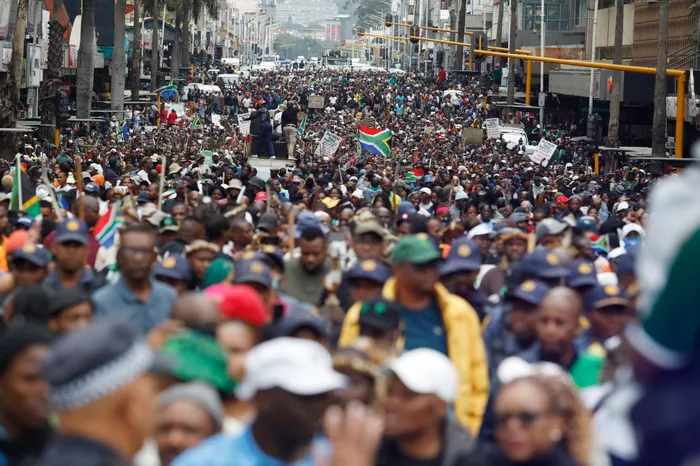
Thousands of March and March supporters took to the streets in Durban on June 30, demanding that illegal immigrants leave the country.
Image: Doctor Ngcobo/ANA Studio
He also accused authorities of intimidating protesters.
"They tell South Africans to march properly or face arrest. The fear is directed at South Africans instead of those who are in the country illegally. Despite that, we will continue protesting."
Mashilompane said the government should enforce existing laws instead of avoiding responsibility.
"The solution already exists because the laws are in place. The government must implement them instead of running away from its responsibilities."
He urged political parties not to hijack the campaign.
"We must remove politics from these marches and focus on activism. Once politics takes over, activism suffers and solidarity is weakened. South Africans want law and order, and that should remain the focus," he told IOL News.
Meanwhile, police said they were prepared to monitor "every situation" after March and March leader Jacinta Ngobese-Zuma announced that the movement would continue holding weekly demonstrations until the government removed undocumented immigrants from South Africa.
The National Joint Operational and Intelligence Structure (NatJoints) made the remarks during a media briefing in Pretoria on Wednesday following the June 30 nationwide protests.
Addressing supporters outside SAPS Point in Durban after thousands marched through the city on Tuesday, Ngobese-Zuma said the campaign would continue every Thursday until the government responded to the movement's demands.
"For as long as they haven't left, we are marching every Thursday," she said.
She warned that continued police deployments would increase the financial burden on the state.
"We hope the government has a budget for another R600 million," she said, claiming ongoing security operations would be required while undocumented immigrants remained in the country.
Ngobese-Zuma also alleged that drugs were being sold openly in some communities and claimed criminal activity linked to undocumented immigration remained a major concern for supporters of the movement.
NatJoints chairperson Lieutenant General Tebello Mosikili said authorities had noted the movement's intention to continue protesting.
She said police, together with other law enforcement agencies, were prepared to maintain law and order.
Mosikili said the South African Police Service (SAPS), the South African National Defence Force (SANDF), private security companies and other stakeholders had been working together under long-standing operational plans.
"We have signed the Memorandum of Understanding known as Eyes and Ears with private security companies. I want to reiterate that the South African Police Service remains in charge and is constitutionally mandated to police the country.
"Any other law enforcement agency working alongside SAPS does so in a support role when required."
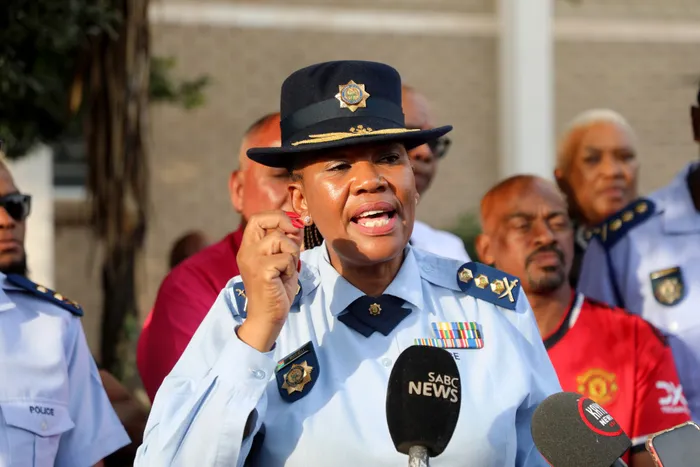
NatJoints chairperson Lieutenant General Tebello Mosikili says law enforcement agencies are prepared to monitor weekly anti-illegal immigration protests while ensuring public safety and protecting the constitutional right to demonstrate.
Image: File Picture: Timothy Bernard / Independent Newspapers
Mosikili said police would continue facilitating lawful protests.
"We have noted that March and March has announced it will continue with marches over the next six months.
"As I have indicated before, we will continue to monitor every situation and support every person who wishes to exercise their constitutional right to demonstrate, march and picket in accordance with Sections 16 and 17 of the Constitution."
She said authorities would continue working with private security companies, the SANDF and the Department of Home Affairs.
"I'm not sure why private security companies are being singled out. We did not work only with private security companies. This is community policing in action because we police with our partners, including community policing forums."
Mosikili confirmed that nearly 1,000 people were arrested during Tuesday's operations, with the majority being undocumented foreign nationals.
She said 120 marches were held nationwide, of which 108 remained peaceful, while 12 required law enforcement intervention following incidents of unrest.
IOL News