

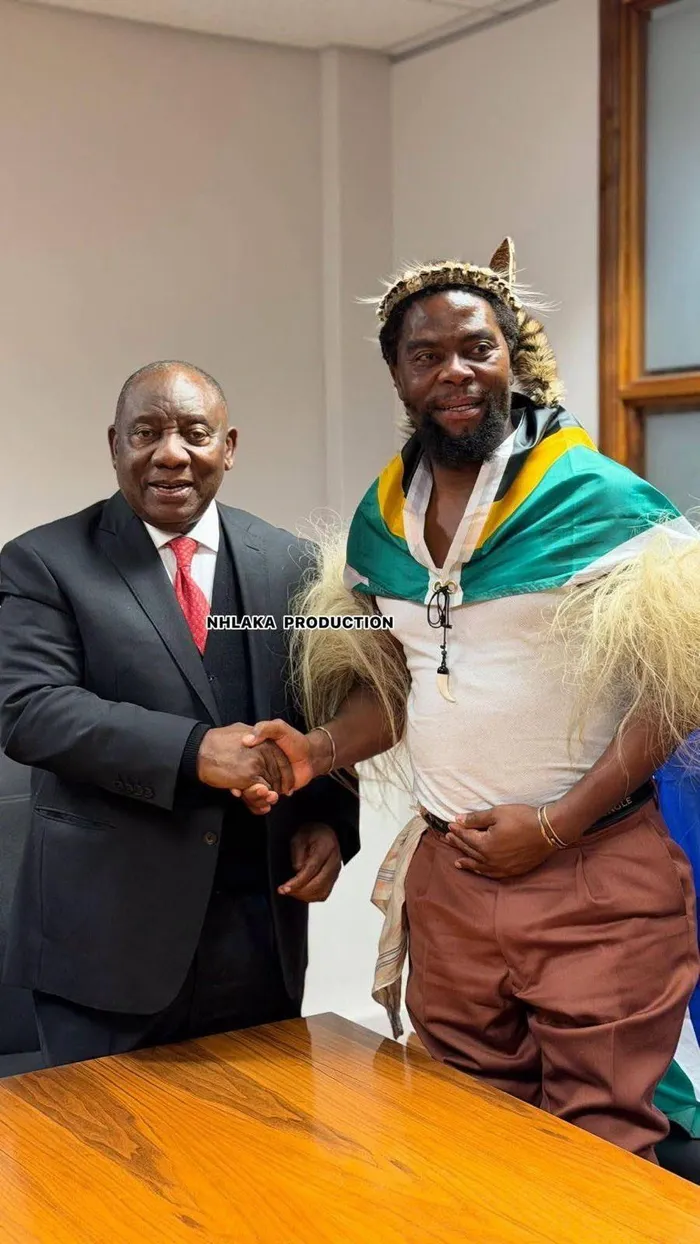
President Cyril Ramaphosa met with two of the country's most prominent anti-immigration activists, Nkosikhona Ndabandaba and Ngizwe Mchunu
Image: Facebook
President Cyril Ramaphosa met with two of the country's most prominent anti-immigration activists, Nkosikhona Ndabandaba and Ngizwe Mchunu, in the hours before nationwide community demonstrations were set to proceed, in what appeared to be a last push for dialogue between the Presidency and grassroots movement leaders.
Ndabandaba, popularly known by his moniker Phakel'umthakathi and who leads the Insizwa Ngobunsizwa Development Foundation, has emerged over recent months as one of the most recognisable faces of the anti-immigration campaign that has swept through KwaZulu-Natal, Gauteng and the Eastern Cape.
Alongside him, Mchunu, a former radio personality and leader of the Amabhinca Nation movement, has co-led marches calling for tougher enforcement against undocumented migrants. Both men were received by the President as part of efforts to engage directly with figures at the centre of the protest movement, rather than address grievances solely through public statements or law enforcement warnings.
The meetings came as organisers prepared for planned demonstrations, with the Presidency framing the engagement as an attempt to promote peaceful civic dialogue and de-escalate tensions that have built up over weeks of marches, some of which have turned violent or fatal.
Commentary on the development was swift on social media. A post by Sihle Lushozi captured the mood among observers who welcomed the sit-down, with a caption arguing that direct engagement, rather than confrontation, is the appropriate route for resolving disputes.
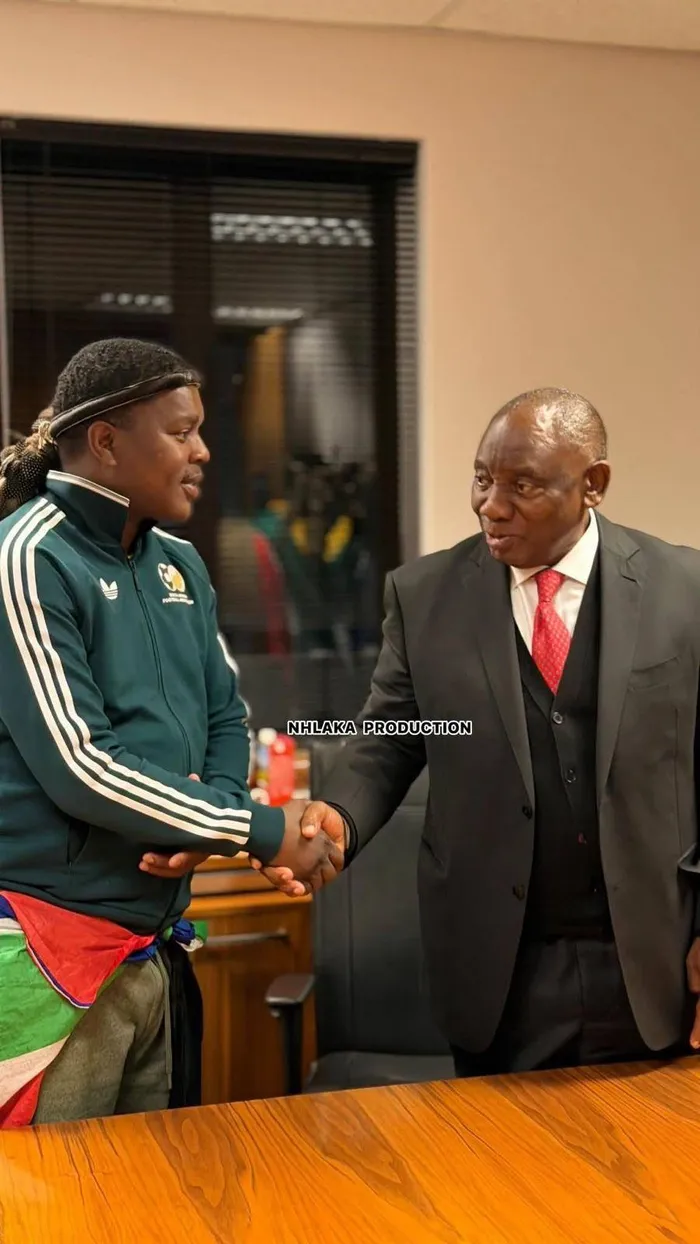
President Cyril Ramaphosa met with two of the country's most prominent anti-immigration activists, Nkosikhona Ndabandaba and Ngizwe Mchunu
Image: Facebook
The post drew a parallel to ongoing diplomatic talks between the United States and Iran as evidence that even longstanding adversaries can find their way to a negotiating table, and questioned why some commentators were reacting with excitement rather than measured reflection, asking pointedly who was actually expected to receive the activists' memorandum of grievances in the first place.
That question goes to the heart of a dispute that has simmered within the protest movement itself in recent days, with different factions trading blame over who set the June 30 deadline and who holds the authority to formally submit demands to government.
The uncertainty has added a layer of confusion to a movement that has, at various points, drawn support from civic groups, traditional structures and political parties, while also facing condemnation from human rights organisations over its tactics and the violence that has accompanied some of its marches.
The Presidency's direct outreach to Ndabandaba and Mchunu follows a broader pattern of engagement in the lead-up to the demonstrations, including consultations with traditional leadership structures and the Zulu royal house, reflecting government's apparent strategy of using respected community and cultural channels to try to keep the day's events peaceful.