

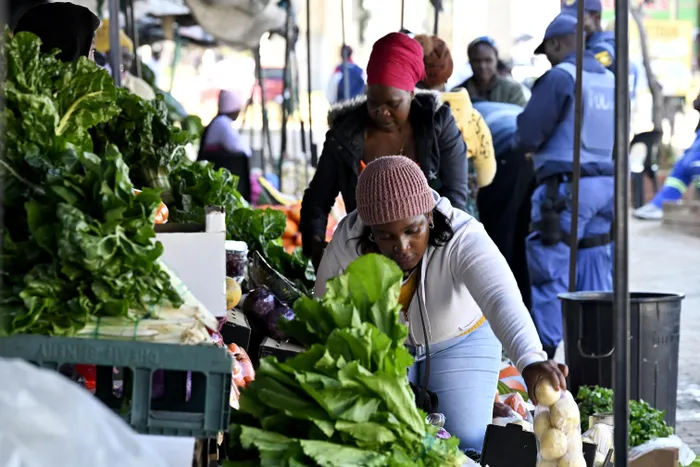
Informal traders plying their trade at the iconic Walter Sisulu Square have called upon the government to address the challenges posed by illegal immigration.
Image: Itumeleng English/Independent Newspapers
Two days before the self-imposed June 30 deadline for illegal immigrants to leave South Africa, informal traders plying their trade at the iconic Walter Sisulu Square have called upon the government to address the challenges posed by illegal immigration, linking it directly to the scarcity of jobs and business opportunities in their community.
On Sunday, ahead of the march to Moroka Police Station, 76-year-old Sophie Mbengwa, a seasoned trader with more than five decades of experience, painfully told her story of being arrested on the same day she gave birth to her second daughter, who has since become her business partner selling fruits and vegetables.
"We have fought for a long time to be here. It was a painful day for me on May 25, 1985, when I had to give birth to my second-born child, who is now working alongside me. When people say we are lazy as South Africans. What are they talking about, as I have raised nine children while working as an informal trader? It is an insult, really, to be told we are lazy."
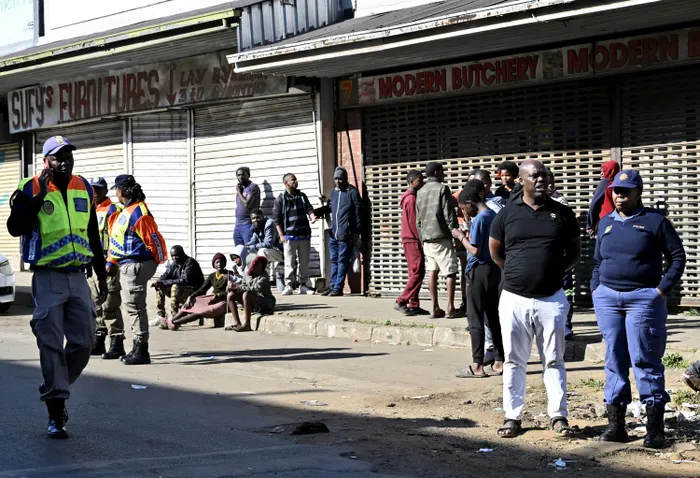
Some stores around the iconic Walter Sisulu Square remained closed on Sunday as Soweto residents took their fight to the street ahead of the June 30 deadline.
Image: Itumeleng English/Independent Newspapers
The march to Moroka Police Station comes as Malawian nationals continued to gather at the Sandton consulate, seeking help with voluntary repatriation, while the consulate remains closed for the weekend.
Media reports have indicated that over the weekend, more than 500 Malawian nationals have been taken to the Lindela Repatriation Centre for processing, while churches, volunteers, and organisations have mobilised to assist hundreds of Malawian nationals outside the Malawi Consulate General in Woodmead.
Khanyisele Mkhwanazi, another trader, stated: "We want undocumented foreigners to leave because they have made trading here difficult for us. Our lives as informal traders were much better before they arrived here and started telling us how to conduct our business, even though we were the first to arrive here.
Nhlanhla Magwaza, who has been selling alongside her sister since 2007, voiced a similar perspective, stating: "We are not lazy. We have never been lazy. This economy belongs to us, but what has happened is that we are being squeezed out of this economy by illegal foreigners, who have been allowed by our government to do as they please." This assertion highlights the perceived inequities that long-standing local traders believe have undermined their businesses.

Soweto residents have joined calls for illegal immigrants to leave South Africa as deadline for self-deportation looms.
Image: Itumeleng English/Independent Newspapers
The demonstrators, many of whom are aged and feel overlooked in the broader economic landscape, split into smaller groups to march towards the Kliptown, Moroka, and Lenasia SAPS stations. Their unified message revolved around seeking government intervention to facilitate a more favourable business environment that prioritises local traders' needs.
Annah Mjoli, a Kliptown resident who joined the march, also expressed genuine apprehension about the growing unemployment among youth in the area. "We have become pensioners without having enjoyed the benefits of democracy. Right now, our children are getting older without holding a permanent job," Mjoli said.