

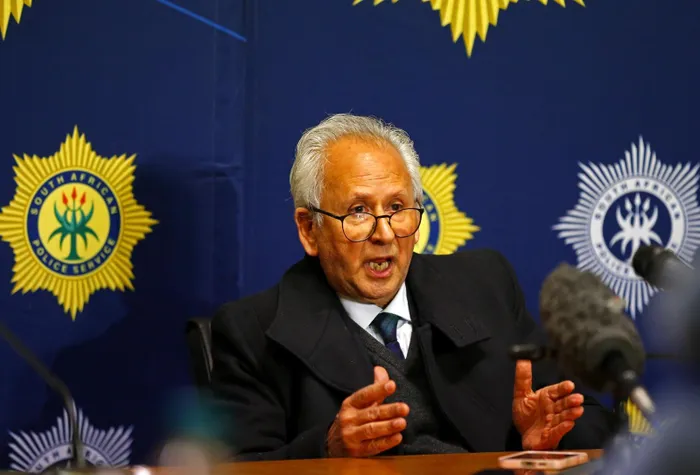
Acting Police Minister Professor Firoz Cachalia has labelled the planned June 30 protests targeting undocumented immigrants as reckless, warning that they could have serious economic, financial, human and diplomatic consequences.
Image: Bheki Radebe/ANA Studio
The protests planned for June 30 targeting undocumented immigrants and calling for them to leave the country have been described by acting Police Minister Professor Firoz Cachalia as “reckless,” saying that they carry economic, financial, human and diplomatic costs
This as the government has mobilised security forces nationwide and insists anyone inciting violence could face criminal charges and civil liability.
The demonstrations come amid growing concerns over the safety and wellbeing of foreign nationals as anti-illegal immigration protests continue to escalate, particularly in KwaZulu-Natal and Gauteng.
Many migrants travelled to South Africa seeking better opportunities. Instead, many say they are living in fear as hostility towards foreign nationals intensifies.
Protesters argue that undocumented migrants are taking jobs from South Africans, placing pressure on healthcare services and schools, and failing to contribute to the economy through taxes.
Despite repeated government appeals for calm, demonstrations have continued.
Anti-migrant organisation March and March, together with more than 20 civil society organisations, has called on undocumented foreign nationals to leave South Africa by June 30.
Speaking at a media briefing in Midrand on Wednesday, the organisations pledged that their demonstrations would remain peaceful and would not lead to violence, looting or loss of life.
However, March and March leader Jacinta Ngobese-Zuma said the organisation would not accept responsibility if violence broke out, arguing that maintaining law and order is the state's responsibility.
"I’m finding it so strange that it can be illegal to tell people who are illegal in the country to leave the country because they’re in the country illegally," she said.
Ngobese-Zuma said the campaign aims to encourage compliance with immigration laws rather than incite violence, adding that undocumented migrants should "take it to heart" and prepare to leave.
She confirmed that several organisations had applied for permission to hold marches in different parts of the country, although details would be announced later.
"We honestly don’t know. All we know is that South Africans, in their majority, have expressed that they are no longer comfortable living with people who they don’t know who are in the country legally," she said.
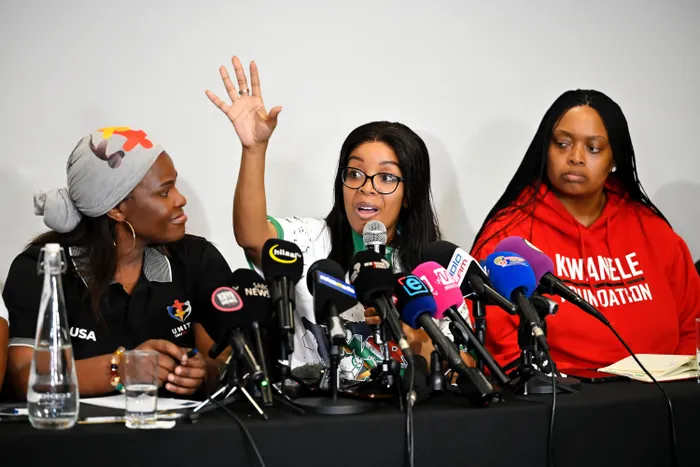
Jacinta Ngobese-Zuma, leader of March and March, speaks at a media briefing in Midrand where anti-migrant organisations called for undocumented foreign nationals to leave South Africa by June 30.
Image: Itumeleng English/Independent Newspapers
She added that organisers could not estimate attendance because planning was still under way.
The groups are calling for stricter visa regulations, a review of asylum policies, action against businesses employing undocumented migrants, accountability for corrupt police officers and restrictions on public services for undocumented migrants.
Cachalia described the planned demonstrations as "reckless", saying they carry significant economic, financial, humanitarian and diplomatic costs.
Speaking at the Inter-Ministerial Committee (IMC) on Migration media briefing on Friday, Cachalia said safeguarding buses transporting undocumented migrants is the responsibility of the South African Police Service (SAPS).
He said the Department of Home Affairs is responsible for processing those boarding and leaving the buses.
"It is our responsibility to provide security, which, of course, is not costless," he said.
Earlier this week, Cachalia announced that R600 million, originally allocated to police stations and community policing, would be redirected to security operations ahead of the planned protests.
Police have since confirmed they are prepared to maintain law and order, although the decision has been criticised by anti-migrant groups because of the cost.
Cachalia declined to disclose how many officers had been deployed.
"That is an operational question, and I'm not going to give the details of that in public," he said.
He said police had mobilised all available personnel, technology and other resources nationwide to respond to any potential disruptions.
"From our point of view, June 30 is a normal day, and we plan to ensure that, as well as security, after June 30."
Cachalia warned organisers that anyone responsible for inciting violence could face both criminal prosecution and civil liability.
"There is a narrative out there, propagated by those organising this reckless, disruptive behaviour, that they are acting in the interests of our citizens," he said.
He argued that the protests ultimately harm South Africans by damaging the country's economy, international relations and public safety.
"It is the responsibility of the government, including law enforcement agencies, to defend our people, defend our sovereignty, uphold the law and ensure that the country is safe and secure."
He added that organisers could be held personally liable for injuries or property damage resulting from incitement.
"What we're experiencing is not costless, and that must become part of the national conversation," he said.
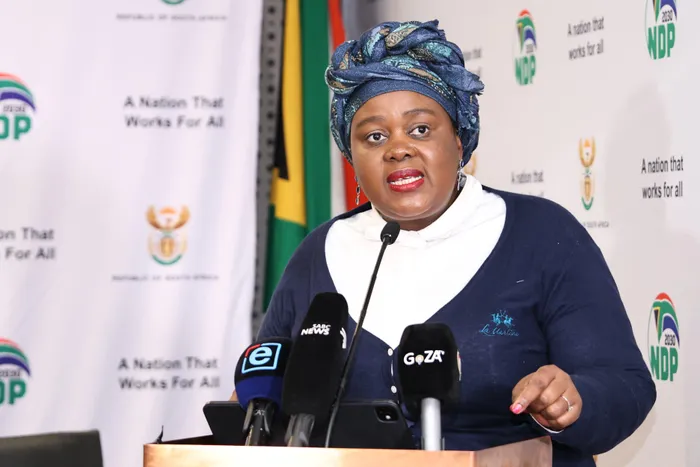
Inter-Ministerial Committee on Migration chairperson Mmamoloko Kubayi has declare dJune 30, 2026, a normal day for the country
Image: GCIS
IMC chairperson and Minister of Human Settlements Mmamoloko Kubayi reiterated President Cyril Ramaphosa's position that enforcing immigration laws is the responsibility of the state.
"Thus, we are ready as a State to protect every person, citizens and foreign nationals, against any form of abuse and intimidation.
"We therefore declare June 30, 2026, a normal day for the country," she said.
Kubayi stressed that no unauthorised person may demand documentation or proof of nationality from anyone.
"Blocking access for anyone to clinics, hospitals, schools or other public services is prohibited and against the law."
She warned that violence, intimidation, xenophobia, racism, tribalism, Afrophobia and hate speech are criminal offences.
She also cautioned that misinformation, fake news and online incitement to violence would be prosecuted.
While acknowledging that most employers comply with labour and immigration laws, Kubayi said businesses found employing undocumented migrants would face prosecution.
Kubayi said intelligence-led operations had intensified across the country.
As of June 21, authorities had registered 89 public order and incitement-related criminal cases, up from 53 the previous week.
A total of 164 people have been arrested for offences including incitement to violence and contraventions of the Regulation of Gatherings Act. Of those cases, 36 are before the courts, while another 40 remain under investigation.
A recent multidisciplinary operation in Tshwane resulted in 35 arrests, including two employers accused of hiring undocumented foreign nationals.
Kubayi also said SAPS arrested 5,056 people for immigration-related offences during Operation Shanela conducted during the week of June 15.
She condemned recent anti-immigration protests in the Free State that were accompanied by looting.
"We reiterate that vigilantism, looting and the targeting of individuals based on nationality are criminal acts that will be met with the full force of the law," she said.
Kubayi said the government had made significant progress in deporting undocumented migrants.
As of June 25, authorities had processed 15,162 Malawian nationals for deportation and repatriation, while others remained at temporary repatriation centres awaiting verification.
She said Malawi, Ghana, Nigeria, Mozambique and Zimbabwe had offered to facilitate the voluntary repatriation of their citizens, with Kenya and the Democratic Republic of Congo also requesting similar arrangements.
Under normal circumstances, she said, the host country's responsibility is limited to verification and issuing deportation orders, while countries requesting voluntary repatriation cover transport and logistics.
However, humanitarian assistance is provided in exceptional circumstances.
Kubayi said the situation involving Malawian nationals in Sherwood, Durban's former Drive-In site and parts of eMsunduzi had become a humanitarian emergency, prompting government intervention.
To speed up processing, the jurisdiction of the Musina Refugee Reception Office has been extended to conduct additional verifications.
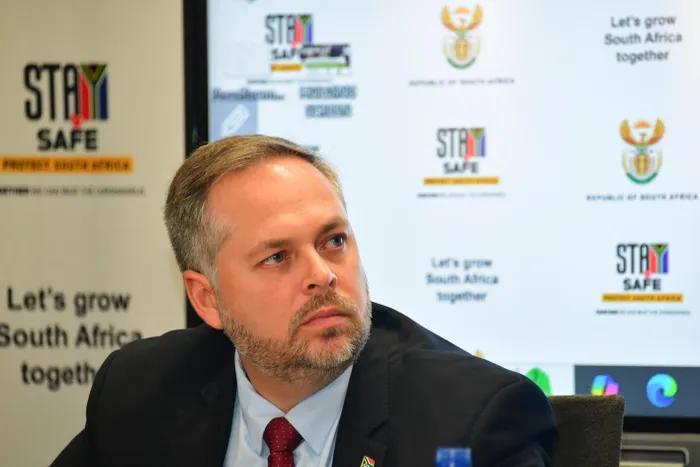
Home Affairs Minister Dr Leon Schreiber has outlined deportation efforts and operational responses ahead of planned nationwide protests.
Image: Ntswe Mokoena / GCIS
Home Affairs Minister Dr Leon Schreiber clarified that not every bus transporting undocumented migrants, particularly Malawian nationals, had been procured by the South African government.
"We are determined to go above and beyond to ensure that we manage these processes in a lawful, orderly and humane manner," he said.
Schreiber declined to disclose the total cost of the nationwide operation but said departments were managing the response within existing budgets.
He argued that while deportations are costly, failing to enforce immigration laws carries an even greater financial and social cost.
"There is a huge cost to not enforcing deportations and repatriations in an orderly manner," he said.
Schreiber added that a temporary processing facility at Beitbridge would help streamline verification procedures for people with passports or cross-border permits before repatriation.
Police have increased security measures across the country ahead of Tuesday's planned demonstrations.
Authorities have warned that traffic disruptions are expected in several areas as law enforcement works to maintain public order during the protests.
IOL Politics