

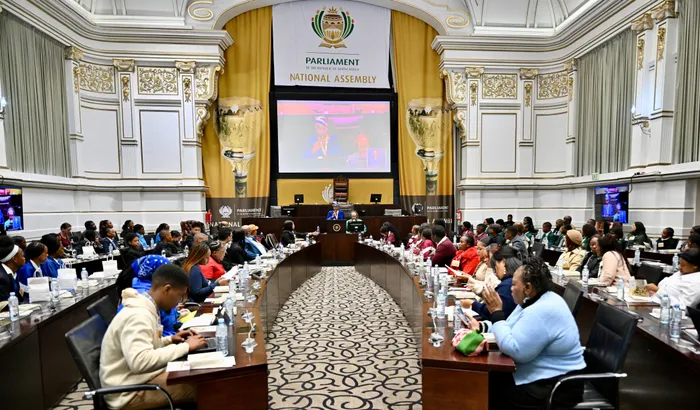
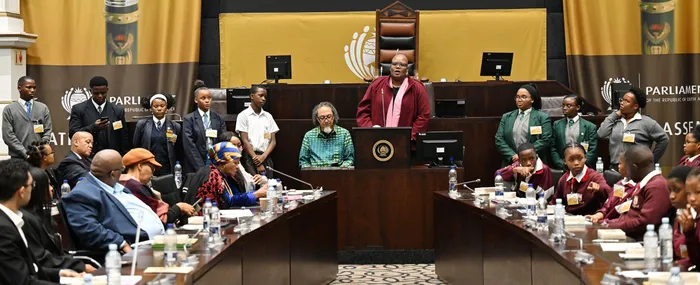
Parliament’s Library Service, in partnership with external stakeholders, will host the Intergenerational Dialogue titled "Youth Voices, Reading and Democracy". The event will reflect on the legacy of the 1976 student uprising and its contribution to democracy in South Africa.
Image: Phando Jikelo/ParliamentRSA
The youth and relevant stakeholders made their voices heard in Parliament ahead of the 50th anniversary of the 16 June 1976, Soweto Uprising.
They joined an Intergenerational Dialogue titled "Youth Voices, Reading and Democracy" to reflect on the legacy of the 1976 student uprising and its contribution to democracy in South Africa.
The dialogue, hosted by Parliament’s Library Service, included participation from various legislatures, high schoolers, the National Library of South Africa, members of Parliament and representatives from Pan South African Language Board (PanSALB), among others.
June is observed annually as Youth Month, with June 16 commemorated as National Youth Day in honour of the role young people played in the liberation struggle. This year marks the Golden Jubilee of the Soweto uprising under the theme: “Reset@50 – The Future Calls”.
The uprising was rooted in the Bantu Education Act of 1953, which enforced an inferior education system for black South Africans, designed to prepare them only for labour and service roles in apartheid society.
Soweto 50 years after the uprising.
Image: Independent Media
The keynote address, which was delivered by Thembisile Angel Khanyile, a member of the portfolio committee on Women, Youth and Persons with Disabilities, touched on the legacy of the Soweto Uprising, but also how some of the challenges from then persist today.
“Today, we gather not merely to remember a date in history, but to honour a generation of young people whose courage altered the course of our nation forever. 50 years ago, on the morning of 16 June, 1976, thousands of black school learners in Soweto left their classrooms and marched peacefully against the apartheid government's decision to impose Afrikaans as a medium of instruction in schools.
“What started as a peaceful demonstration soon became one of the defining moments in South Africa's liberation struggle,” Khanyile said.
“At the forefront of the movement were courageous young leaders, such as Tsietsi Mashinini, Khotso Seatlholo, and many other student activists who dared to challenge an unjust system.
“They were young, they were fearless, and they understood something many adults failed to grasp, that education without dignity is oppression. As the learners merged, the police confronted them. Then came the gunshots. One of the bullets struck a 12-year-old boy named Hector Pieterson.
“The image that shocked the world, captured Hector's lifeless body being carried by Mbuyisa Makhubo, while his sister, Antoinette Sithole, ran beside them in pain. That photograph became a symbol of brutality, of apartheid, and the price that young people were willing to pay for freedom,” Khanyile said.
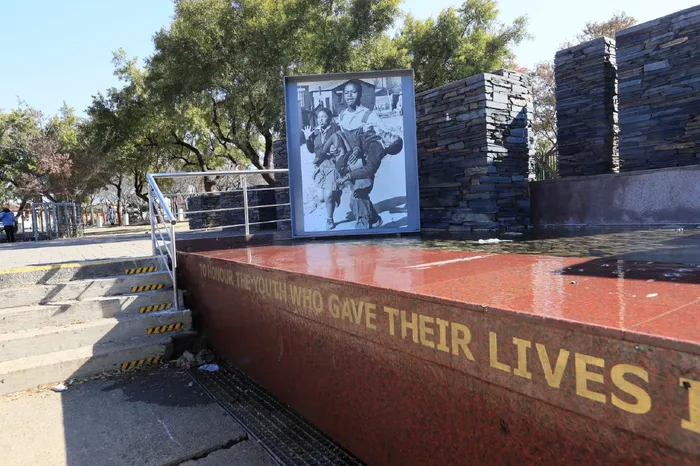
The Hector Pieterson Memorial is an essential stop for anyone wishing to honour the role of the youth in South Africa's liberation Struggle.
Image: Independent Newspapers
She said today, it is necessary to ask the difficult question, “If the young people of 1976 walked among us today, would they believe that the South Africa they fought for has truly been realised?”
She said that while South Africa has a constitution that is admired around the world, along with the freedoms previous generations could only dream of, “democracy cannot be measured by only what is written in our Constitution”.
She asked, looking at today’s lived realities, can South Africa truly claim to be free when so many young people remain trapped by unemployment?
“With the recent statistics stating an increase in youth unemployment, can we claim to be fully democratic when poverty continues to undermine the future of a child before they are born, or even enter a classroom?
“Can we speak of equality when opportunities available to one young person are vastly different from those available to another, simply because of where they were born.
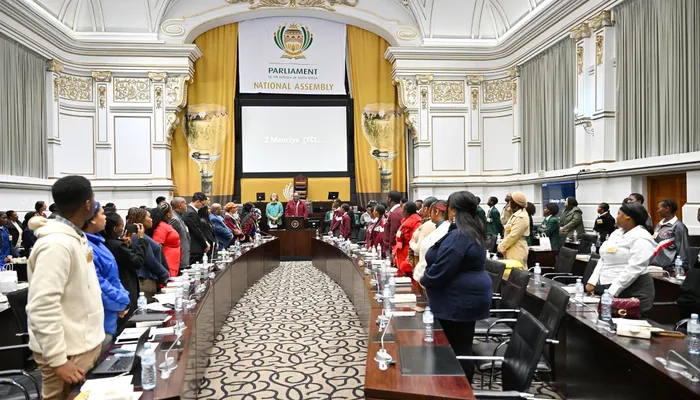
Parliament’s Library Service, in partnership with external stakeholders, will host the Intergenerational Dialogue titled "Youth Voices, Reading and Democracy". The event will reflect on the legacy of the 1976 student uprising and its contribution to democracy in South Africa.
Image: Phando Jikelo/ParliamentRSA
Parliament’s Library Service, in partnership with external stakeholders, will host the Intergenerational Dialogue titled "Youth Voices, Reading and Democracy". The event will reflect on the legacy of the 1976 student uprising and its contribution to democracy in South Africa.
Image: Phando Jikelo/Independent Newspapers
“For many young people, freedom remains a promise yet to be fulfilled,” she said.
“The generation of 1976 did not fight because they had all the answers. They fought because they believed that change was possible, and that is the same spirit that must guide us today. This is why youth voices matter.
“A healthy democracy listens to its young people, not only during elections, not only during youth months, but every day,” Khanyile said.
Deputy Junior Mayor for the City of Cape Town, Samantha September, said that youth do not want to be given lip service or handouts; they want access, which allows them to be involved and given the opportunity to lead.
“I've had the privilege of meeting young people from different communities, schools, and backgrounds. Through those experiences, I've learned something important.
“Young people are often described as the future. But what I see every day is that young people are already making a difference in the present. I see young people volunteering in their communities. I see young people mentoring others,” September said.
“I see young people taking initiative, stepping into leadership positions, and finding ways to serve those around them. What I have learned is that young people do not lack passion. We do not lack ideas. We do not lack potential, but what we sometimes lack is opportunity,” she said.
She said that despite the uncertainties of a rapidly changing world and the impact of artificial intelligence, she remains hopeful “because I have seen the resilience of South Africa's youth”.
“I have seen young people overcome challenges that many adults would struggle to face. I've seen young people continue to dream despite difficulties. I have seen young people choose leadership, service, and community when it would have been easier to give up.
“That resilience reminds me that the spirit of the youth of 1976 is still alive today,” September said.