


Unhappy parents and learners outside the gates of the newly built Blueridge Primary School in Wallacedene, demanding priority enrollment for their children.
Image: Henk Kruger / Independent Newspapers (File)
Western Cape Education MEC, David Maynier, has hit back against the Portfolio Committee on Basic Education after disagreements arose relating to a Department of Basic Education (DBE) presentation on allegations of racial profiling in learner admissions to schools.
The disagreements between the Western Cape Education Department (WCED) and the portfolio committee arose from the start of the committee meeting, which was set to hear a DBE presentation on the matter. That particular presentation did not go ahead, but MPs did hear a submission from Equal Education on the issue.
The committee expressed "serious concern" about the WCED’s failure to provide the requested information on learner admissions and placement practices in the province.
The committee also noted the Western Cape High Court judgment that highlighted discriminatory practices in admission requirements affecting historically disadvantaged and marginalised communities.
Chairperson of the committee, Joy Maimela, said the committee had expected a comprehensive report on progress made in addressing the allegations and practices identified by the court.
“What we expected was a presentation that comprehensively covers what we requested the department to do. What we have before us does not appear to do that,” Maimela said.
The committee heard that the WCED had submitted correspondence only the day before the meeting, indicating a reluctance to engage on matters linked to the court ruling on the basis that the matter is sub judice.

Portfolio Committee on Basic Education Chairperson Joy Maimela.
Image: Parliament RSA/Supplied
Maimela said this undermined the committee’s ability to prepare properly and, where necessary, seek parliamentary legal advice on the limits of the sub judice rule.
“The sub judice rule cannot be used by the provincial education department to evade responding to critical questions or providing information to this portfolio committee,” she said.
The committee noted that Parliament’s oversight responsibility does not fall away because a matter is before the courts. Maimela said the committee’s work was rooted not only in the court judgment, but in allegations brought before it before the litigation.
“The foundation of our discussion does not emanate from a court ruling. The foundation of our discussion emanates from allegations that were made before this committee that there is some form of racial profiling in admissions and placements in the Western Cape,” she said.
The committee resolved to elevate the matter to the House Chairperson for Committees and the Office of the Speaker. It will also explore mechanisms available to compel the provincial education department to provide the information required for meaningful oversight.
“Somehow, we are made to beg for information as Parliament, and that we will never accept,” said Maimela. “We will never accept being placed in that situation.”
Maimela said the committee will continue to monitor the matter, including the information relating to learners who remain unplaced, which the MEC committed to provide.
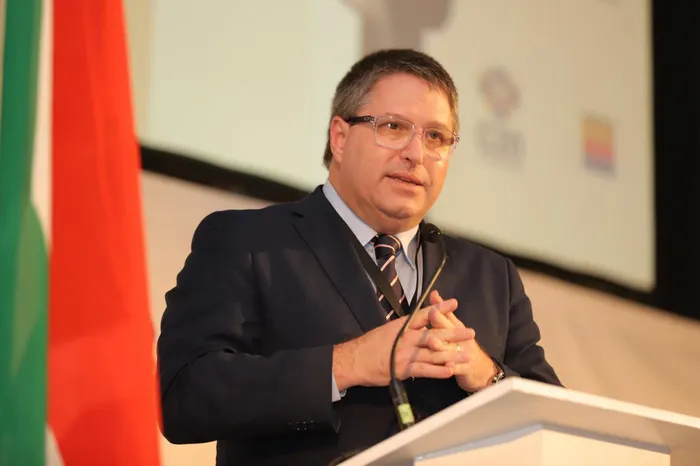
Western Cape Education MEC, David Maynier.
Image: WCED/Supplied
Maynier hit back, calling the meeting “a complete shambles which makes it harder to address serious challenges facing the education sector in South Africa”.
“The DBE did not deliver their presentation, which means we did not have the opportunity to respond to it. The committee deliberately misled the public by creating the impression that there was an ‘investigation into racial profiling’.
“There was no such investigation, and the DBE has clarified that it was in fact a monitoring and evaluation exercise. The exercise was conducted in all nine provinces, but the committee ignored findings in other provinces,” Maynier said.
“We have not received a report with supporting evidence on the alleged findings. The findings are therefore untested and unverified.
“The court judgment was an entirely separate matter before the committee, which is suspended and sub judice,” Maynier said. “In fact, on Friday (5 June 2026), we received the judgment granting our leave to appeal to the Supreme Court.”
He said that the committee conflated and confused the two matters on the agenda.
“We did not indicate that the DBE presentation was sub judice. Instead of engaging with these facts, the committee was used to launch a political hit designed to smear the Western Cape.”
On 24 April 2025, Equal Education and the Equal Education Law Centre appeared in the Western Cape High Court to ask that the court declare the WCED's failure to plan for and timeously place late applicant learners in schools unconstitutional and in violation of their rights to dignity and equality, among others.
The applicants successfully asked that the court declare the department’s failure to plan for and timeously place late applicant learners in schools is unconstitutional and in violation of their rights to dignity and equality, among others.
Regarding the case, Maynier said: “We have been granted leave to appeal the judgment, as we have serious concerns about the process and findings of the Court. The judgment is thus suspended pending appeal.
“The judgment was not unanimous. The dissenting judgement states that the main judgement is ‘flawed’ and that the Admissions Policy ‘does not discriminate, let alone unfairly so, on the basis of race, poverty, place of birth and social origin’,” Maynier said.
“We have made extensive support available to parents for extremely late applications to communicate essential information, and to assist parents in applying for places in schools.
“We specifically target our infrastructure investments to areas where increased demand is predicted, and do everything we can to place extremely late applicants as quickly as possible, despite these applications arriving over eight months late.”